America’s war on Iran has changed the Middle East—for the worse
This week’s ceasefire leaves the region less secure than when the war began
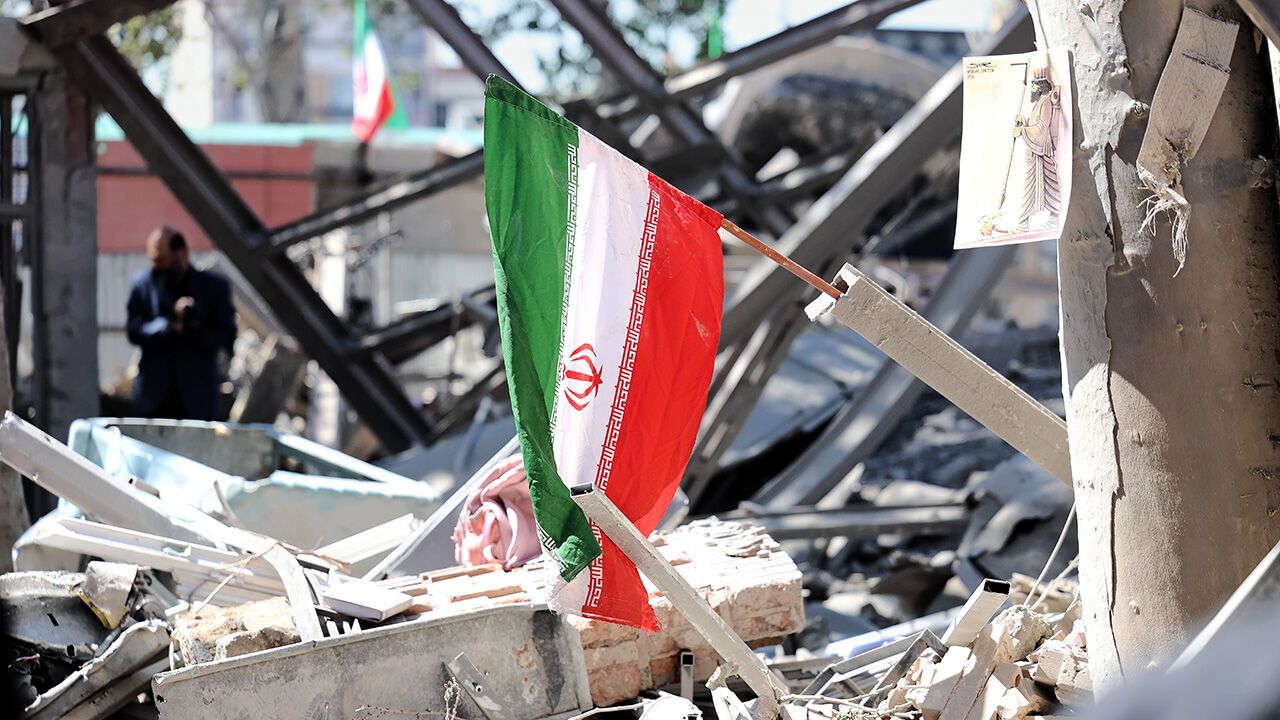
IT WAS A muddled halt to a muddled war. Donald Trump first threatened to intensify America’s bombing so much that it would destroy Iran’s “whole civilisation”. Then, less than two hours before this blitz was supposed to start, he announced that America, Israel and Iran would suspend hostilities for two weeks and that Iran would allow commercial shipping to resume through the Strait of Hormuz. Pakistan’s prime minister, Shehbaz Sharif, who had helped mediate the ceasefire, declared on social media that it was “EFFECTIVE IMMEDIATELY”.
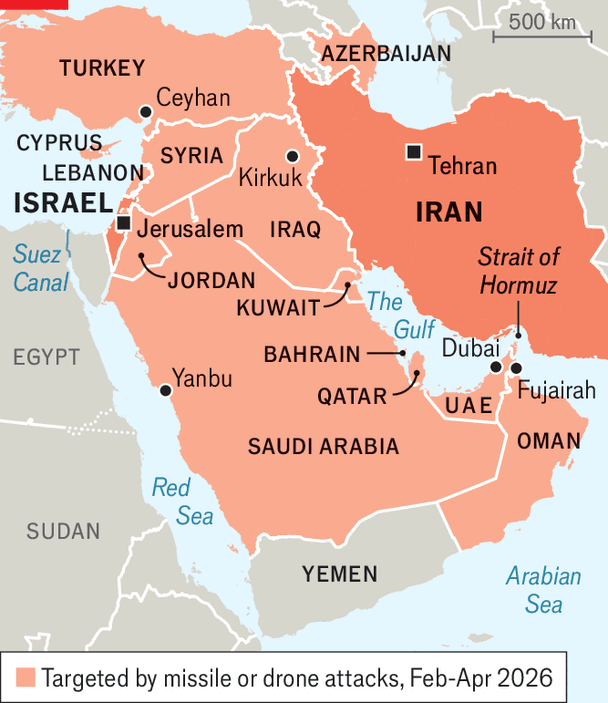
Yet Israel, Kuwait, Qatar, Saudi Arabia and the United Arab Emirates (UAE) all reported subsequent Iranian drone and missile attacks, the truce notwithstanding. Iran decried an air strike on an oil refinery. Israel intensified its bombing of Lebanon, which it said was not included in the ceasefire. Iran (and Mr Sharif) insisted that it was. Ships in the Gulf received an alert from Iranian forces, stating that any vessel that tried to transit the strait without Iran’s permission would be destroyed. America and Iran gave wildly different accounts of the template for negotiations on a lasting end to the war, which are supposed to begin in Pakistan on April 11th. Pete Hegseth, America’s “secretary of war” declared the outcome a “historic and overwhelming victory”. Iran claimed much the same.
More firing than ceasing
It is too early to know whether the ceasefire will take hold properly, let alone whether the talks in Pakistan will succeed. That makes it hard to judge where the war has left the two sides. If the negotiations lead to a deal and Iran agrees to stop threatening its neighbours in exchange for relief from American sanctions, both will arguably benefit. If the talks fail and the war resumes, both will be worse off.
For the moment, at least, it is hard to see any winners. The disruption to the global economy has been vast and will continue for some time yet. Iran has suffered severe damage not just to military facilities, but also to civilian and commercial infrastructure. The Gulf states have seen revenues lost, energy facilities damaged and their reputation for safety and stability punctured. Israel’s popularity in America and beyond has taken another knock. America has run down its stock of munitions and stretched its armed forces.
Meanwhile, none of the goals that Mr Trump and Israel’s prime minister, Binyamin Netanyahu, had set for the war appear to have been met. Iran’s regime has lost much of its military might and many of its senior leaders. Its acceptance of the ceasefire may be a sign that pragmatists are in the ascendant. But the Islamic Republic remains in place, retains a stockpile of enriched uranium and still has the capacity to fire drones and missiles around the region. Worst of all, it has demonstrated for the first time the potency of a long-dreaded weapon, its power to close the strait, which America has no means to counter. The region and the world will be paying a price for the conflict for years to come.
Israelis overwhelmingly supported the war when it started, seeing Iran as an existential threat. Now many question whether it was worth it. Despite tens of thousands of Israeli and American strikes, Iran is still able to launch dozens of missiles and drones at Israel and the Gulf countries every day. Israel’s assessment early in the war that it had “neutralised” over three-quarters of Iran’s missile-launchers looks like an exaggeration. Half is a more plausible guess; even that includes devices that can be restored to working order fairly easily.
The survival of the regime and its retention of its enriched uranium are further disappointments. Worse still for Mr Netanyahu, Mr Trump is about to start negotiating with Iran’s leaders directly. Israel was aware that talks on the ceasefire were under way but was not party to them. The Israeli air force was preparing to send its warplanes to attack Iran’s power grid when Mr Trump called Mr Netanyahu to tell him to stand them down.
On an immediate tactical and military level Israel can point to considerable achievements. Iran has lost much of its (admittedly puny) air force and its navy. Its air-defence network is in ruins. Considerable damage has been done to its arms industry. Israel did not lose a single warplane during the thousands of sorties it carried out over Iran. At home, its missile-defence systems intercepted the vast majority of the more than 600 missiles fired at Israel by Iran. Only about 20 Israelis were killed, far fewer than predicted in most military planning for a war on such a scale.
From Mr Netanyahu’s perspective, the war represented a strategic win in a critical respect: Israel and America co-operated to an unprecedented degree. The two countries launched a war together against a shared enemy; their planners co-ordinated targets; and American and Israeli pilots flew on joint missions.
Yet the manner in which the ceasefire came about, brokered by Pakistan between America and Iran, with Israel shut out, made clear the nature of the relationship: that of superpower and client-state. That may be reinforced in the weeks to come. Israel will not be part of the negotiations in which America and Iran try to thrash out some sort of permanent agreement. Israel’s future security will be at the mercy of Mr Trump’s whims.
Worse still for Mr Netanyahu, he could yet be transformed from partner to scapegoat. He helped convince Mr Trump to launch the war. On April 7th the New York Times reported that many senior American officials, including the vice-president, the secretary of state and the head of the CIA, America’s spy agency, had expressed reservations about Mr Netanyahu’s plans before the war began. Such leaks, as the war may be ending, could be a sign that many in Mr Trump’s administration want to distance themselves from Israel’s leader. They are acutely aware that Israel has become deeply unpopular among American voters. A survey conducted in late March by Pew, a research centre, found that 60% of Americans have an unfavourable view of Israel, a rise of seven percentage points from last year. Mr Trump personally still seems closely aligned with the prime minister, but their partnership could be tested.
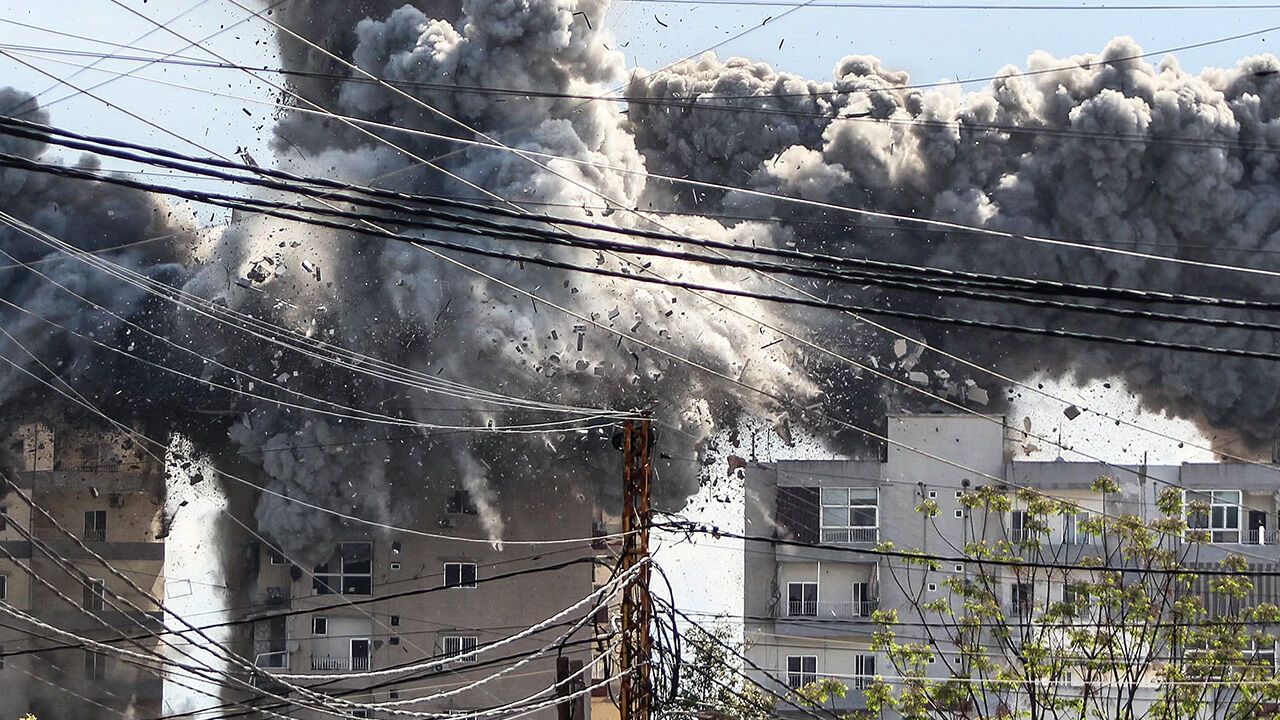
In a terse early morning statement, Mr Netanyahu said that Israel “supports President Trump’s decision to suspend strikes against Iran for two weeks”. He made a point of emphasising that it was, for Israel, merely a pause in the hostilities. He also stressed that the ceasefire does not include Lebanon, where Israel has been fighting Hizbullah, a militia backed by Iran which began launching missiles at Israel on the third day of the war. Instead of striking Iran, the Israeli air force attacked around 100 targets in Lebanon on the afternoon after the ceasefire. More than 1,000 people were killed and injured; hospitals were overwhelmed and ran short of blood.
Iran has warned that if Israel continues to strike Hizbullah, it will resume its attacks on Israel. Mr Trump may have to rule on this soon. If he forces Israel to suspend its campaign in Lebanon, it could signal the beginnings of a rift.
Mr Netanyahu would be eager to be the spoiler of the ceasefire but above all he is anxious to avoid any open discord with the president, who has spoken of arriving in Israel in two weeks as guest of honour on its independence day. An election must be held in the next six months, and the prime minister’s friendship with the president is a big electoral asset in Israel, one of the few countries where Mr Trump is popular.
In order to win the election, which is expected to be held in October, Mr Netanyahu will want to convince Israelis both that he and Mr Trump are still partners and that Israel has won its wars in Iran and Lebanon. Yet Mr Trump seems intent on ending the war, even though the Iranian regime remains in place and retains its ability to strike Israel with missiles and drones. It may even end up keeping its nuclear material, although American officials insist it will not. Even a political conjurer as talented as Mr Netanyahu will struggle to transform that into a triumph.
E pluribus unum
Iran’s rulers, too, are trying to depict the war as a victory. It certainly seems to have tightened their grip. Factions closed ranks. Soldiers and civil servants stayed at their posts, defying calls to defect. Emergency crews cleared rubble. There were fewer blackouts and water cuts than usual. Despite strikes on banks, salaries were paid.
The focus of popular outrage shifted from the regime’s massacres of protesters in January to America’s and Israel’s excesses. Early enthusiasm for foreign intervention waned along with hopes that the Islamic Republic would collapse and as the bombing spread from military targets to steel mills, refineries and bridges. Many monarchists lost faith that Reza Pahlavi, the son of the last shah, would return, and drifted away from Iran International, the opposition broadcaster that championed the American and Israeli strikes as a means of restoration. “We woke up to the realisation that Israel was not on our side,” says a former Iranian supporter of intervention.
Yet the truce threatens to revive old fissures. Hardliners, known as the paydaris, have attacked pragmatists, or amalgarayan, led by Mohammad Baqer Qalibaf, the speaker of parliament, and fellow military veterans, for negotiating. “Instead of a ceasefire, let’s strangle this rabid dog!” thundered Kayhan, the paydari mouthpiece, hours after the truce was announced.
Acceptance within the regime that Ayatollah Ali Khamenei, the supreme leader killed in an Israeli air strike on the first day of the war, should be succeeded by his son, Mojtaba, is also fraying. Some question his fitness, given that he is widely rumoured to have suffered severe injuries himself. Others cite his father’s purported opposition to dynastic succession. The Islamic Revolutionary Guard Corps (IRGC), the main force that defends the regime, may quickly lose its wartime unity and fragment again into factions.
Strikes on infrastructure have further weakened an already feeble economy. Its dire state was one of the causes of mass protests that erupted in December. Lots of Iranians cannot afford enough to eat. Many others hope to emigrate.
The destruction of bridges, roads, railways, telecoms networks, airports and, an industrialist claims, half the passenger-jet fleet may have the effect of loosening the centre’s grip on the provinces. So too could the destruction of the security services’ bases around the country. Kurds and other minorities may become restive.
Indeed, some analysts see Iran’s continued attacks on Gulf countries as a reflection of a splintering within the regime. With its leaders hidden in bunkers and the mobile-phone network penetrated by Israeli spies, communication is difficult. The IRGC has given commanders in the field latitude to launch attacks on their own initiative. Some may be unaware of the ceasefire or are choosing to ignore it. On April 8th, after the truce had in theory gone into effect, Iran fired more than 50 drones and missiles at the UAE, one of the biggest barrages of the war. It also struck a vital pipeline in Saudi Arabia that carries 7m barrels a day of oil to the Red Sea, bypassing Hormuz. In Kuwait it targeted power and water-desalination plants.
Yet there have also been tantalising hints that the regime is becoming less hardline. The most obvious is its embrace of the ceasefire, however poorly observed. What is more, on its first day, the authorities freed a political prisoner, Maryam Akbari Monfared, after 17 years in prison. State television, very unusually, has been airing interviews with unveiled women.
Mr Qalibaf and a coterie of pragmatic IRGC generals appear to occupy the most senior positions within the government. A leadership less wedded to Mr Khamenei’s anti-colonial diatribes, in turn, may find it easier to repair relations with the West. Western countries remain the preferred destinations for study and travel for the children of Mr Qalibaf and other grandees. Even Mojtaba Khamenei is said to own luxury properties in London.
The new leadership is unlikely to carry out a mass release of political prisoners, as the opposition demands, much less scrap the religious foundations of the Islamic Republic. But it may see a strategic and fiscal value in being acknowledged as the gatekeeper, perhaps even toll-collector, of the Strait of Hormuz.
No rush for the exit
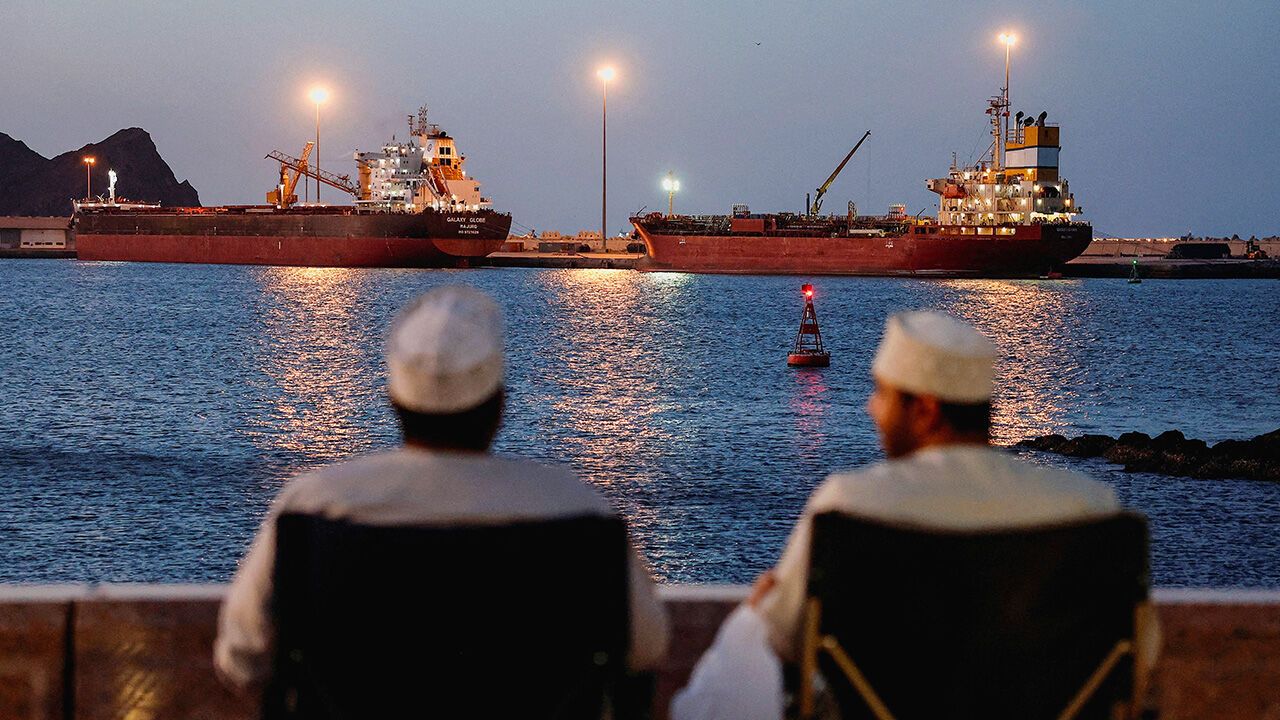
Traffic through the strait had been slowly increasing before the ceasefire. Some 74 vessels transited in the week ending April 5th compared with fewer than 40 in the first weeks of hostilities, with two-thirds of the ships concerned leaving the Gulf and a third entering. But that is still a trickle compared to the 130 or so that would typically have made the passage every day before the war began.
Almost all the ships getting through are tied to Iran or “friendly” countries. In order to monitor these vessels Iran has required them to sail a peculiar route between Larak Island and the Iranian mainland, not through the main channel of the strait. The assumption within the industry is that all these ships have either secured passage through diplomatic leverage (boats tied to Pakistan seem to be getting through, for example) or have paid off the IRGC (the going rate is said to be around $2m a tanker).
There are over 700 commercial vessels still stuck in the Gulf that would happily take advantage of the ceasefire to get moving again. But few of them are risking a transit for now, given the conflicting signals emerging from Iran and the shakiness of the ceasefire in general. As Lloyd’s List, a trade publication, notes, recent transits have been negotiated individually with the Iranian authorities, and have involved the submission of documents on ownership, management, financing, insurance and trading and chartering history to show that a vessel has no American or Israeli connections. Iran’s foreign minister insists that safe passage “will be possible via co-ordination with Iran’s armed forces and with due consideration of technical limitations”, two conditions that did not apply before the conflict. To top it all off, Iran has implied that the route around Larak island is necessary because it has laid mines in the main shipping lanes.
Most shipowners are waiting to see what happens, according to Clarksons, a shipbroker. It thinks “transit levels still seem unlikely to return to pre-conflict levels in the near term”. Even if the majority of stranded ships are soon allowed to leave the Gulf, the process will be slow, as the strait’s shipping lanes cannot safely accommodate very many at once—especially if the narrow and shallow route around Larak is the only option.
The two-week duration of the ceasefire (if it lasts even that long) presents another problem. Shipowners will not be in a hurry to send vessels into the Gulf, even if it appears safe to do so, if there is a risk that fighting might flare again, trapping them on the wrong side of the strait. And the dislocations of recent weeks will create further delays. Some tankers that had been bound for the Gulf were rerouted to the Atlantic after the strait closed to try to pick up cargo there. It will take several weeks to return them to their customary routes, even in the unlikely event that the strait reopens completely.
For the petro-monarchies of the Gulf, the strait is either their primary maritime link to global markets or their only one: they send out hydrocarbons and other commodities, and import everything from cereals to cars. Iran’s ability to shut the strait poses an existential threat; its apparent desire to charge tolls on vessels using Hormuz smacks of extortion.
Iran may not be able to implement such a scheme in peacetime, especially if Oman, on the other side of the strait, does not co-operate. A couple of ships have managed to exit the Gulf in recent days while sailing close to Oman’s shores. Yet officials across the Gulf are naturally pondering longer-term alternatives to the strait.
Saudi Arabia and the UAE have been able to maintain a portion of their oil exports despite the strait’s closure using pipelines that connect in the Saudi case to Yanbu, a port on the Red Sea, and in the UAE’s case to Fujairah, a port on the Gulf of Oman. Bahrain, Iraq, Kuwait and Qatar, in contrast, have no alternatives to the strait.
The Iraqi government and leaders of the autonomous Kurdish region in northern Iraq have hastily agreed to re-open the Kirkuk-Ceyhan pipeline, which can carry a modest 250,000 barrels a day (b/d), a fraction of the country’s pre-war exports of about 3.3m b/d. Iraq is also shifting some oil by road through Syria—a costly and inefficient method.
After governments in the region have rebuilt production capacity damaged in the war, says Alan Gelder of Wood Mackenzie, an energy consultancy, their next priority will be to expand the capacity of existing pipelines. Then, perhaps, they may try to build short interconnectors to neighbouring countries. The most difficult projects are long-distance pipelines that traverse several countries.
Maisoon Kafafy of the Atlantic Council, a think-tank in Washington, DC, argues that Gulf states need a regionwide network that is “resilient by design” with multiple interconnections and ports so that the closure of a single chokepoint can no longer disrupt global supply chains on such a scale. But that will take decades and tens of billions of dollars to build, not to mention a hitherto elusive degree of diplomatic alignment. And the attack on the Saudi pipeline shows that alternative export routes are just as vulnerable to Iranian drones and missiles as oil tankers in the Strait of Hormuz.
That is why a second vulnerability exposed by the war is so worrying to the countries of the Gulf: their reliance on an ever-less-reliable America. For decades the presence of American troops on the Arabian peninsula was meant to deter aggression. Mr Trump’s war has flipped that logic on its head. Instead of warding off attacks, America’s forces attracted them.
In public, most Gulf officials insist the war will not shake their bond with America. Their private views are more nuanced. A few express a sort of buyer’s remorse with Mr Trump, a president they worked hard to court. Less than a year ago he stood in the Saudi capital and announced an end to “interventionist” wars in the Middle East. Now he is waging one.
Yet when it comes to the broader relationship with America, Gulf states have no clear alternative. Britain and France are helping to shoot down drones above Qatar and the UAE, but their reluctance to commit to a post-war maritime mission in the strait has irked some Gulf governments. Europe, in their eyes, is unwilling and unable to embrace a serious hard-power role.
They have other options, of course. Qatar will deepen its ties with Turkey, which has deployed troops in the emirate since 2017. Saudi Arabia will firm up the defence pact it inked with Pakistan in September. South Korea rushed an air-defence system to the UAE during the war; the two countries have grown increasingly close. If such middle powers can help them diversify their relationships, however, they cannot substitute for a superpower.
That points to another lesson of the war. Arab states thought they could stay out of competition between America and its great-power rivals. When Russia invaded Ukraine, the Middle East sought to remain neutral; Vladimir Putin was a welcome guest in the UAE as recently as August. He has not returned the favour. Russia has reportedly provided Iran with satellite imagery to help it strike targets in Arab states. Meanwhile, Volodymyr Zelensky rushed to the Gulf to offer help shooting down drones: the Iranian Shahed models that have wreaked havoc across the region, after all, are the same ones Russia is using against Ukraine.
There is frustration in the Gulf towards China as well. It did help nudge Iran towards accepting Mr Trump’s ceasefire. But a country that imports most of its oil from the Middle East joined Russia in vetoing a UN Security Council resolution, sponsored by Bahrain, to authorise a military mission in Hormuz. At the same time, Russia and China have been underwhelming allies for Iran as well. The former has provided targeting help but seemingly not much more. The latter is unlikely to offer much help with post-war reconstruction if America does not ease sanctions.
America the inescapable
A few years ago everyone in the Middle East was keen to talk about the region’s new multipolar era. Now America is at the centre of events, for better or worse, and its rivals are on the margins.
Yet one of America’s closest allies is increasingly viewed with suspicion as well. Outside of the UAE, many Arab officials now regard Israel as a destabilising force in the region. They believe it dragged Mr Trump into the war by misleading him about how easy it would be to topple the Iranian regime. They also think its ferocious bombing of Lebanon on April 8th was an effort to blow up the ceasefire.
All of this leaves the Gulf states in a quandary. Before the war the region had enjoyed decades of relative peace. It thought itself an entrepot immune from the Middle East’s many conflicts. America would keep it safe, even as it pursued closer ties with Russia and China; for some, relations with Israel also offered the promise of a staunch ally against their common foes in Iran. The war has upended all of those assumptions at once.
For almost half a century, the conflict between America and Iran has defined the Middle East. It was a fight both were happy to conduct at arm’s length. They bloodied one another in Iraq, first in the 1980s and again in the 2000s, but only indirectly. They carved out spheres of influence, and their allies fought wars in Lebanon, Yemen and the occupied Palestinian territories. A direct war was unimaginable, though: the consequences seemed too great.
Mr Trump, ever the transgressor, has made the unimaginable real. The consequences of that will be irreversible, no matter how much the president thinks he can bend reality to his will. Perhaps the talks in Pakistan will succeed, in which case America, Israel and the Gulf states may no longer be bound by a mutual threat. Or perhaps they will fail and the spectre of war will linger. America will have to decide whether to stick around in a region it has long tried to leave, or to abandon its allies. Either way, the Middle East will be dealing with the consequences of Mr Trump’s “little excursion” for years to come. ■