How war has made a 33-year-old the Czech Republic’s richest man
The rapid rise of CSG, Europe’s newest defence giant
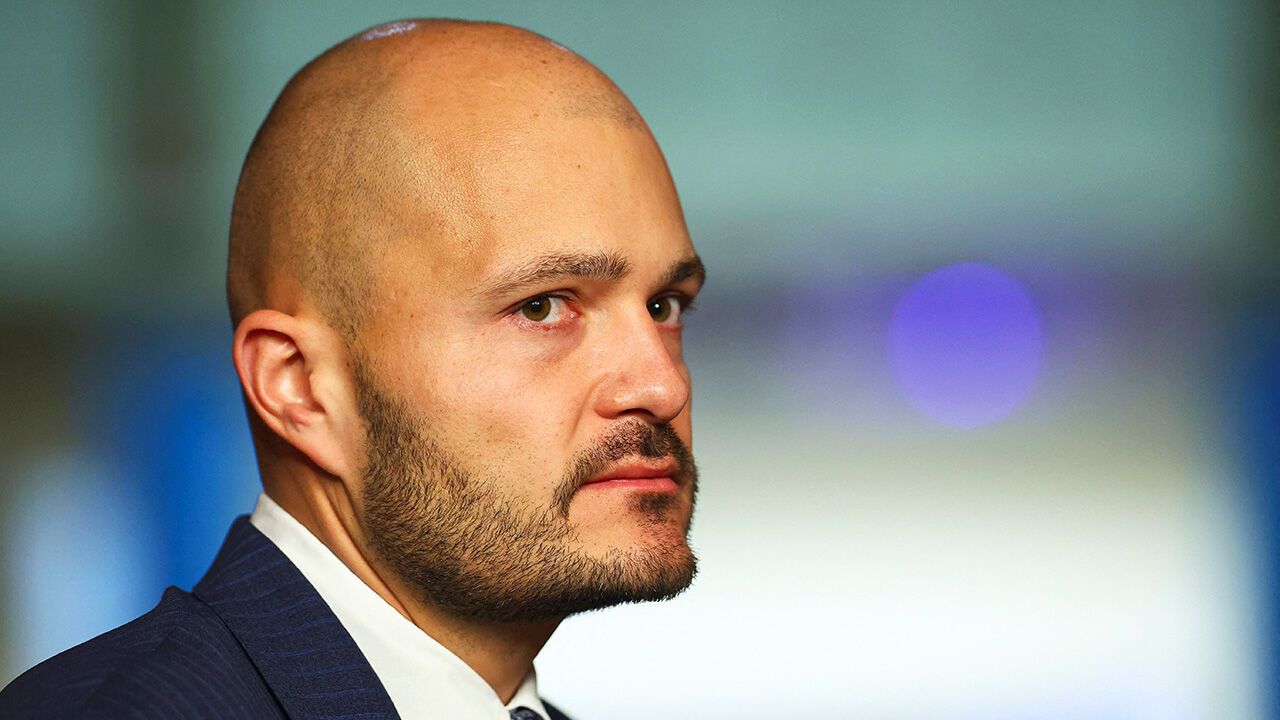
UNTIL RECENTLY Michal Strnad was hardly known in his home country, let alone elsewhere. The 33-year-old chief executive and majority owner of the Czechoslovak Group (CSG), an arms-maker, has in the past kept a low profile and remained focused on running the company founded by his father, at which he has worked since leaving high school.
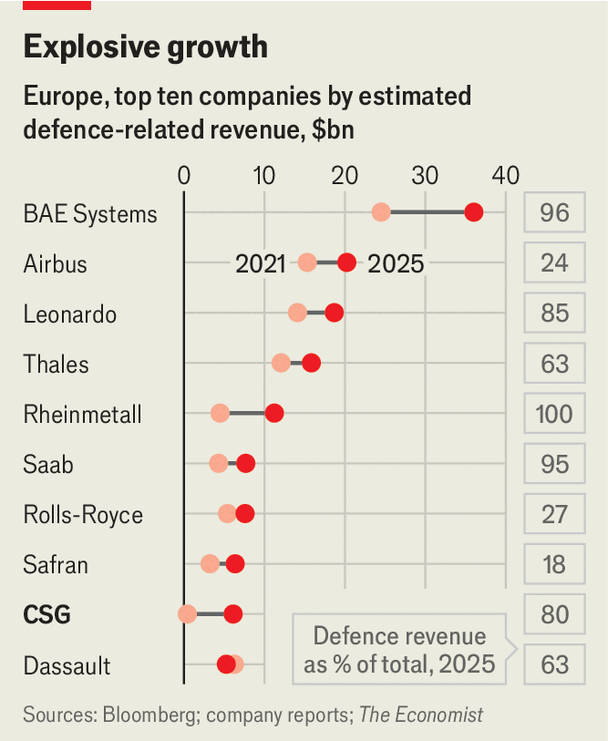
Yet since taking CSG public in January at a valuation of around €25bn ($29bn), the Czech Republic’s richest man, who recently sat down with The Economist, has begun to draw more attention. So has his company, which employs 14,000 people and operates more than 30 production sites around the world. Last year CSG brought in €6.7bn in revenue—up 12-fold from 2021. Four-fifths of that is defence-related, meaning the company is now among Europe’s ten biggest arms-makers (see chart). Even that understates its rise. It is now the continent’s second-largest maker of ammunition, behind only Germany’s Rheinmetall. And Mr Strnad is not done yet.
CSG’s rise has been propelled by the Ukraine war. The arms-maker has played a central role in the Czech Ammunition Initiative led by Petr Pavel, the country’s president, and financed by Western allies, which has supplied Ukraine with bullets and shells. CSG has benefited both from sales directly to Ukraine, which accounted for 27% of its total last year, and the replenishment of European ammunition stocks.
An acquisition spree has added extra firepower. In 2022 CSG bought a majority stake in Fiocchi, an Italian producer of small-calibre ammunition. In 2024 it acquired Kinetic Group, an American peer. Last month it announced it would buy 49% of Hirtenberger Defence Systems, an Austrian maker of mortar shells. Mr Strnad plans to continue shopping. “The time for defence consolidation is now,” he says.
Indeed, CSG’s boss has big ambitions. He says he wants his company to become Europe’s biggest arms-maker. In December it signed a seven-year deal with Slovakia worth up to €58bn to supply ammunition to members of the European Union as part of a joint rearmament initiative by the bloc. Although three-quarters of CSG’s sales are made in Europe, Mr Strnad is also eager for it to continue growing in America, which accounts for much of the rest.
The company has certain advantages. Wages in the Czech Republic and Slovakia, home to most of its production, are much cheaper than elsewhere in the West. Vertical integration also helps it lower costs and maintain control over its supply chain; in January, for example, it unveiled a joint venture with Hellenic Defence Systems, a Greek state-owned arms-maker, to produce TNT, among other things.
There will be challenges to further growth, however. Whizzy newcomers such as Helsing, a German drone-maker, are growing quickly and may start to gobble up more of Europe’s defence budgets. And if the war in Ukraine ends, demand for ammunition may drop significantly.
In the meantime, Mr Strnad is beginning to develop a bigger profile at home. CSG has become the main sponsor of the Czech Olympic team. Its boss has also bought a football club, Viktoria Plzen, a rival to AC Sparta Prague, owned by fellow Czech billionaire Daniel Kretinsky. Mr Strnad is eyeing more than one goal. ■
To track the trends shaping commerce, industry and technology, sign up to “The Bottom Line”, our weekly subscriber-only newsletter on global business.