The West is doing more to combat China’s covert activity abroad
But China is paying little attention
Vancouver’s historic Chinatown borders on and blends with one of the city’s bleakest neighbourhoods, Downtown Eastside. The area, with its cheap boarding houses, has become a magnet for the desperate. Drug addicts and homeless people huddle on the streets. Local politicians, however, sometimes focus on another problem: China’s political influence among ethnic Chinese in this district and elsewhere in the city. Across Canada, the Chinese Communist Party’s invisible hand has been stirring intense debate.
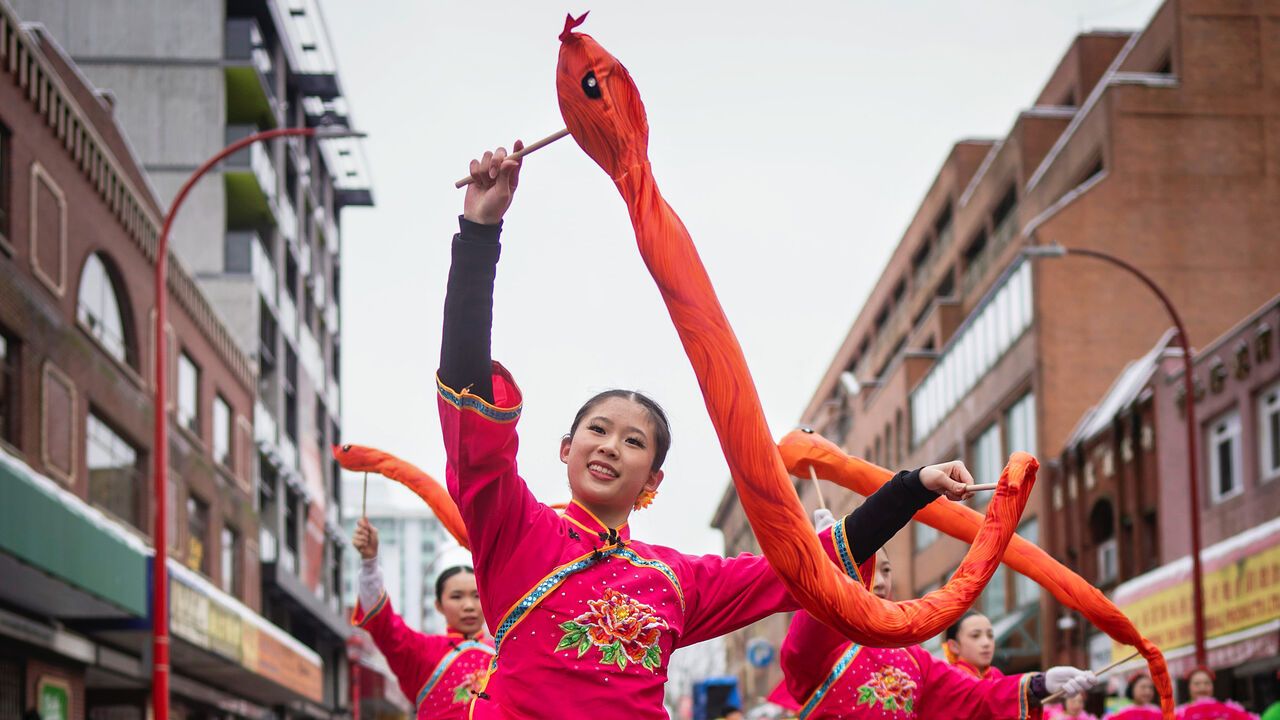
Many ethnic Chinese in Vancouver are relatively recent immigrants from mainland China who live in suburbs far from Chinatown. But the enclave where labourers and merchants settled in the 19th century retains outsize influence. One of the city’s most prominent organisations for ethnic Chinese, the Vancouver Chinese Benevolent Association (CBA), still uses the four-storey building in Chinatown that it has occupied since 1909. Its membership includes dozens of groups. It plays a central role in lunar new-year parades (last year’s is pictured).
The CBA also has close ties with the party’s “united-front” system, a sprawling network that aims to win the support of influential non-Communists. The party calls the united front a fabao, or “magic weapon”. In 2022 China’s leader, Xi Jinping, said its work had become even more important as a result of “profound changes” globally: a veiled reference to tensions with America. Some Western governments have stepped up efforts to resist.
Mr Xi has done nothing to allay their concerns. In 2022 he put his chief ideologue, Wang Huning—the party’s fourth-highest-ranking leader—in overall charge of united-front operations. He gave a seat in the Politburo to the new head of the party’s United Front Work Department (UFWD), the main bureaucracy involved. The UFWD leads the work of tens of thousands of party cadres who are not UFWD members but whose jobs relate to its mission: cajoling and arm-twisting everyone from religious leaders to private businesspeople into backing the party.
Among ethnic-Chinese groups in the West, the CBA is far from alone in currying favour with such officials. In February the Jamestown Foundation, a think-tank in Washington, said it had identified more than 2,000 organisations that have links to united-front bodies: 967 in America, 575 in Canada, 405 in Britain and 347 in Germany. The think-tank called its findings a “snapshot” of the united-front network as it looked in 2023. Recent evidence, it said, showed that its activities in the four countries had “continued unabated” last year.
They are often clearly visible. Meetings between united-front officials and overseas groups are reported by China’s media and Chinese-language outlets abroad (many are under China’s control). And China’s ability to influence these groups is obvious, too. On its website, the CBA expresses support for China’s tough positions on Taiwan and Hong Kong.
Echoing these views is not a crime. What worries governments is political lobbying that conceals the party’s hand, the threatening of people who refuse to toe the party line and the grooming of potential spies (the CBA has not been charged with any such activity). Britain’s MI5 has accused the UFWD of cultivating “relationships with influential figures in order to ensure the UK political landscape is favourable” to the party. In 2024 it emerged that a Chinese businessman close to Andrew Mountbatten-Windsor, then Prince Andrew, had been barred from re-entering Britain for alleged “covert and deceptive” activity for the UFWD (the businessman denied wrongdoing; the prince said nothing sensitive was discussed).
The UFWD is not a spy outfit. But its workers are well placed to help the country’s spy agencies spot likely recruits. (In March British police arrested three political advisers for allegedly helping an unnamed Chinese “intelligence service”.)
Among Western countries, Australia was one of the earliest to toughen up: in 2018 it adopted new laws against covert interference and espionage. America also began muscle-flexing around the same time. The first Trump administration reinvigorated the Foreign Agents Registration Act of 1938, partly to deal with “unregistered agents seeking to advance China’s political agenda”, as the Justice Department put it.
Britain has also been tightening its laws. Its National Security Act, which took effect in 2023, makes it easier for espionage charges to stick (a case against two men accused of spying for China, brought under a much older law, collapsed last year). The act also set up a “foreign influence registration scheme” that took effect last year. And it created a new offence of “foreign interference”.
In 2024 Germany tightened its regulations on political lobbying, while Canada updated security-related acts to tackle foreign interference. This followed huge political debate about alleged Chinese interference in elections, including efforts to persuade ethnic Chinese not to vote for candidates critical of China. In 2025 a government-organised inquiry into this concluded that China was “the most active perpetrator of state-based foreign interference targeting Canada’s democratic institutions”. Also last year, France set up a system for registering influence activities by foreign countries and parties.
But such laws are hard to enforce against the huge range of Chinese united-front activity: in courts, standards are usually high for evidence of covert behaviour. Australia has only convicted two people under its new laws. One was found guilty in December 2023 of trying to influence a government minister while concealing his links with the Chinese state, including the UFWD. The other was a consultant who was convicted in March of providing reports to suspected Chinese spies.
American courts have seen more action. In recent years several people have been prosecuted there for involvement in China-related cases of political interference, covert influence and the harassment of dissidents. One recent example was the sentencing in February of a man in California to four years in prison for acting as an “illegal agent” of China. The prosecution alleged he had dealings with united-front operatives. Another involved a former aide to two New York state governors who was accused of being an undisclosed agent for China. The trial collapsed in December when jurors could not reach a verdict.
In China, meanwhile, united-front officials continue to attend numerous meetings to discuss Mr Xi’s thoughts on their work. In 2024 the UFWD produced a 204-page study guide to help them. It accuses “hostile forces” (meaning the West) of waging a political-influence battle against China to promote “so-called universal values” and foment “colour revolutions”, as the party describes anti-authoritarian uprisings. The book calls the united front the “frontline” of China’s struggle to resist. Its fight will surely be protracted. ■
Subscribers can sign up to Drum Tower, our new weekly newsletter, to understand what the world makes of China—and what China makes of the world.