As Iran’s civilian economy crumbles, its military economy grows stronger
War has split the country in two
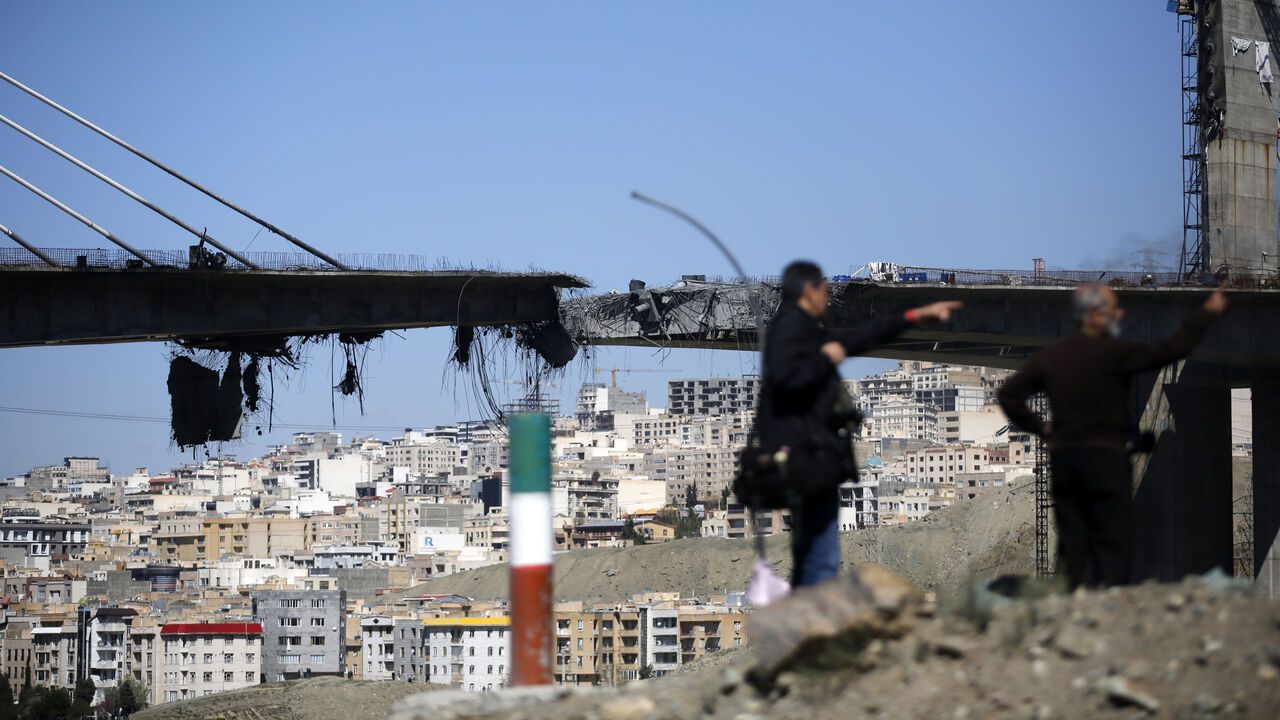
FOR THE first month of their war on Iran, America and Israel mostly spared civilian infrastructure. The second month began differently. On April 2nd, as families picnicked in a nearby valley, America damaged the B1, Iran’s tallest bridge. (Iranian drones struck a Kuwaiti oil refinery in response.) Days later Mr Trump first threatened to obliterate more bridges and power plants, then warned that “a whole civilisation will die” unless Iran eased its blockade on the Strait of Hormuz.
Fortunately it did not come to this. On April 7th America and Iran agreed to a two-week ceasefire. Though details of the agreement are still emerging, one thing is clear: it is unlikely to weaken the Iranian regime’s economic position. Perversely, this position has in fact already been strengthened by the damage visited on Iran’s civilian economy. That is because the activities of the mullahs and their elite fighting force, the Islamic Revolutionary Guard Corps (IRGC), are funded by a commercial empire, and war has been good for business. High oil prices are boosting revenues, as is the Guards’ ability to benefit from shipping and trade disruptions.
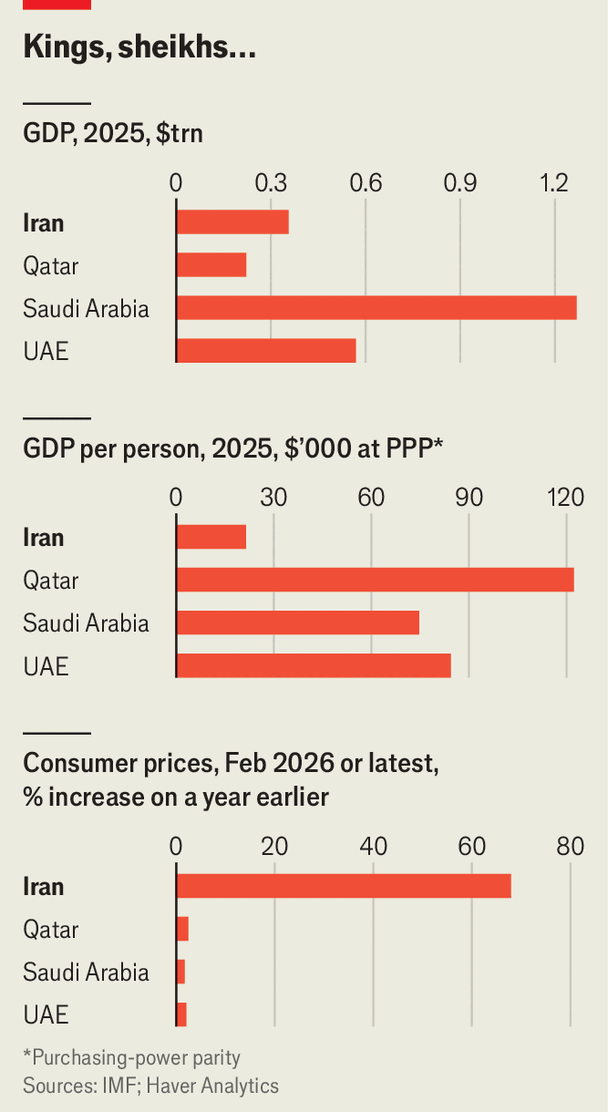
Ordinary Iranians’ lot was already painful owing to years of Western sanctions and, last June, 12 days of Israeli bombardment. The economy shrank last year and six in ten people of working age are thought to be out of work, which prompted protests against the regime in January. The 11,000 strikes carried out by America have brought daily life to a halt. An internet blackout has squeezed the services industry, which once employed half the workforce. The government claims that 7m people, or one in four workers, have volunteered for military service.
Foreign goods have become as scarce as employees and information. Iranian oil tankers are sailing freely through Hormuz, keeping energy exports flowing. But the flow of goods from Asia and the Gulf to Iran that had arisen despite the threat of American secondary sanctions has all but stopped. The United Arab Emirates (UAE), the source of nearly a third of Iranian imports in 2025, has not sent a single ship since it became the target of Iranian retaliation early in the conflict. It has closed its borders to most Iranians and stopped turning a blind eye to the thousands of shell companies in Dubai which helped Iran evade sanctions. Emirati authorities have arrested dozens on money-laundering charges and may freeze billions of dollars in Iranian assets even if the ceasefire holds.
The rial, already nearly worthless, has fallen by another 8% against the dollar on the black market since the war began. Annual inflation was just under 50% on the eve of war, and prices have since risen by another 6%, according to the central bank. The government has done little to cushion the impact of lost jobs or higher costs. Policymakers have printed cash to cover deficits for decades. Now the printing presses are awhirr again.
But the income of the regime and the IRGC is insulated from the vicissitudes of the broader Iranian economy. Proceeds come from three main areas: oil sales, domestic manufacturing and illicit trade. As Iran has been locked away from the outside world, all three have boomed.
Short of cash, the government pays for the IRGC in oil instead. The Guards processed roughly half of Iran’s oil exports in 2025, worth at least $30bn. A slick machine has been built to deliver shipments, mostly to China, and process payments while evading sanctions. Thousands of shell companies and money exchanges buried deep in banking systems in Russia and China make deals nearly impossible to trace. According to two people familiar with the matter, Iran’s central government has handed over more barrels than usual to the IRGC in the past month.
Who wants more moolah?
The Guards have thus become the chief Iranian profiteer from pricier oil. Despite the war, Iran has exported at least as much as it did on average last year, and earned nearly twice as much. If the IRGC controls the same portion of oil it did a year ago, it could have captured half of that revenue.
Domestic firms are a second source of finance. Each of the IRGC’s five branches owns sprawling conglomerates with stakes in roughly half of Iran’s firms, according to one official. These businesses construct pipelines, sell houses, make medicines and much besides. According to American officials, the IRGC is linked to Bahman, once the manufacturer of Mazda cars in Iran, and Sina Food Industries Development, a big producer of processed food.
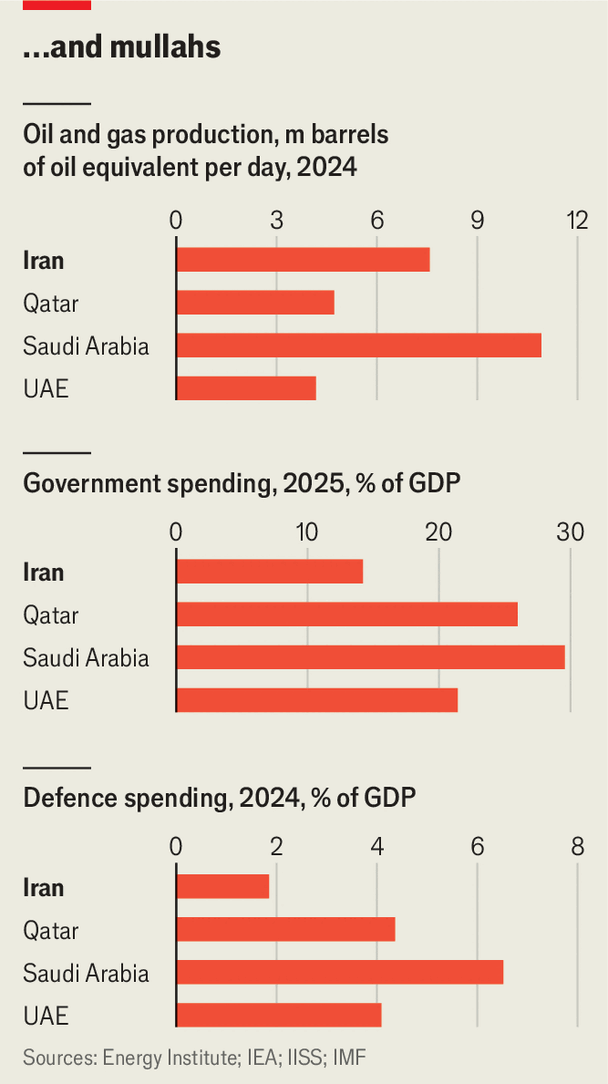
The IRGC’s manufacturers have benefited from wartime price rises and the sudden absence of foreign competition. Iranians normally favour higher-quality goods from Asia, the Gulf and Russia. They have had little choice but to turn to homegrown products. Two Western officials expect IRGC-linked firms’ profits from cosmetics and processed food to have doubled in a month. Other firms are smelting steel and aluminium, and making mechanical parts, prices of which have also jumped. The IRGC’s aluminium facilities are raking in more than before the war.
Rising prices have boosted the IRGC’s income from illicit trade, too. The Guards run ports, airports and border crossings, which gives it a near-monopoly over such trade. The weakening of Iran’s regional proxies such as Hamas and Hizbullah, which once helped run a network that smuggled cigarettes, drugs and food inside weapons shipments into and out of Iran, is a blow to supplies. But disruption to shipping has added a premium to smuggled goods, giving an advantage to Iranian traders, who can pass through the strait with relative ease. One Israeli official reckons that the IRGC’s smugglers will be earning more from its international narcotics business. If Iran succeeds in levying a formal toll of $2m for every ship passing through Hormuz, the regime could earn $50bn if traffic resumed to just half of pre-war levels of about 130 vessels a day.
The Emirati crackdown is an inconvenience for the IRGC, but not a disaster. Only a small share of the Iranian money stashed away in Dubai belongs to the regime, which has been wary of the UAE’s closeness to America, according to two American officials. Oil and arms payments are mostly processed through China, they say, which also stores the central bank’s reserves. Iran’s domestic payment system, Shetab, is linked to Russia’s Mir system, allowing banks to make transactions without worrying about extra sanctions. “It shows that these basic [payment systems] work in a crisis,” says one of the officials.
Prophet and loss
The war has not been without costs. Khatam al-Anbiya, the IRGC’s biggest conglomerate, runs factories making goods deemed important for national security, some of which are exported to China and Russia. Its weapons factories have come under heavy fire since the start of March. Iran’s two biggest steel mills closed on April 2nd after strikes, knocking out nearly 70% of production capacity. An Israeli official reckons a blackout in Tehran, which Iran blamed on Israeli strikes, may be the first instance of the regime saving power for its factories and oil infrastructure.
With luck, the ceasefire will bring respite to Iranian civilians. But the war has proved the remarkable resilience of the IRGC’s finances. The only way to eliminate the Guards’ financial firepower is to go after Iran’s oil. The pause in hostilities demonstrates that Mr Trump has no appetite for that. He knows the regime would respond by setting the Gulf’s energy infrastructure—and world markets—ablaze. ■
For more expert analysis of the biggest stories in economics, finance and markets, sign up to Money Talks, our weekly subscriber-only newsletter.