The latest Italian banking whodunnit has it all
A a coup, a conspiracy and even a (possibly unrelated) corpse
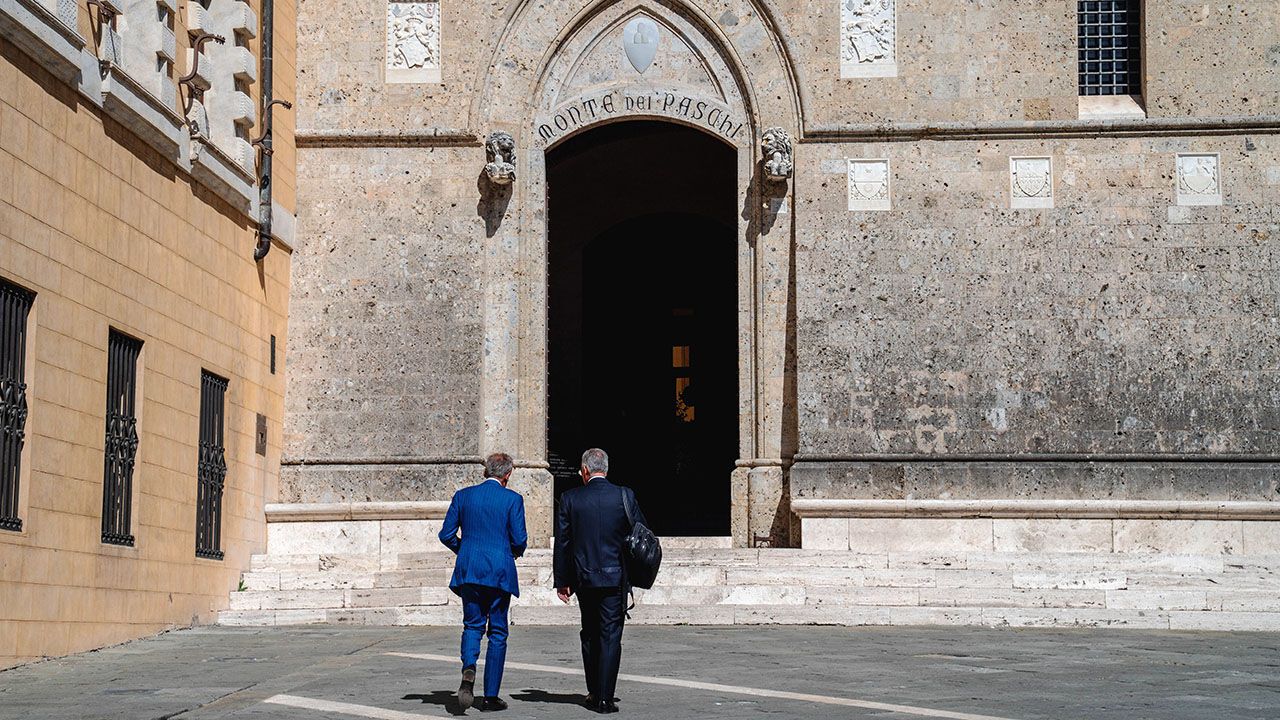
ITALIAN FINANCE at times gets operatic. But recent developments at the world’s oldest bank, Monte dei Paschi di Siena (MPS), due to hold its annual shareholder meeting on April 15th, would light up La Scala. They feature an alleged conspiracy and a boardroom coup, plus a cadaver.
The dead body is that of David Rossi, an MPS executive who fell to his death 13 years ago from his third-floor office at the bank’s headquarters in Siena. Police and judges decided it was suicide. But on March 3rd a parliamentary commission of inquiry revealed that its interim report challenged that conclusion. Citing expert analysis of Rossi’s injuries, the head of the commission said that the executive died because of “a crime”. Who might have killed Rossi remains a mystery. But he died amid a crisis that engulfed the bank, required a government bail-out and set the stage for the latest intrigue.
This began with MPS’s extraordinary revival. As part of the rescue plan, shareholders and some creditors took losses, €26bn ($31bn) in non-performing loans were sold in tranches to investors and MPS slimmed down to a core operation serving retail customers plus small and medium-sized businesses. Bad loans, which peaked at 37% of gross consumer lending in 2017, are now below 2%. Stable profits returned in 2023. Its market value ballooned from €2bn in late 2022 to €28bn in January.
Last year it felt robust enough to launch a successful €16bn bid for Mediobanca, a jewel in the crown of Italian finance that was once at the centre of a web of cross-shareholdings which controlled much of the industry. The Milan-based institution’s activities include consumer credit, investment banking, wealth management and insurance (through a 13% stake in Assicurazioni Generali, Europe’s third-largest insurer by premiums written).
The architect of the new MPS is Luigi Lovaglio, its boss since 2022. Yet on April 7th he was sacked by the outgoing board, after refusing to step down when he was left off its slate of new directors. His proposed replacement is Fabrizio Palermo, head of Acea, a Roman utility. Mr Palermo once ran Cassa Depositi e Prestiti, which manages Italy’s postal savings. Though he has no experience in retail banking (a fact that reportedly troubles the European Central Bank), several proxy advisers have counselled the institutional investors who hold more than half the shares in MPS to vote for the board’s slate.
MPS reportedly fears that Mr Lovaglio has become a liability. He and two of the bank’s biggest shareholders are under investigation on suspicion of market manipulation. Prosecutors in Milan claim that Francesco Gaetano Caltagirone, a Roman media and construction tycoon, and Francesco Milleri, who invests for the heirs of Leonardo Del Vecchio, a luxury-spectacles mogul, secretly hatched a plot to gain control of, first, MPS, then Mediobanca, and ultimately Generali. And that Mr Lovaglio was in on it. Under the alleged plot, Messrs Milleri and Caltagirone would, once their stakes were combined with MPS’s Mediobanca holding, own 30% of the insurer’s equity. All three men deny wrongdoing.
A contradictory explanation for Mr Lovaglio’s ousting is that, however chummy his past relations with the 83-year-old Mr Caltagirone, they fell out over what to do with Mediobanca once acquired. The CEO’s plan, approved by the outgoing board, would see Mediobanca delisted and parts of its business, including the stake in Generali, taken into MPS. That could make it harder for the octogenarian power-broker to engineer a takeover of the insurer.
Whatever the truth, Mr Lovaglio may be making a fight of it. Before his removal he headed a rival list drawn up by a minority shareholder. Mr Palermo could also stick to Mr Lovaglio’s strategy, despite his closeness to Mr Caltagirone. “MPS is a listed company with many shareholders who do not want to lose money,” says Stefano Caselli of the SDA Bocconi School of Management in Milan. And, amid the uncertainty surrounding the bank since the start of the year, they have: its share price is down by 14%, compared with a decline of 1% for European banks as a whole. ■
For more expert analysis of the biggest stories in economics, finance and markets, sign up to Money Talks, our weekly subscriber-only newsletter.