Artemis II has offered Earth inspiration
But rekindled Space Age enthusiasm will need new foundations if it is to endure
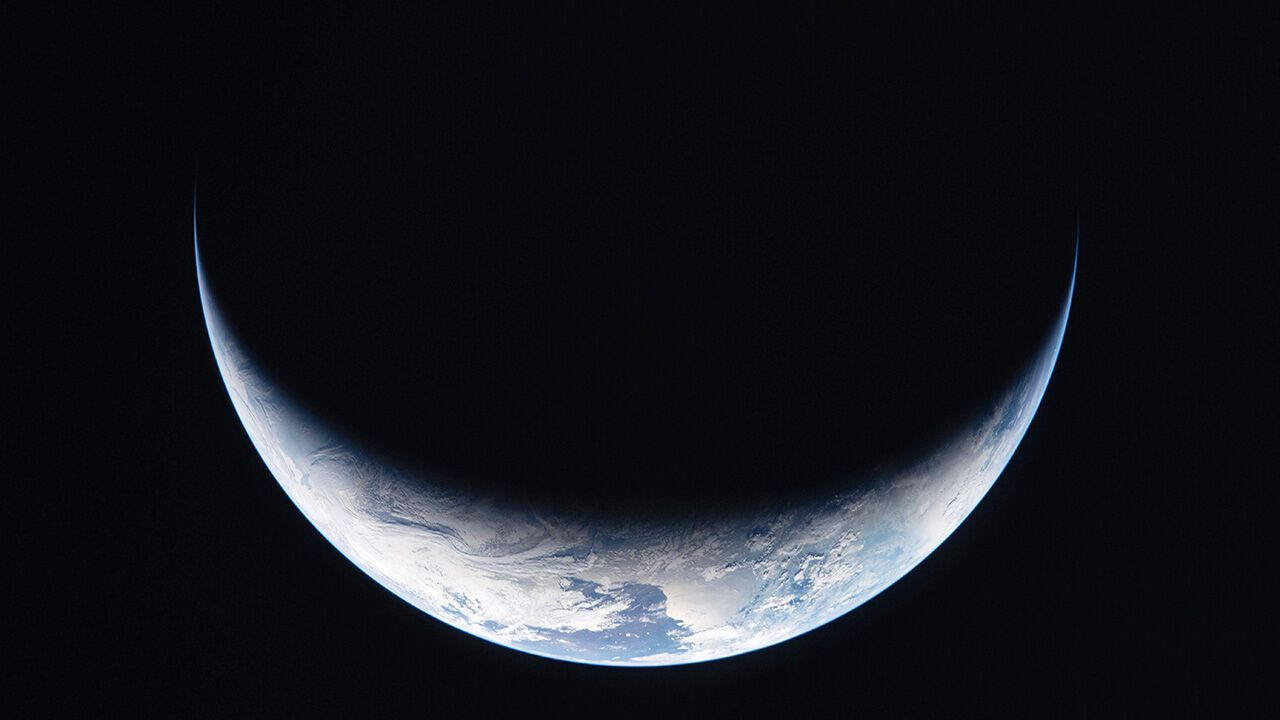
Editor’s note: On April 11th Artemis II splashed down in the Pacific Ocean after what NASA described as a “textbook” re-entry
On christmas day 1968, a boy called Michael Collins junior asked his father who was driving Apollo 8, then bringing home the first three men to have orbited the Moon. Collins senior, who oversaw communications with the spacecraft, passed his son’s question on to Bill Anders, one of the crew. There was a pause. Then Anders replied: “I think Isaac Newton is doing most of the driving right now.” From when it had left lunar orbit until its planned splashdown on December 27th, the spacecraft’s path was almost entirely set, like that of a falling rock, by the law of universal gravitation.
Sir Isaac does a lot of this sort of work for spacecraft. After the fiery leap of lift-off they spend most of their time coasting. Integrity, the capsule that houses the crew of NASA’s Artemis II mission, has used its main engine only twice, once to change its orbit around Earth, once to leave it. The crew of Apollo 8 depended on a burst from their main engine to get into lunar orbit without hitting the surface (“Longest four minutes I ever spent,” said Jim Lovell, the pilot). Integrity’s crew just cruised on by, their elegant figure-of-eight trajectory taking them past the Moon and farther from Earth than any previous astronauts before beginning the long fall back.
This is not to say the four astronauts—three American, one Canadian—have not been busy, particularly during their passage over the parts of the Moon that cannot be seen from Earth. To terrestrial Moon-watchers Mare Orientale is a hard-to-spot smudge right at the edge of the Moon. To the astronauts passing almost directly above it, it was a dark bullseye set among concentric mountain ranges, ripples of rock left by the shock unleashed when a sizeable asteroid smacked into the Moon less than 4bn years ago. The “targeting plan” put together to guide the astronauts’ observations helpfully notes that its diameter is roughly the distance between Johnson Space Centre in Houston, Texas, where they trained, and Kennedy Space Centre in Florida, from which they blasted off.
Other features to which the plan drew the crew’s attention, such as Pierazzo, a far-side crater about 9km across, have previously been appreciated only by cognoscenti. It was named after Elisabetta Pierazzo, who specialised in the study of impact craters; remote measurements of its fresh and intriguing features have been pored over by her colleagues and successors. It seems unlikely that the astronauts’ brief inspection will have added much. “It’s a spectacular crater and it’s nice to remember Betty,” says a scientist. “But I don’t expect any new science results from Artemis II.”
Remembrance also informed the most moving of the observations, those of a fresh and previously unrecorded crater on the edge of the Moon’s far side. The crew is recommending it be officially named Carroll, after Carroll Taylor Wiseman, the late wife of the mission commander, Reid Wiseman. How tears behave in the absence of gravity is not thought to be part of the crew’s research agenda, but the message by which they told the world of their choice made it clear they had found out.
That the mission has produced more by way of emotion than by way of science—or, thinking of Lovell’s four minutes, jeopardy—is not a criticism. Integrity’s flight along a path very like that taken by the uncrewed Artemis I capsule in 2022 was never likely to provide scientific surprises, and any major technical ones would have been very unwelcome. And so the crew’s experience has come to the fore. Even if, at times, their expressions of awe, humility and cosmic connection have felt a touch too scripted, they have made possible not new discovery, but rediscovery: a reminder to millions back on Earth that such things can still move them and inspire them.
The Moon has lost her memory
No picture of Earth and the Moon today can supersede Anders’s picture of “Earthrise”; it has had half a century to become an icon. But the importance of “Earthrise” has never been just what the camera saw. It was the presence of somebody behind the camera, someone in a position to see such a thing. For most people alive today there has never been such a presence. The feelings Artemis II evokes by restoring it are no less real to those people for having been felt before.
Unless re-entry sees Integrity fail tragically to live up to its name, this emotional affirmation will endure for some time. The role that Elon Musk and SpaceX are meant to play in the next Artemis mission may sour the vibes—many idealists stirred by images of Earth as a common home revile the politics of division he fosters. But Artemis IV’s promise of a lunar landing soon thereafter should restore the mood.
What, though, of the steady stream of missions planned for after that—those intended to build and provision a Moon base? They will, by their nature, feel increasingly routine. The rapture that greeted Apollo 8’s first journey to the Moon, and later the first landing, was soon eclipsed by Vietnam, oil crises, Watergate and more. To maintain it, and the support it brings, for a decade or more this time will require new discoveries, or arguments, or dreams—not just remixes of those that came before. Spaceships can coast. Space programmes cannot. ■
Subscribers to The Economist can sign up to our Opinion newsletter, which brings together the best of our leaders, columns, guest essays and reader correspondence.