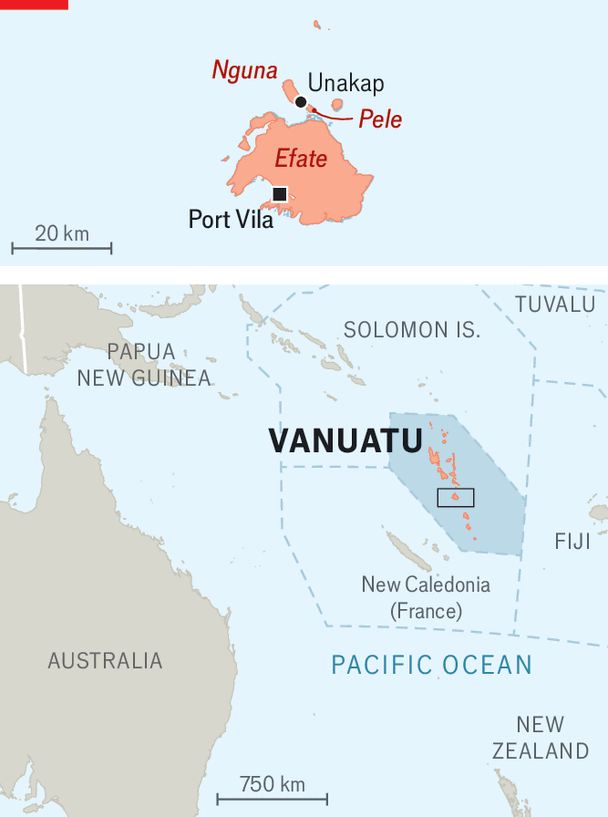
Nguna is one of the smaller of some 83 islands that make up the South Pacific archipelago(群岛) of Vanuatu. It hardly rates a mention in the global politics of climate change, but its people want their voices to be heard. After all, they are living with the effects—close up(近距离地,亲身).
恩古纳是组成南太平洋瓦努阿图群岛的大约83个岛屿中较小的一个。它在全球气候变化政治中几乎不值一提,但其人民希望自己的声音被听到。毕竟,他们正亲身承受着这些影响。
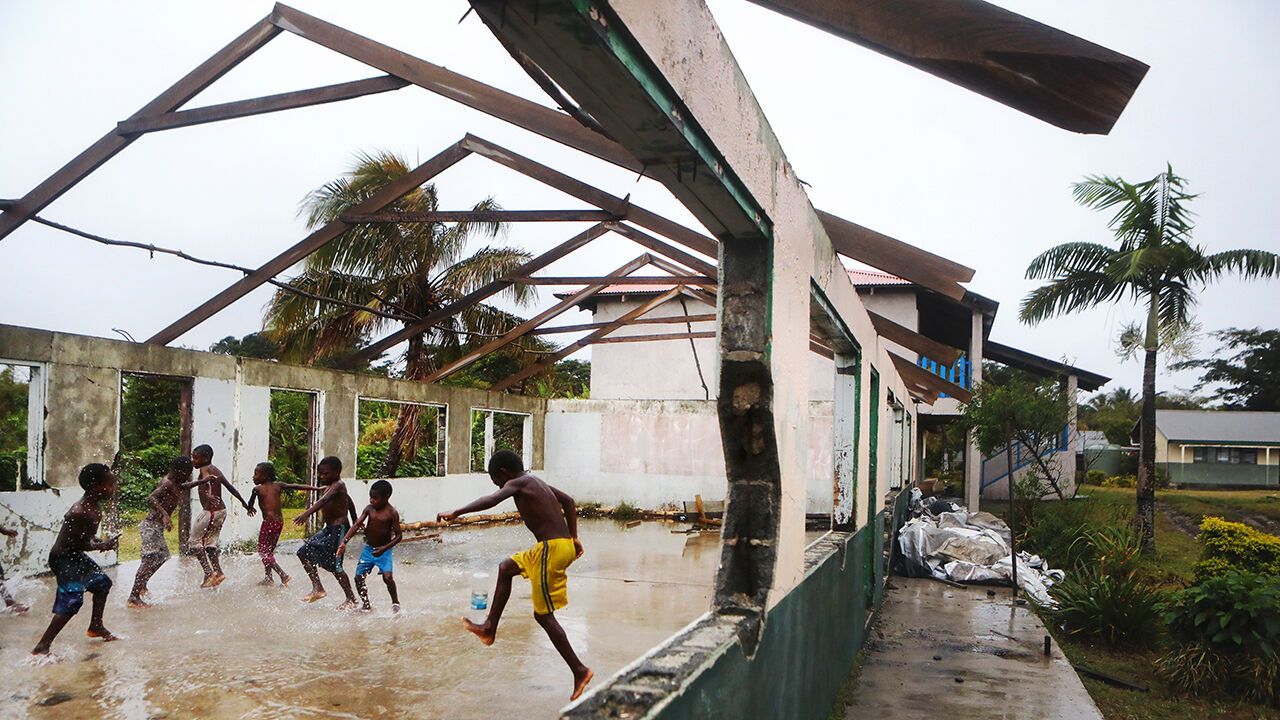
Inneth Tasururu teaches at the little school in Unakap, a village on Nguna just off the coast of Efate, where the capital, Port Vila, stands. Not so long ago she was a pupil playing in its playground. When asked where the sea was then, her eyes glaze over a little and she says just one word: “Far.”(当被问及那时海在哪里时,她眼神有些恍惚,只吐出一个词:“远。”) Locals estimate that in recent decades the shoreline in Unakap has come in(向内推进(指海岸线)) by something like 20 metres. The school’s old football field is under water, and attempts to build coastal defences have all failed, washed away or broken by high tides and storms.
因内斯·塔苏鲁鲁在乌纳卡普的小学教书,这是恩古纳岛上的一个村庄,靠近埃法特岛海岸,首都维拉港就位于那里。不久前她还是这里的学生,在操场上玩耍。当被问及那时海在哪里时,她眼神有些恍惚,只吐出一个词:“远。”当地人估计,近几十年来乌纳卡普的海岸线向内陆推进了大约20米。学校旧足球场已被淹没,修建沿海防御工事的尝试都失败了,要么被冲走,要么被高潮和风暴摧毁。
After each storm, changes can be seen. The shores of Nguna island and its neighbours are littered with(充满、散落着) fallen trees, undermined(削弱、破坏(基础)) by erosion. Other trees have most of their roots exposed, ready to fall next. Metal spikes stand out in places, the ruins of failed defences, and the path to the school is being eaten away(侵蚀、逐渐破坏) by the waves. “All the communities in the islands are affected,” says Whitely Tasururu, a local man who advises the government on the issue.
每次风暴过后,都能看到变化。恩古纳岛及其附近岛屿的海岸上散落着倒下的树木,它们被侵蚀掏空了根基。其他树木大部分根部裸露,随时可能倒下。金属桩子突兀地立在那里,是失败防御工事的遗迹,而通往学校的小路正被海浪吞噬。“岛上所有的社区都受到了影响,”当地男子惠特利·塔苏鲁鲁说,他是政府此问题的顾问。