Shipping is not the safest industry—just ask any oil-tanker captain in the Persian Gulf. That’s why gatherers at Edward Lloyd’s coffee house in London, from around 1688, decided to share the financial risk for the hairiest(最危险的) seafaring ventures. More than three centuries later, a shipowner wanting to insure a vessel passing through the Strait of Hormuz is still likely to call on(拜访;请求) the city’s specialists for a quote(报价).
航运并非最安全的行业——随便问问波斯湾的油轮船长就知道了。这就是为什么从1688年左右起,伦敦爱德华·劳埃德咖啡馆的聚集者们决定为最危险的海上冒险分摊财务风险。三个多世纪后,想要为通过霍尔木兹海峡的船舶投保的船东,仍然很可能向伦敦的专业人士询价。
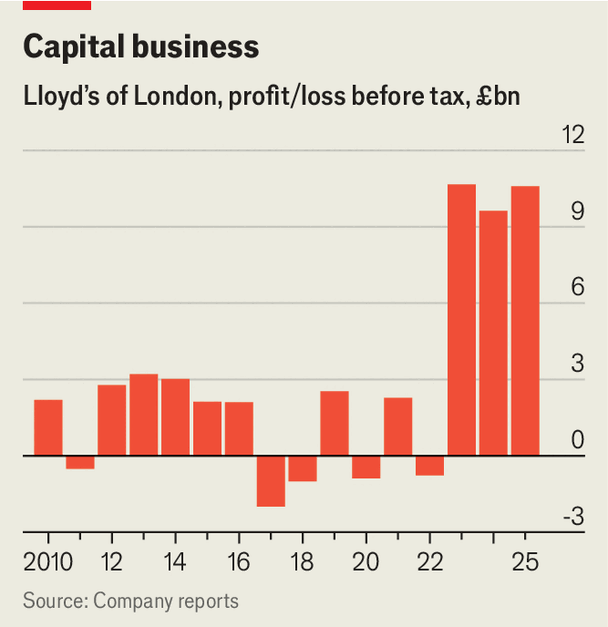
Data from the London Market Group (LMG), a trade body, showed that London’s wider specialty-insurance and reinsurance(再保险) market supported 61,000 jobs in 2024. The Lloyd’s of London marketplace, a descendant(后代,后裔) of the old café, makes up(构成,占) around 40% of that $187bn business, and now covers far more than just shipping. It wrote nearly £60bn-worth ($81bn) of contracts in 2025, doubling in real terms since 2015.
来自行业组织伦敦市场集团(LMG)的数据显示,2024年伦敦更广泛的专业保险和再保险市场支撑了6.1万个就业岗位。作为老咖啡馆后裔的劳合社,占据了这一1870亿美元业务的约40%,且如今涵盖范围远不止航运。2025年,它签订了价值近600亿英镑(810亿美元)的合同,自2015年以来实际价值翻了一番。
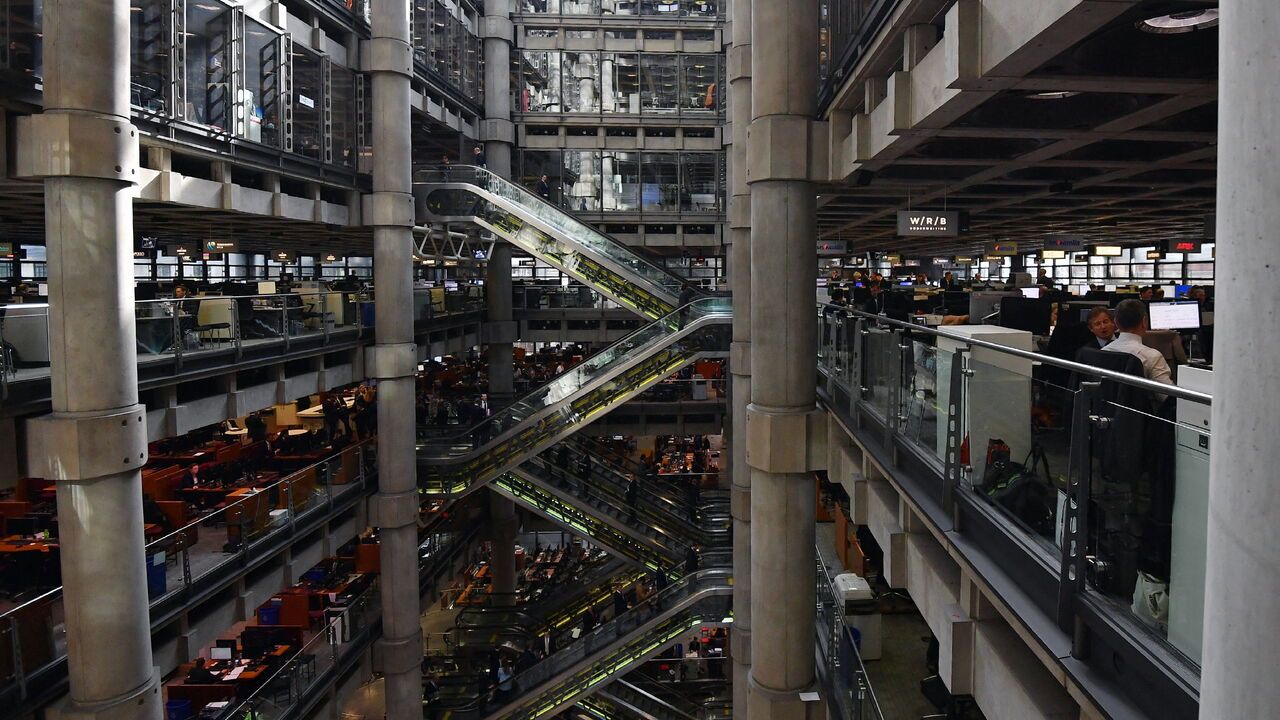
One of its strengths is the concentration of specialists. Like its caffeine-dispensing Stuart forebear(祖先,前辈), the Lloyd’s building in London serves as a meeting place. Today, it bustles(熙熙攘攘) with brokers and underwriting syndicates, which write policies(签发保单) and share risk. This structure promotes innovation. The first policies for a car, plane and satellite were written there. More recently, it has carved out a niche in cyber and energy-infrastructure insurance—and it has grown its share of the global marine, energy and property insurance markets. Interest in those areas recently prompted Zurich, a Swiss insurance giant, to acquire Beazley, a large underwriter.
其优势之一是专家的集中。如同其提供咖啡因的斯图亚特王朝前辈,伦敦劳合社大楼充当着聚会场所。如今,这里充斥着经纪人和承保辛迪加,他们制定保单并分担风险。这种结构促进了创新。汽车、飞机和卫星的首批保单都在这里诞生。最近,它在网络和能源基础设施保险领域开辟了细分市场,并扩大了在全球海运、能源和财产保险市场的份额。对这些领域的兴趣最近促使瑞士保险巨头苏黎世收购了大型承保商Beazley。