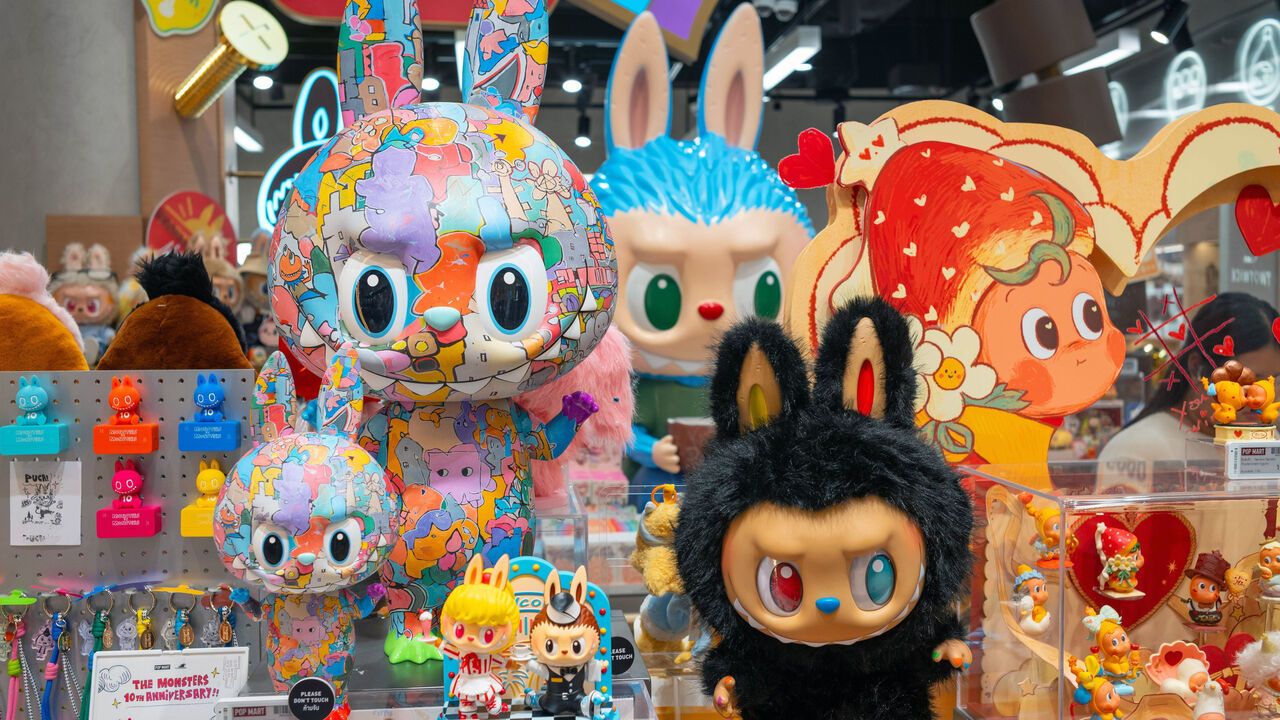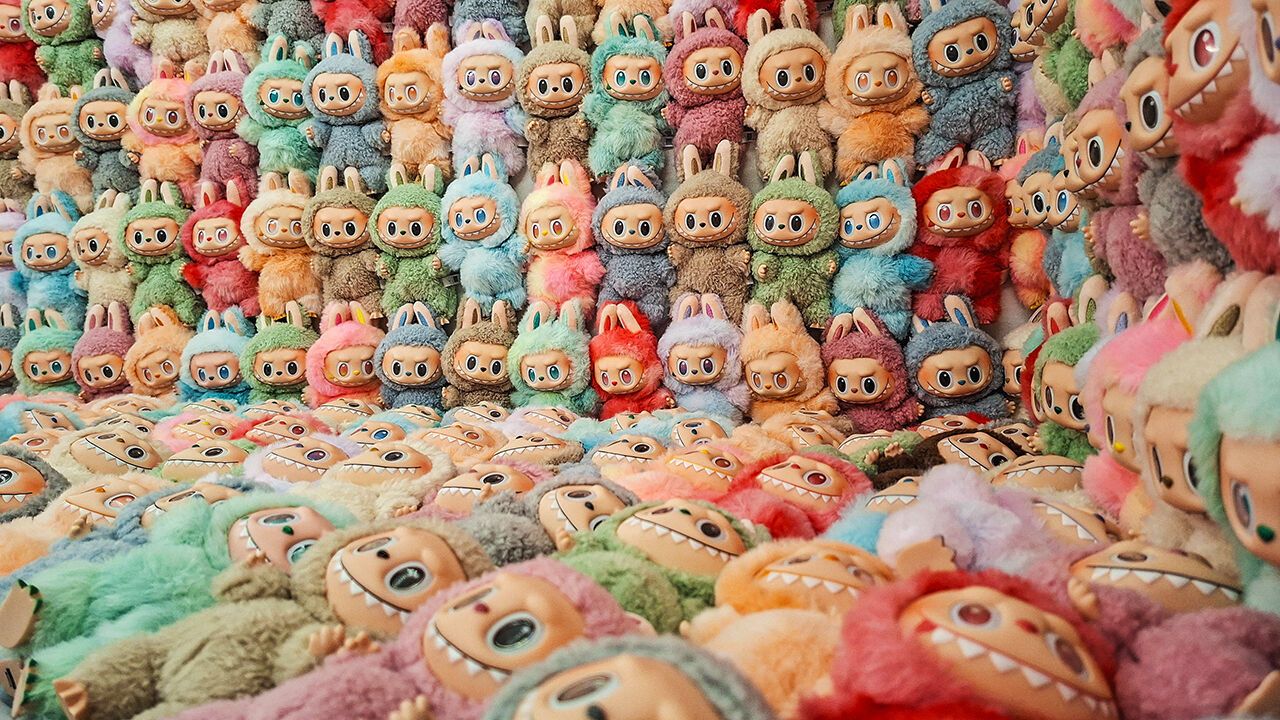
Imagine a baby elf in a onesie(连体衣). Now imagine that it has had its teeth sharpened and been possessed(被着魔的) by the devil: that gives you a sense of the aesthetic(美学,审美) of a Labubu doll. Lots of Labubu-lovers sport(炫耀,穿戴) the creatures on keychains, but you can get a 40-inch Mega Labubu at a Pop Mart shop in London for £850 ($1,150). Why anyone would buy it for even a tenth of that price is beyond your correspondent(超出……的理解).
想象一个穿着连体衣的精灵宝宝。再想象它的牙齿被磨尖,被恶魔附身:你就能感受到Labubu娃娃的美学了。许多Labubu爱好者把这种小怪物挂在钥匙扣上,但你可以在伦敦的泡泡玛特店里花850英镑(1150美元)买到一个40英寸的巨型Labubu。为什么有人会花哪怕十分之一的价格买它,本报记者实在无法理解。
Compared with some Labubus, however, it is a steal(便宜货,价格极低). In June a Chinese auction house(拍卖行) sold a four-foot-tall Labubu (confusingly described as “human-sized”) for $150,000. You can forget about precious metals, cryptocurrencies and the stocks of companies planning to launch data centres in space. This is far and away(无疑,显然) the weirdest speculative mania(投机狂热) out there.
然而,与某些Labubu相比,它简直就是便宜货。今年6月,一家中国拍卖行以15万美元的价格出售了一个四英尺高的Labubu(令人困惑地描述为“真人大小”)。你可以忘掉贵金属、加密货币和那些计划在太空发射数据中心的公司股票。这绝对是目前最离奇的投机狂潮。
Talking about a bubble in Labubu dolls puts a strain on(给……带来压力/挑战) the category. In financial markets, a bubble forms when an asset’s price rises to a level that could possibly be justified(被证明合理) by fundamentals. (Think of euphoric(狂喜的,极度兴奋的) traders bidding up(哄抬价格) a company’s equity value to hundreds or thousands of times its underlying(基础的,潜在的) annual earnings.) For some assets, it is famously difficult to pin these down(确定,明确)—as with gold, which generates no cash flows and yet has been prized as a store of value for millennia(千年(复数)). Creepy elf dolls take the problem a step further. How can you tell whether prices are out of whack with fundamentals if there aren’t any to begin with?(反问句,讽刺无基本面)
谈论Labubu娃娃的泡沫对这个概念本身构成了挑战。在金融市场中,当资产价格上涨到由基本面根本无法证实的水平时,泡沫就形成了。(想想那些兴高采烈的交易者,把一家公司的股权价值哄抬到其基础年收入的数百甚至数千倍。)对于某些资产,要确定基本面是出了名地困难——比如黄金,它不产生现金流,但数千年来一直被视为价值储藏手段。而可怕的精灵娃娃则把这个问题又推进了一步。如果一开始就没有基本面,你怎么判断价格是否与之脱节呢?