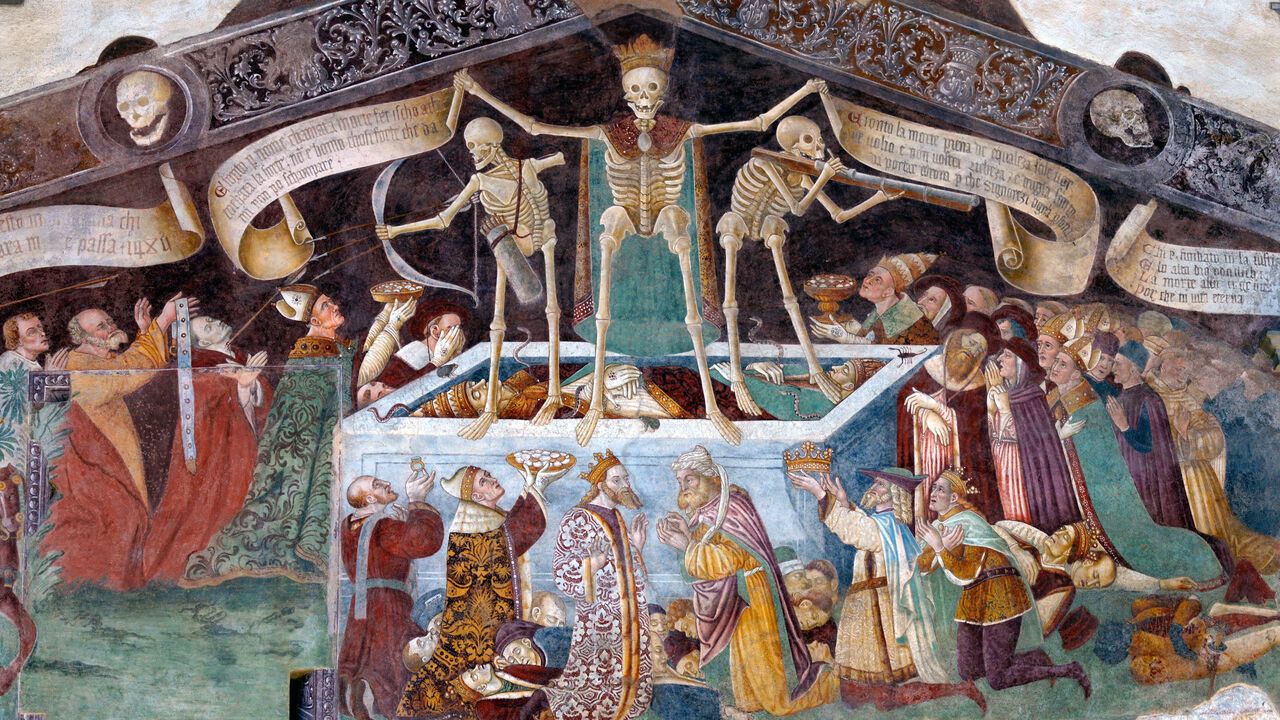
The Black Death: A Global History. By Thomas Asbridge. Random House(兰登书屋(出版社名)); 544 pages; $38. Allen Lane; 560 pages; £40
《黑死病:全球史》托马斯·阿斯布里奇著。兰登书屋;544页;售价38美元。艾伦·莱恩出版社;560页;售价40英镑。
The disease seems to have emerged(出现,浮现) in Asia. It soon reached Europe, ravaging Italy first. It killed millions, often quickly. Many people perished(死亡,消逝) at home, or died within a few hours or days of receiving medical treatment. So large was the death toll and so great was the danger of contagion that funerary customs were disrupted. People fled cities. All this was true of covid-19. It was also true of the Black Death.(这一切对于新冠病毒来说也是如此。对于黑死病也是如此。)
这种疾病似乎起源于亚洲。它很快到达欧洲,首先在意大利肆虐。数百万人迅速死亡。许多人在家中丧生,或在接受治疗后的几小时或几天内死亡。死亡人数如此庞大,传染危险如此巨大,以至于丧葬习俗被打乱。人们逃离城市。这一切对于新冠也是如此。对于黑死病也是如此。
As Thomas Asbridge describes in detail, the medieval plague was much deadlier. Many towns and cities lost almost half their inhabitants in the first wave of the disease, in the mid-14th century; subsequent waves were smaller but nonetheless(尽管如此,仍然) terrifying. In Damascus a poet observed that “The plague sat like a king on a throne.” One English village was hit so hard that it did not recover its pre-plague population until the 19th century.(一个英国村庄遭受重创,直到19世纪才恢复其瘟疫前的人口。)
正如托马斯·阿斯布里奇详细描述的那样,中世纪瘟疫致命得多。许多城镇在14世纪中期的第一波疫情中失去了近一半的居民;随后的几波规模较小,但同样可怕。在大马士革,一位诗人观察到“瘟疫像国王一样坐在宝座上”。一个英国村庄遭受重创,直到19世纪才恢复其瘟疫前的人口。