THE LATEST update to the IMF’s global economic statistics in April made grim reading(令人沮丧的阅读材料) for patriotic(爱国的) Indians. The fund estimated that Britain, home to 70m people, had overtaken its 1.45bn-strong former colony to regain the title(重新获得头衔) of the world’s fifth-largest economy. India dropped to sixth place. The reordering is largely the fault(过错、责任) of the rupee. India’s currency lost around a tenth of its value(贬值约十分之一) against the dollar in the fiscal year to the end of March.
国际货币基金组织(IMF)4月更新的全球经济统计数据让爱国的印度人读来心情沉重。该机构估计,拥有7000万人口的英国已超越其拥有14.5亿人口的前殖民地,重新夺回世界第五大经济体的头衔。印度跌至第六。这一排序的变动很大程度上归咎于卢比。在截至3月底的财年中,印度货币对美元贬值了约十分之一。
The GDP rankings do not matter (beyond wounded pride(受伤的自尊心)). India, which is growing five times as fast as Britain, will reclaim(重新获得) its fifth spot before long. But the weak rupee does reflect something troubling: India’s struggle(艰难斗争) to attract the foreign capital it needs to fuel growth and finance its ever pricier imports(推动增长并为越来越贵的进口提供资金), including of energy from the war-torn Gulf(饱受战争蹂躏的波斯湾).
GDP排名并不重要(除了伤害自尊心)。印度经济增长速度是英国的五倍,很快就会夺回第五的位置。但疲软的卢比确实反映出一些令人担忧的问题:印度难以吸引维持增长所需的外国资本,以及为日益昂贵的进口(包括来自饱受战争蹂躏的波斯湾地区的能源)提供资金。
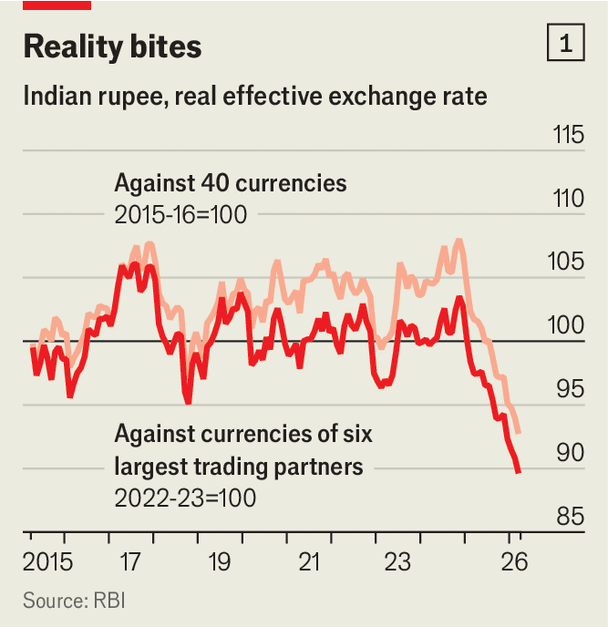
The head of the Reserve Bank of India (RBI), Sanjay Malhotra, previously suggested that a modest depreciation(适度贬值) against the dollar is “normal” for a currency like the rupee—an arithmetic consequence(算术上的结果) of India’s inflation being higher than America’s. It keeps the real value of Indian and American goods equal. In the 12 months to March, however, inflation in both countries was virtually identical, at a smidge(一点点) above 3%. The rupee’s 11% drop against the greenback(美元(美钞)) thus resulted in a collapsing real effective exchange rate(崩溃的实际有效汇率) (see chart 1). Nearly two-thirds of that decline predate(早于……发生)s the Gulf energy crisis.
印度储备银行(RBI)行长桑杰·马尔霍特拉此前曾表示,对卢比这样的货币来说,对美元适度贬值是“正常的”——这是印度通胀高于美国的算术结果。它使印度和美国商品的真实价值保持相等。然而,在截至3月的12个月里,两国的通胀率几乎相同,都在3%以上一点点。因此,卢比对美元11%的跌幅导致实际有效汇率崩溃(见图表1)。其中近三分之二的下跌发生在波斯湾能源危机之前。