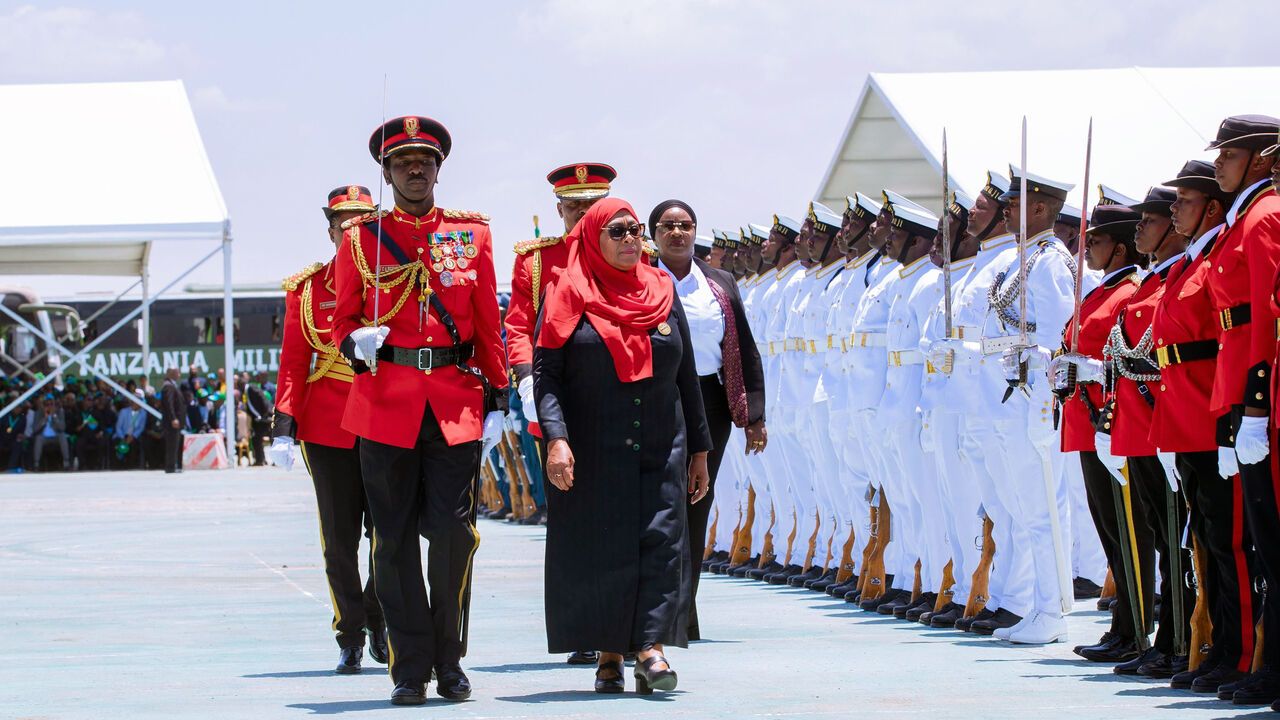
Tanzania has had dramatic ups and downs(大起大落). In the 1970s the government of this east African country forced farmers into collective villages at gunpoint(在枪口威胁下), causing horrific food shortages. In the 1980s it abandoned utopian socialism(乌托邦社会主义) and the economy took off. After the cold war, it scrapped(废弃,取消) its one-party system and let others contest elections (though the ruling Party of the Revolution, Chama Cha Mapinduzi(), has never lost). Political stability and better economic policies lifted living standards: since 1995 income per person has quintupled(增至五倍).
坦桑尼亚经历了戏剧性的起伏。20世纪70年代,这个东非国家的政府用枪逼迫农民进入集体村庄,导致可怕的粮食短缺。80年代,它放弃了乌托邦式的社会主义,经济开始腾飞。冷战后,它废除了一党制,允许其他人参加竞选(尽管执政的革命党——查马查马平杜齐——从未输过)。政治稳定和更好的经济政策提高了生活水平:自1995年以来,人均收入增长了五倍。
But now the repressive regime(专制政权) of President Samia Suluhu Hassan threatens Tanzania’s achievements and its future. The latest whitewashing(粉饰,掩盖) of a post-election massacre(大屠杀) of protesters and bystanders suggests that her government does not think the country’s 70m people deserve a say(应有发言权) in how they are ruled.
但现在,总统萨米亚·苏卢胡·哈桑的专制政权威胁到坦桑尼亚的成就和未来。最近对选举后抗议者和旁观者屠杀事件进行的粉饰表明,她的政府认为这个国家7000万人民不配在如何被统治方面拥有发言权。
When Mrs Samia first came to power(上台,执政) in 2021, she gave many signs of being a reformer. Her predecessor, John Magufuli, had started a lurch(突然倾斜,急剧变化) back towards authoritarianism, erratically(反复无常地) bullying dissidents(异见人士) and foreign investors. When he died, reportedly of covid-19, a virus whose presence in Tanzania he denied, he was succeeded by his vice-president, Mrs Samia.(当他去世时——据报道死于新冠肺炎,一种他否认存在于坦桑尼亚的病毒——他的副总统萨米亚夫人接任。)
当萨米亚夫人于2021年首次上台时,她表现出许多改革者的迹象。她的前任约翰·马古富力开始急剧倒退至威权主义,反复无常地欺凌异见人士和外国投资者。当他去世时——据报道死于新冠肺炎,这是一种他否认存在于坦桑尼亚的病毒——由他的副总统萨米亚夫人接任。
Samia’s shameful sham
萨米亚的可耻骗局