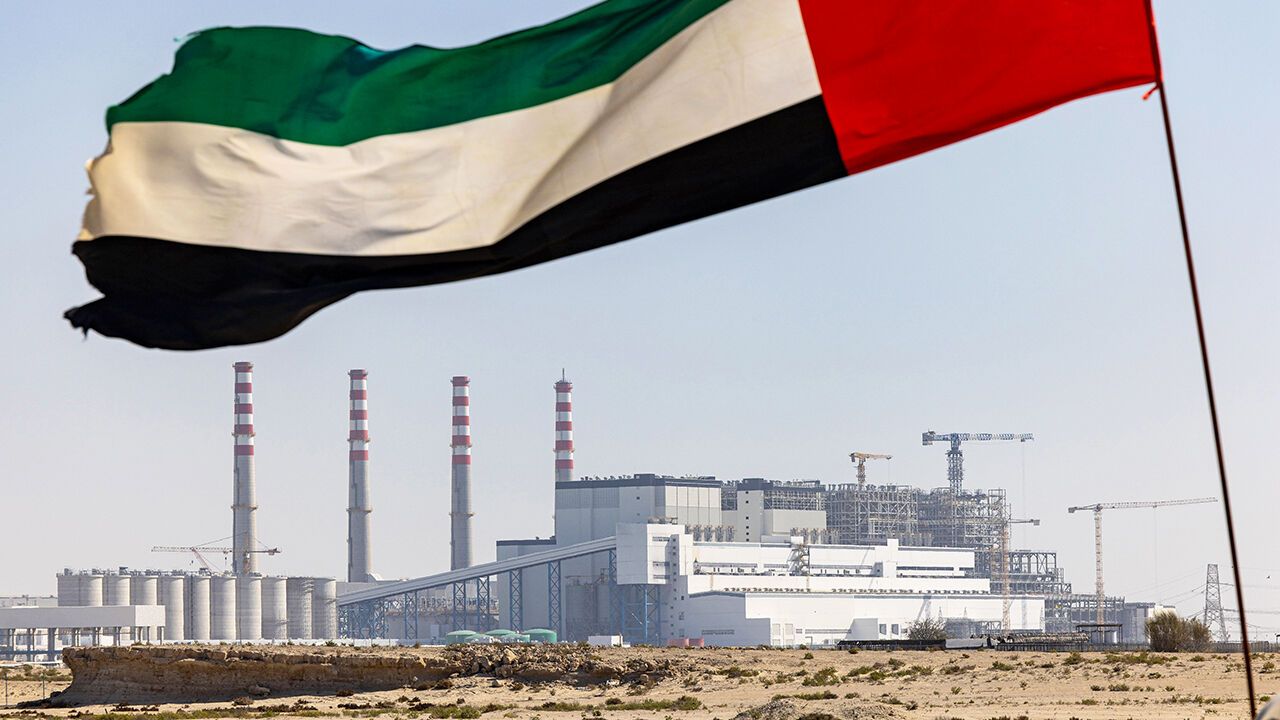
AT LAST IT has jumped. For years the United Arab Emirates (UAE) chafed at(恼怒;感到不满) restrictions that came with membership of the Organisation of the Petroleum Exporting Countries (OPEC). It had even threatened to quit; and on April 27th, in the middle of a war, it stormed out(愤然退出;拂袖而去).
终于行动了。多年来,阿联酋一直对石油输出国组织(OPEC)成员国身份带来的限制感到不满。它甚至曾威胁要退出;而在4月27日,一场战争正在进行之际,它毅然退出了。
That raises two sets of questions. The straightforward(简单的;直接的) one is about the future of OPEC itself. A more complex one is about security in a part of the world rocked by the war with Iran. In spite of all the problems that America and Israel have caused the Emirates with their unfinished campaign, the UAE’s abandonment of OPEC has sent an unambiguous(明确的;毫不含糊的) signal that it remains in their camp. As much as that may please President Donald Trump, it is a slap in the face(一记耳光;公然侮辱) for the rest of the Gulf, and especially Saudi Arabia.
这引发了两类问题。直接的问题是OPEC本身的未来。更复杂的问题是关乎一个被与伊朗的战争所震动的地区的安全。尽管美国和以色列尚未完成的战役给阿联酋带来了诸多问题,但阿联酋放弃OPEC发出了一个明确的信号:它仍然站在美以阵营。这或许令唐纳德·特朗普总统感到满意,但对于海湾其他地区,尤其是沙特阿拉伯来说,这是一记耳光。
The Emiratis(阿联酋人) have good reason for leaving OPEC. In the next few years they want to increase oil production, from 3.6m barrels a day to 5m. Other members prefer to try to keep the price of oil high; the Emiratis want volume(产量;数量).
阿联酋人有充分的理由离开OPEC。在未来几年,他们希望将石油产量从每天360万桶提高到500万桶。其他成员国倾向于试图维持高油价;阿联酋人想要的是产量。