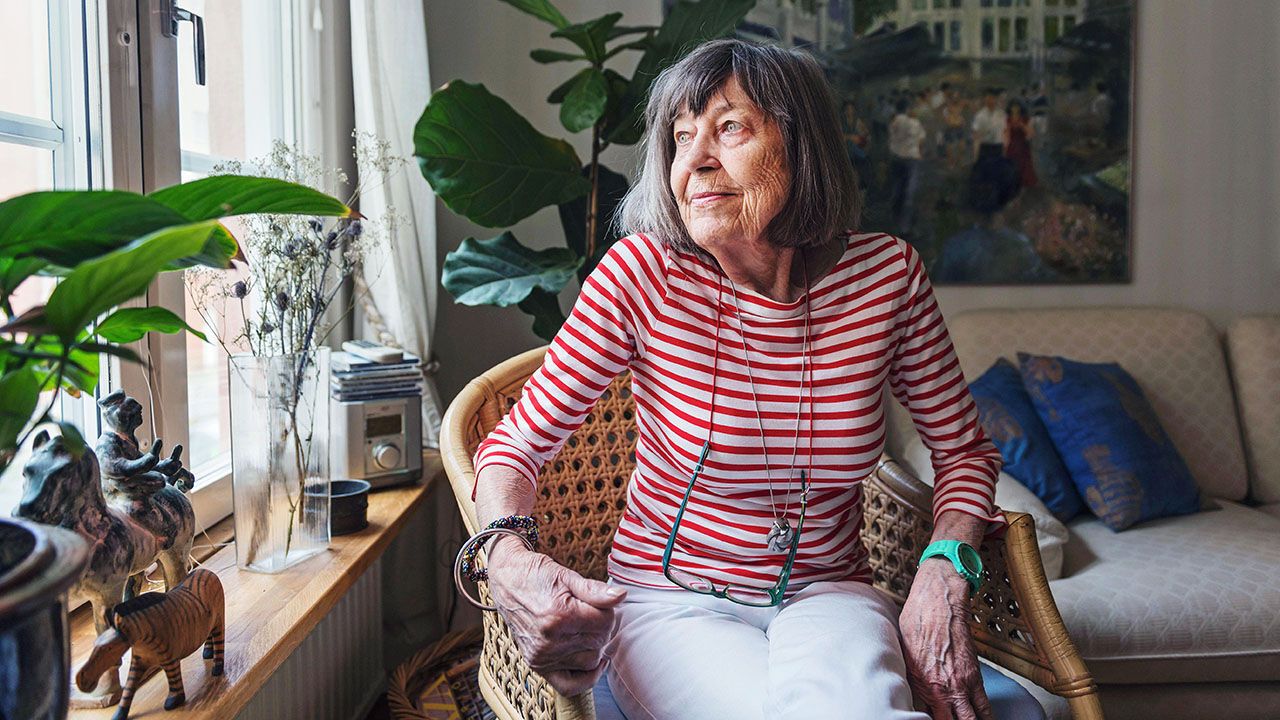
In recent years you might have seen her in the streets of Stockholm, a slightly bent old woman in a bright stripey top. She pushed a walker-stroller(助行推车) and wielded a grabber with which, neatly, she removed cigarette butts from the pavement. Each butt-removal gave her a small rush, like an absolution(赦免;宽恕). As a heavy smoker for years, Margareta Magnusson was tidying up after herself.
近年来,你可能在斯德哥尔摩的街头见过她,一位穿着亮条纹上衣、微微驼背的老妇人。她推着助行推车,手持一把捡拾器,灵巧地从人行道上捡起烟头。每次捡起一个烟头,她都会感到一阵小小的快感,如同获得赦免。作为一名多年的重度吸烟者,玛格丽塔·马格努森是在清理自己的遗留物。
That habit possessed her(控制了她;占据了她). Back at home she had nothing in the attic and, in the cellar, only an ancient bike. She had cleared out the cupboards in the hall, traditional resting place of unwearable old shoes. From the kitchen she had given away, among all sorts of other stuff, ten plates (why have 16, if your dining table seated only six?) and her infallible wok, which she had once worn as a hat to a fancy-dress party(化装舞会). Her two-bed flat held every piece of furniture she needed and no more, for she had plotted out their size and position on graph paper before she moved in. Any books remaining had already been picked over by family and friends. Clothes had been sorted into two brisk piles, Keep or Don’t Keep. Most were condemned. As for knick-knacks, they had to be either useful or full of meaning to be allowed to stay. Cushions and candles she still bought new, to be cosy, and a lot of chocolate—key to a joyous old age—was stowed around the place.
这种习惯占据了她。回到家时,阁楼上空无一物,地下室里只有一辆旧自行车。她清理了门厅的橱柜,那里通常是穿不下的旧鞋的安息之所。从厨房里,她送走了各种各样的东西,包括十个盘子(如果餐桌只能坐六个人,为什么要有16个?)和她的不粘锅,她曾经戴着它当帽子参加化装舞会。她的两居室公寓里只有她需要的家具,一件不多,因为她搬进来之前就在方格纸上规划好尺寸和位置。任何留下的书都已经让家人和朋友挑选过。衣服被分成两堆:保留或不保留。大部分都被判了死刑。至于小摆设,它们要么有用,要么充满意义,才能被允许留下。靠垫和蜡烛她还会买新的,为了舒适,还有大量的巧克力——快乐晚年的关键——藏在房子各处。
She kept life simple partly because she was tidy-minded, interrupting conversation to snip a cyclamen or rouse a storm among the books with her duster. Partly, too, reducing skräp(垃圾;废物(瑞典语)) in old age was traditional in Sweden, a clear-eyed and unsentimental place, where the Vikings had filled graves with the corpse’s clutter to get it out of the way. It was called döstädning(死亡整理(瑞典语)), death-cleaning. Men could seldom do it, keeping even a rusty nail in case it might come in useful, but women could, and she was obsessive. Why leave all your accumulated crap for other people to deal with, typically your children, who had to take time off work to sort it out? It was your moral duty, before you died, to slim it down. It was also your duty to the planet, before you left it. Fired with this idea she wrote “The Gentle Art of Swedish Death-Cleaning” and in 2017, at 81, had a global bestseller on her hands.
她保持生活简单,部分是因为她有洁癖,会打断谈话去修剪仙客来,或者用鸡毛掸子在书中掀起一阵风暴。部分也是因为在瑞典,在老年时减少杂物理所当然,这个国家清醒而不煽情,维京人曾用死者的杂物填满坟墓以免遗留在世上。这被称为döstädning,即死亡整理。男人很少能做到,他们甚至保留生锈的钉子以防将来有用,但女人可以,而她对此痴迷。为什么要把所有积攒的破烂留给其他人处理,通常是你的孩子,他们不得不请假来整理?这是你在死前的道德责任——精简物品。这也是你离开前对地球的责任。带着这个想法,她写了《瑞典死亡整理的温柔艺术》,并在2017年,81岁时,成为全球畅销书作家。