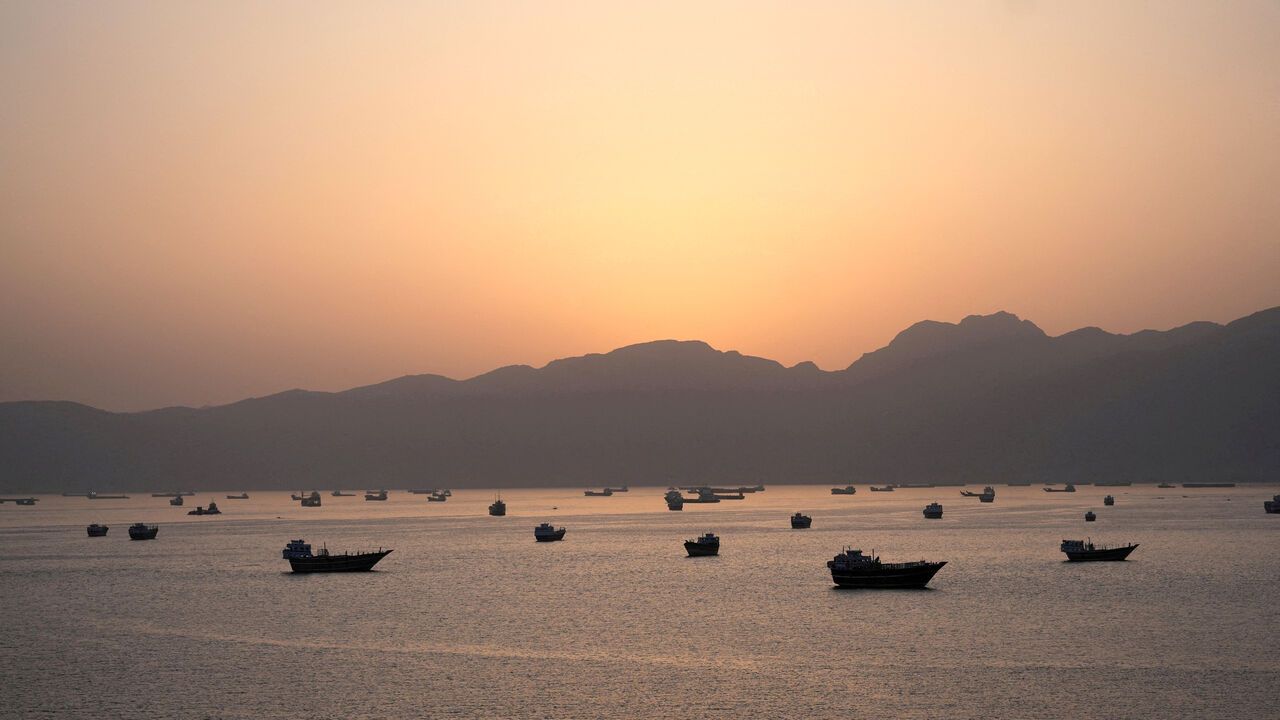
“We are like war prisoners(战俘(比喻)),” says Captain Khan, who is waiting in the Persian Gulf as missiles “go all around” him. One hit a nearby fuel tanker, which caught fire(起火,着火) and exploded. On another occasion debris(碎片,残骸) sank a vessel(船只,舰艇) a few metres in front of him. Mr Khan’s crew have tried to pass through the Strait of Hormuz three times; the Iranians have turned them back(让他们返回,挡回) on each occasion. “We are afraid,” says the captain, who does not want to disclose(透露,公开) his full name or identify his vessel. “We have to go home.”
“我们就像战俘,”卡汉船长说。他正在波斯湾等待,导弹“在他周围飞过”。一枚导弹击中附近的油轮,起火爆炸。另一次,碎片击沉了他前方几米处的一艘船。卡汉的船员曾三次试图通过霍尔木兹海峡,但每次都被伊朗人挡回。“我们很害怕,”这位不愿透露全名和船籍的船长说,“我们必须回家。”
Very few have. On May 3rd Donald Trump announced a plan to “guide” stranded(被困的,搁浅的) vessels out of Hormuz, but later paused it as he tried to strike a deal(达成协议) with Iran. Around 20,000 seafarers remain stuck in the Gulf. Most hail from(来自(某地)) relatively poor countries in Asia, such as the Philippines, Indonesia and India. These countries supply a large share of the crew for the merchant fleet that carries 85% of the world’s traded goods (by volume), from oil to smartphones, fertiliser and food. Yet these sailors are increasingly caught up in(卷入,陷入) conflicts in which they play no part and for which they are unprepared.
很少有人离开。5月3日,唐纳德·特朗普宣布了一项计划,要“引导”被困船只离开霍尔木兹,但后来暂停了,因为他试图与伊朗达成协议。大约2万名海员仍被困在波斯湾。他们大多来自亚洲相对贫穷的国家,如菲律宾、印度尼西亚和印度。这些国家为商船队提供了大量船员,而这些商船承载着全球85%的贸易货物(按体积计算),从石油到智能手机、化肥和食品。然而,这些海员越来越被卷入他们并未参与且毫无准备的冲突中。
The closure of Hormuz is only one reason why so many seafarers are stuck in the Gulf. The International Transport Workers’ Federation (ITF) has secured for its members a right to refuse to sail into the region and to be repatriated(遣返回国) from it. But seamen cannot legally abandon their ships until companies find replacements(找到替代人员). Few are volunteering to relieve(接替,换班) them. Tickets on flights out of the Middle East are also expensive and scarce, while visas to enter Gulf countries are hard to get. That means that even if the strait opens it will take “at least six months before things get back to some sort of normality(恢复某种正常状态)” for seafarers in the region, says Francesco Gargiulo of IMEC, which represents shipping firms.
霍尔木兹海峡关闭只是众多海员被困波斯湾的原因之一。国际运输工人联合会(ITF)已为其成员争取到拒绝驶入该区域并从该区域被遣返的权利。但在公司找到替代者之前,海员不能合法弃船。几乎没有人自愿来接替他们。飞离中东的机票也很贵且稀缺,而进入海湾国家的签证很难获得。这意味着即使海峡开放,该地区海员也需要“至少六个月才能恢复某种正常状态”,代表航运公司的国际海事雇主委员会(IMEC)的弗朗切斯科·加久洛说。