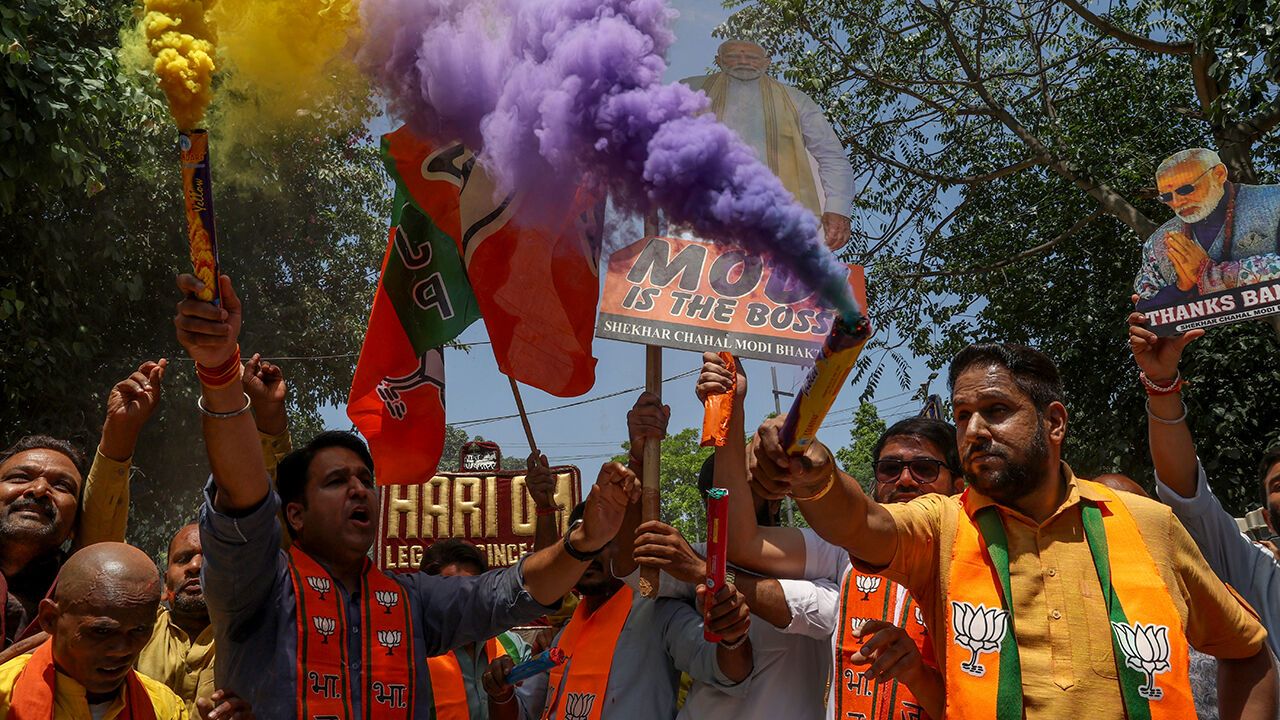
SIX WEEKS ago Narendra Modi stood on a temple-like stage in Kolkata, before a sea of saffron-clad(身穿藏红花色衣服的) voters. The event marked the beginning of his party’s campaign to win the populous(人口众多的) and important state of West Bengal, one of five states that voted over the past few weeks in elections whose results were announced on May 4th. India’s prime minister, a Hindu-nationalist strongman, was in a typically pugilistic mood(好斗的情绪). He accused party members from Mamata Banerjee’s Trinamool Congress (TMC) of taking “cut money” and conspiring in “infiltration” from neighbouring Bangladesh. “Every single one will be made to pay,” he told the cheering crowd.
六周前,纳伦德拉·莫迪站在加尔各答一座类似寺庙的舞台上,面前是身穿藏红花色衣服的选民海洋。这一事件标志着他所在政党为赢得人口众多且重要的西孟加拉邦而展开的竞选活动,该邦是过去几周投票的五个邦之一,选举结果于5月4日公布。印度总理,一位印度教民族主义强人,情绪尤其好斗。他指责玛玛塔·班纳吉的崔纳木大会党成员收取“回扣”并密谋从邻国孟加拉国“渗透”。‘每个人都将付出代价,’他对欢呼的人群说道。
Bengalis will now get to see what he meant. Mr Modi’s Bharatiya Janata Party (BJP) won a landslide(压倒性胜利) in the eastern state, in one of its most important victories since it came to power nationally 12 years ago. Even as incumbents elsewhere struggled, the BJP also won a third term, with 37.8% of the vote, in neighbouring Assam (see map). Nor was Ms Banerjee the only once-mighty regional leader booted out(被赶下台). In the southern state of Tamil Nadu, M.K. Stalin was ejected. In neighbouring Kerala, the incumbent Communists were also kicked out by voters.
孟加拉人现在将明白他的意思。莫迪的印度人民党在这个东部邦取得压倒性胜利,这是该党12年前在全国掌权以来最重要的胜利之一。尽管其他地方的现任者处境艰难,印度人民党还在邻近的阿萨姆邦以37.8%的得票率赢得第三个任期(见图)。班纳吉并非唯一被赶下台的一度强大的地方领导人。在南部的泰米尔纳德邦,M.K.斯大林被赶下台。在邻近的喀拉拉邦,执政的共产党也被选民踢下台。
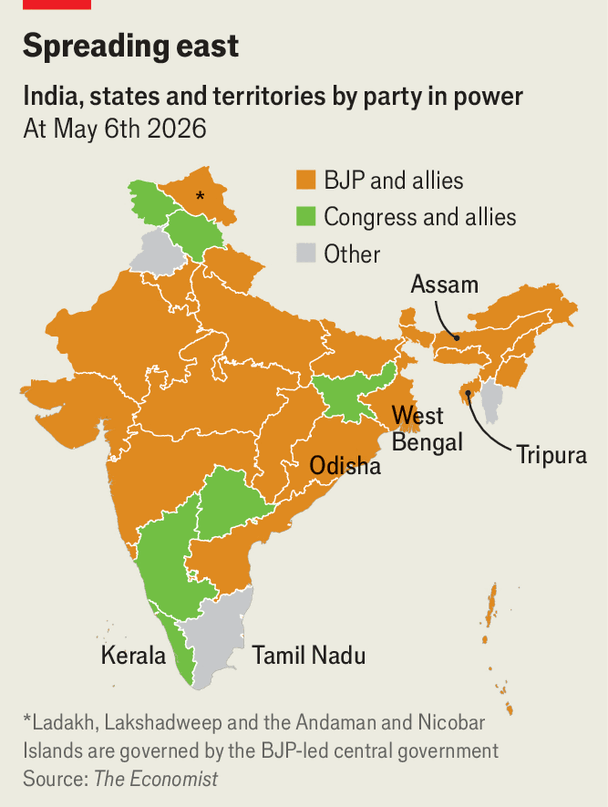
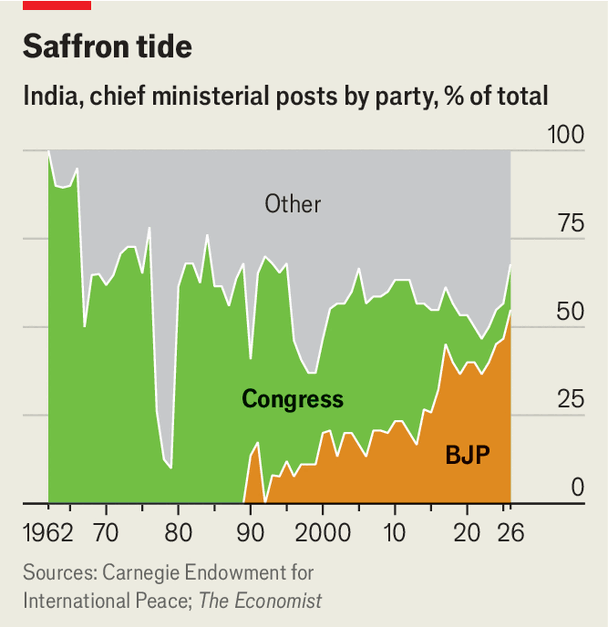
Controversy has swirled(弥漫;持续传播) over the way the elections were run. Mr Modi is not the first Indian leader to use his power over institutions to tilt(使倾斜;操纵) elections in his favour. But he is perhaps the most ruthless in doing so since Indira Gandhi cancelled them altogether in the 1970s. His latest tool, wielded most aggressively in West Bengal, is the revision of electoral rolls(选名册修订) that, say critics, left millions unable to vote. Yet as concerning as such methods are, they cannot explain Mr Modi’s dominance, which depends on his ability to unify Hindu voters. His coalition now runs 22 of the 31 states and territories with elected legislatures.
关于选举方式的争议一直不绝于耳。莫迪不是第一个利用对机构的权力来使选举对自己有利的印度领导人。但他或许是自20世纪70年代英迪拉·甘地完全取消选举以来,在这方面最无情的一个。他最新的手段是在西孟加拉邦最激进地实施选名册修订,批评人士称这使得数百万人无法投票。然而,尽管这些方法令人担忧,但它们无法解释莫迪的主导地位——这取决于他团结印度教选民的能力。他的联盟目前控制着31个有选举产生的立法机构的邦和地区中的22个。