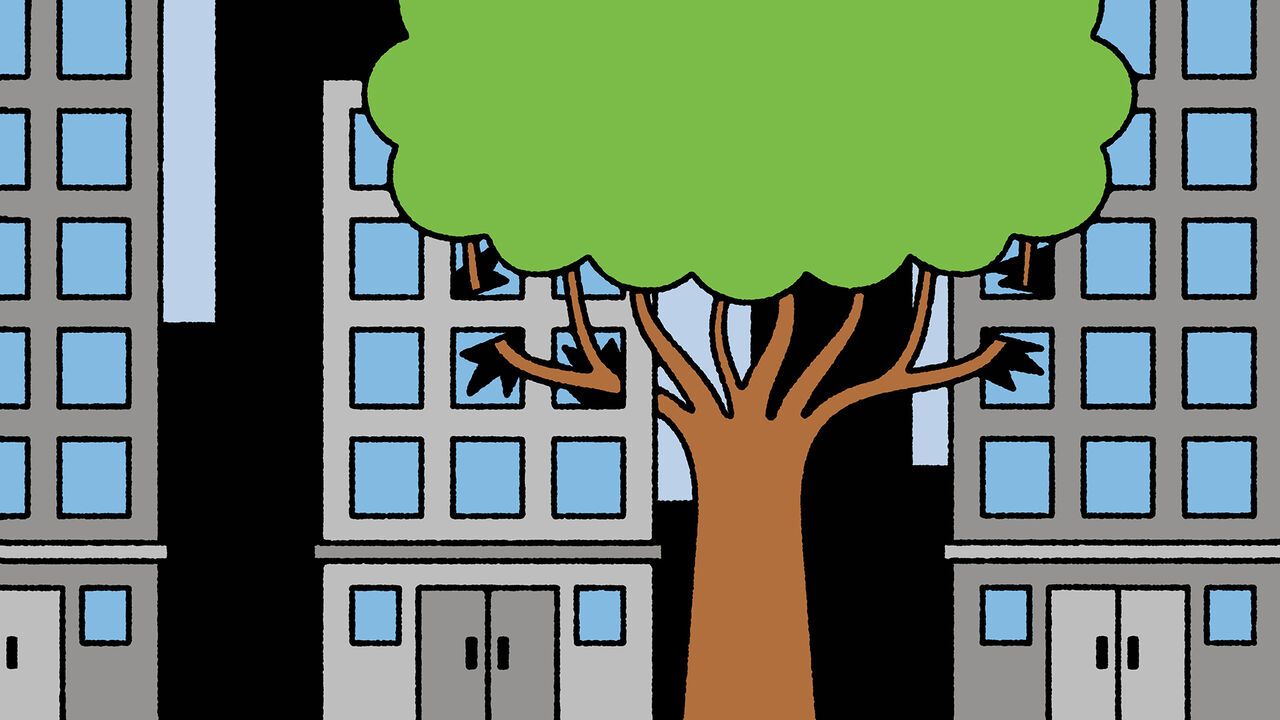
TWO YEARS ago the authorities tore down(拆除) a building on Hill Road, a busy street in an overpriced part of Mumbai, to widen it and ease the traffic. But they left in place(留在原处) a large-canopied(树冠巨大的) rain tree that stood in front of the vanished structure. In theory, the road has been widened. In practice, however, the building’s footprint(占地面积) is now an informal car park(非正式停车场).
两年前,当局拆除了孟买高价区繁忙的希尔路上的一栋建筑,以拓宽道路缓解交通。但他们保留了原建筑前那棵巨大的雨树。理论上,道路已经拓宽。但实际上,原建筑的地基现在成了一个非正式停车场。
The Hill Road tree is not an exception. Across Mumbai traffic is obstructed(阻碍) by trees that remained rooted as lanes were added. It is the same story(相同情况) in other growing cities. The reason for this bizarre state of affairs(事态,状况) is that there is a noisy group even more feared by authorities than motorists, who are themselves no pushovers(不是好对付的). That is the tree-huggers.
希尔路的树并非特例。在整个孟买,随着车道增加,仍扎根的树木阻碍了交通。其他增长中的城市也是如此。这种怪异状况的原因是,有一个比驾驶者(本身也不好对付)更令当局害怕的喧嚣群体,那就是“抱树者”。
India has spent the past 25 years frantically(疯狂地,拼命地) building infrastructure, both in cities and between them. The pace sped up after Narendra Modi(① 背景:纳伦德拉·莫迪(1950- )...), who enjoys few things more than a highway inauguration ceremony, came to power in 2014. Yet a binary idea has taken hold(扎根,深入人心) that trees and development are antithetical(对立的) to each other. This is rather a strange notion for a country that can do with(需要,用得着) a lot more of both.
过去25年,印度疯狂地建设基础设施,城市内外皆是如此。自2014年纳伦德拉·莫迪(他最喜欢的事莫过于高速公路通车仪式)上台后,步伐进一步加快。然而,一种二元观念已经扎根:树木与发展相互对立。对于一个两者都亟需更多的国家来说,这观念颇为奇怪。