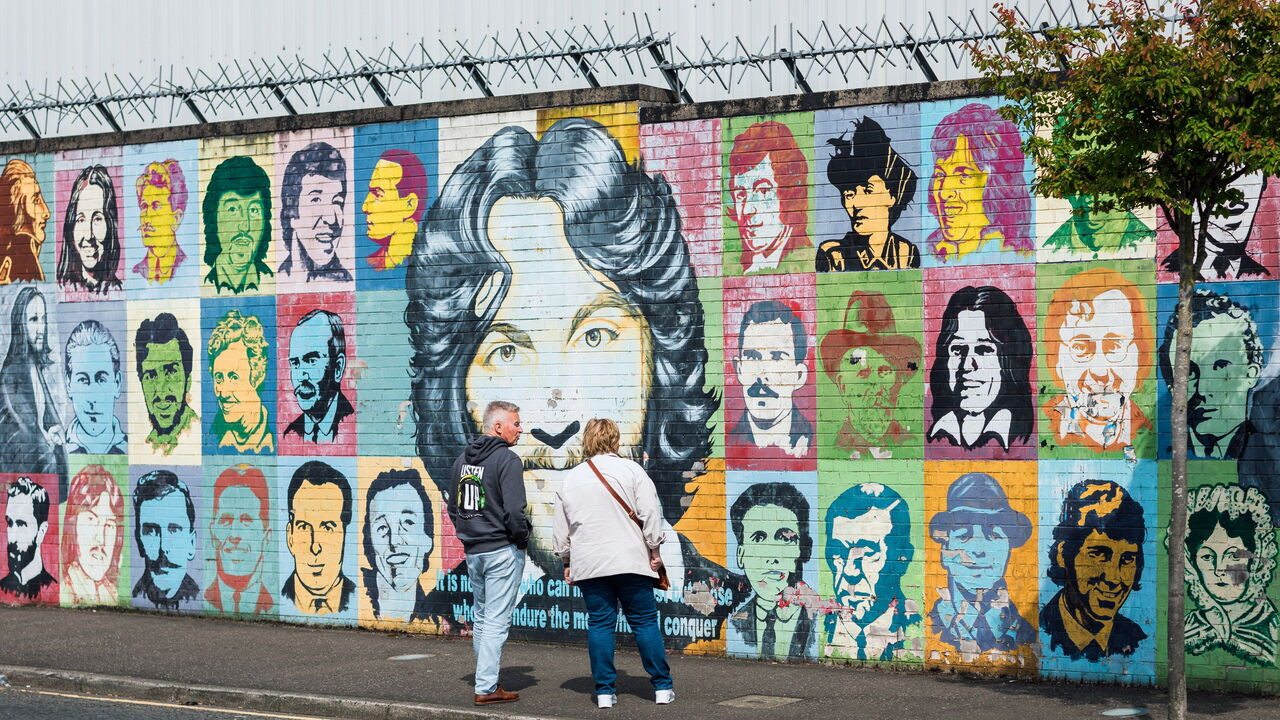
For years in Northern Ireland, walls have talked through words and images. Even after the Good Friday Agreement of 1998 brought an end to the three decades of sectarian strife known as the Troubles, what walls said could be deadly. When “Eamon Collins: British Agent 1985-1999” was scrawled(潦草地写或涂画) on a gable(山墙,三角墙) in Newry, the person named, a former Irish Republican Army (IRA) man, painted over it, but to no avail(毫无效果). Hours later he was butchered(残忍杀害(像屠宰动物)) nearby, the anti-British terror group gouging out(挖出(眼睛等)) his face in what police described as “the act of primitive(原始的,未开化的) cavemen”.
多年来,在北爱尔兰,墙壁一直通过文字和图像说话。即使1998年的《受难节协议》结束了长达30年被称为“动乱”的宗派冲突,墙壁上的话仍可能致命。当“埃蒙·柯林斯:英国特工1985-1999”字样被涂写在纽里的一面山墙上时,被点名的人——一名前爱尔兰共和军成员——将其覆盖,但无济于事。数小时后,他在附近被残杀,反英恐怖组织挖出他的脸,警方称之为“原始穴居人的行为”。
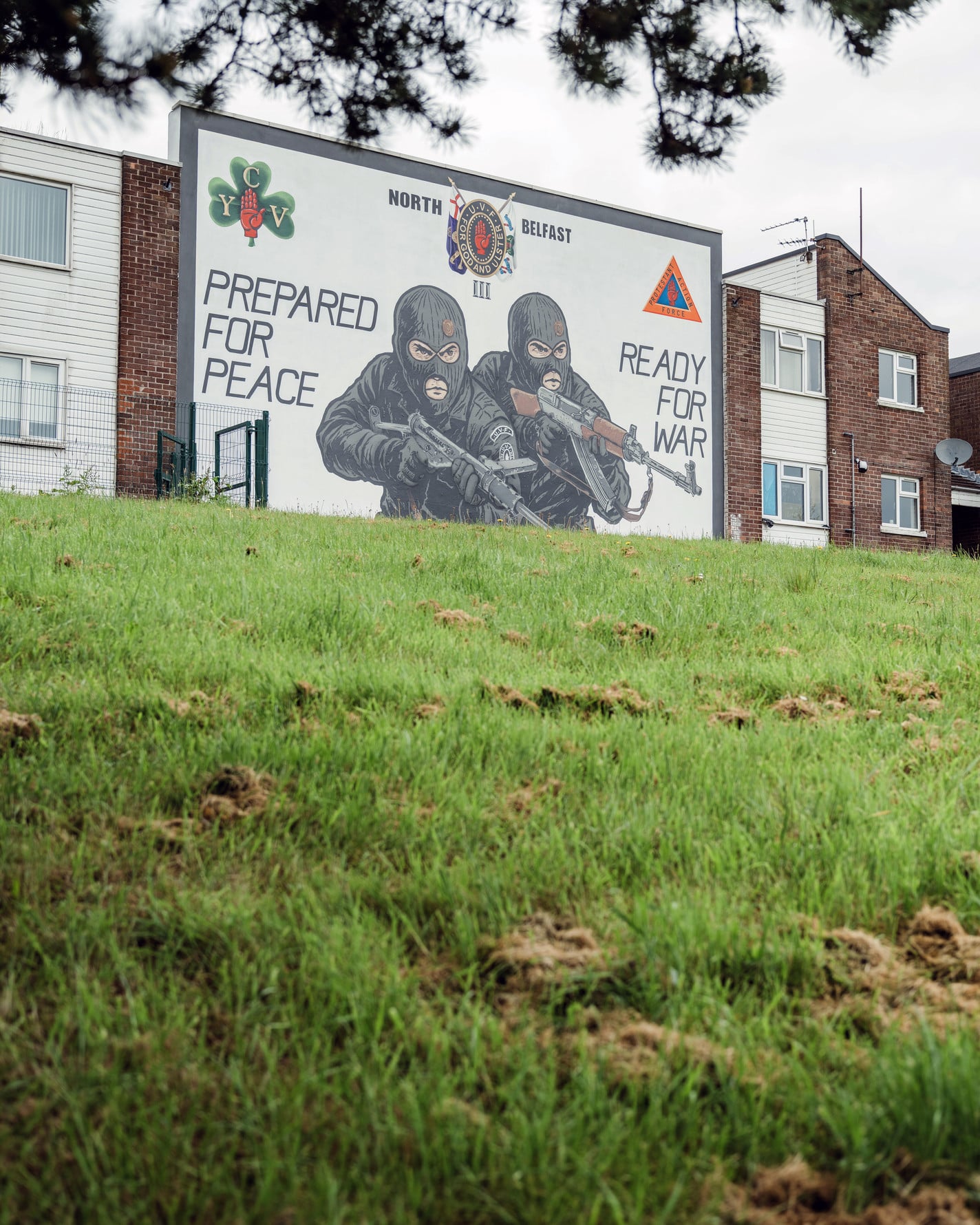
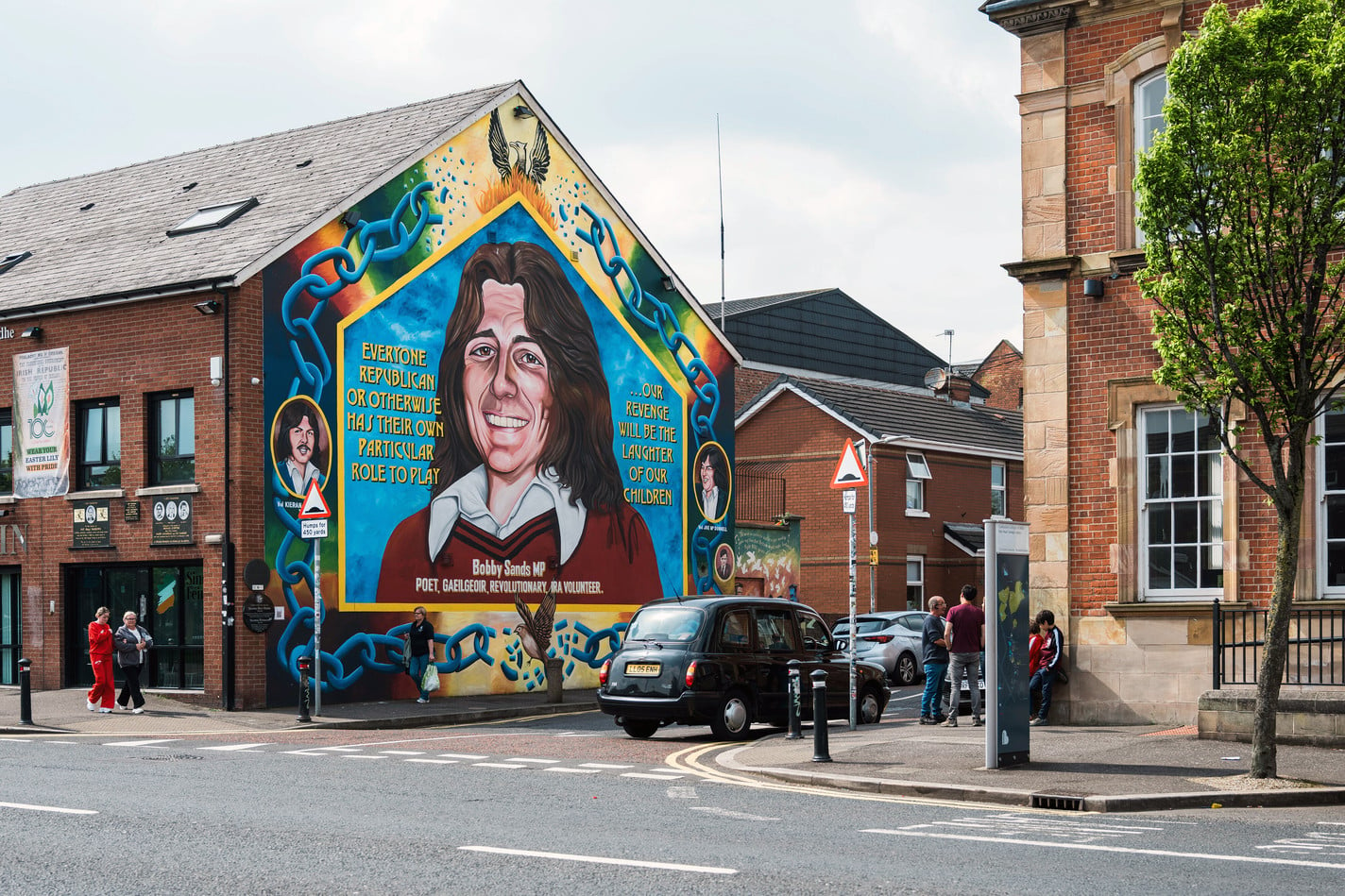
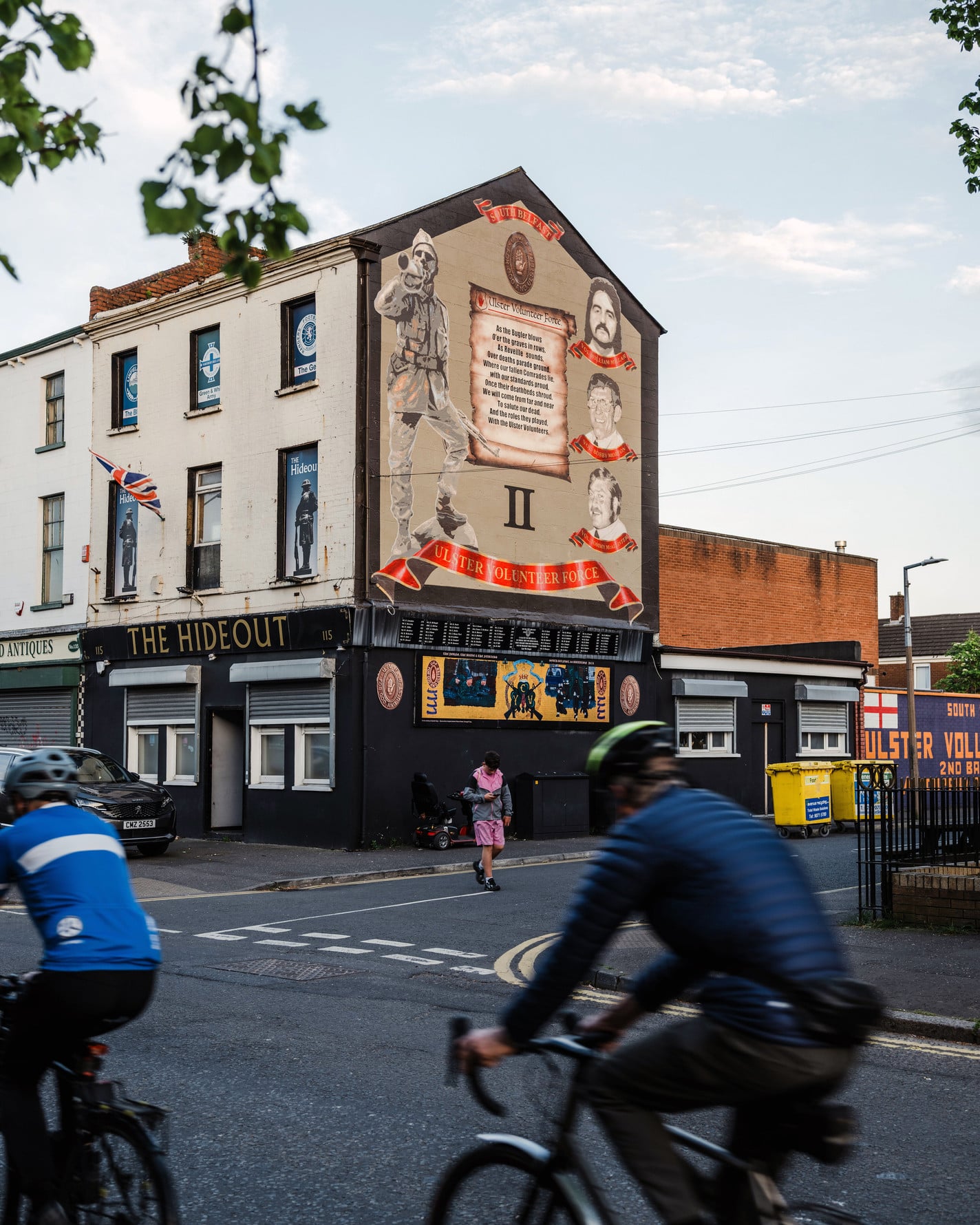
Other wall art lauded sectarian killers, or proclaimed the name of a terror group to mark out(标示,划分) its territory. The state’s inability(无能,无力) to remove such open homage(敬意,颂扬) to illegal organisations made public its weakness.
其他壁画赞美宗派杀手,或宣扬恐怖组织名称以标示领地。国家无法清除这些对非法组织的公开敬意,从而公开了它的软弱。
Lots of these murals endure(持续存在,忍耐). But their number diminishes(减少,变小) with each passing year. Research by four academics—Dylan O’Driscoll, Birte Vogel, Eric Lepp and Dan Morecroft-Rice—found that in the quarter-century(四分之一世纪,25年) since 1998 three-quarters of the most intimidatory(恐吓性的,胁迫的) murals in the loyalist Shankill area have gone.
许多这样的壁画依然存在。但它们的数量逐年减少。四位学者——迪伦·奥德里斯科尔、比尔蒂·沃格尔、埃里克·莱普和丹·莫克罗夫特-赖斯——的研究发现,自1998年以来的四分之一个世纪里,保皇派尚基尔地区最恐吓性的壁画有四分之三已经消失。
Even the walls have fears
连墙都有恐惧