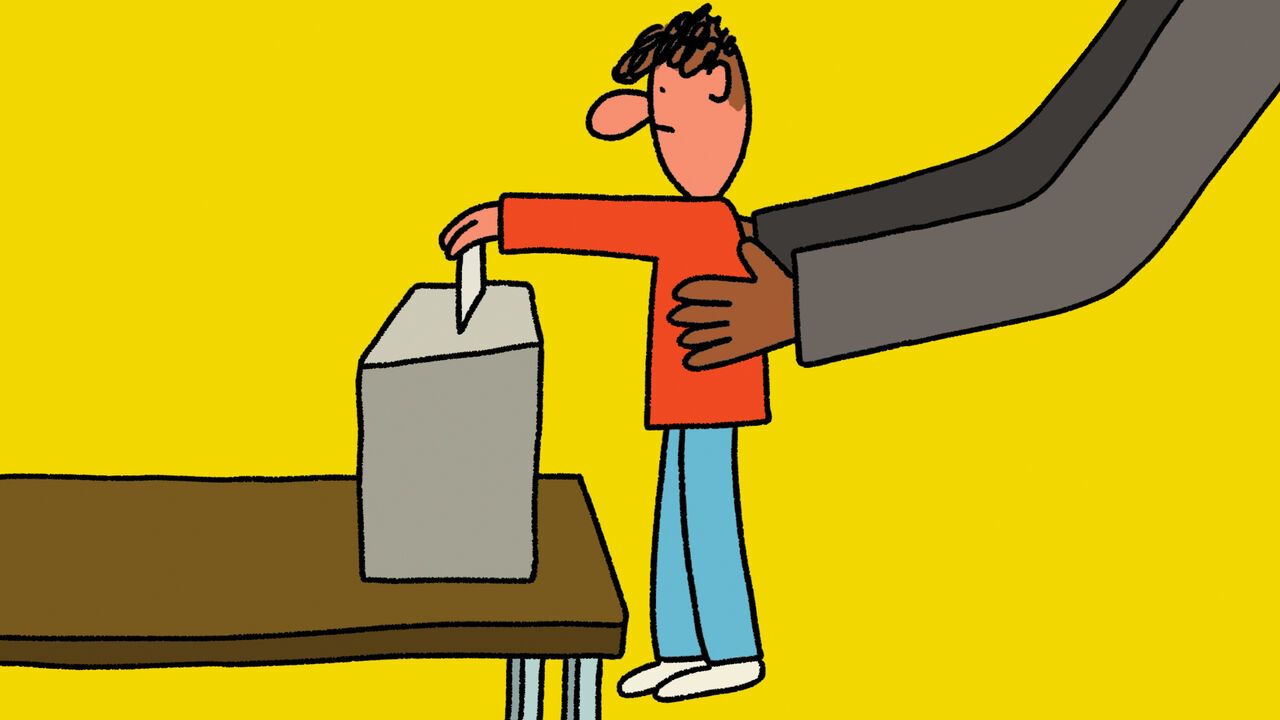
“At 16, we can sleep with our MP,” ventured(大胆地说,冒险说出) James Evans, in a 2009 UK Youth Parliament debate in the House of Commons(① 背景:英国青年议会(UK Youth...), but “we are not mature enough to vote for them.” That is going to change, as legislation to lower the voting age to 16 makes its way through(逐步通过(立法程序)) Parliament. Though Scotland and Wales already allow 16-year-olds to vote in devolved elections, Britain will become only the third European country, after Austria and Malta, to let them vote in national ones.
“16岁时,我们可以和我们的议员睡觉,”詹姆斯·埃文斯在2009年下议院英国青年议会辩论中大胆说道,但“我们却不够成熟,不能投票选他们。”这种情况即将改变,因为将投票年龄降至16岁的立法正在议会中推进。尽管苏格兰和威尔士已经允许16岁的人在权力下放选举中投票,但英国将成为继奥地利和马耳他之后,第三个允许他们在全国选举中投票的欧洲国家。
Already, 16-year-olds pay tax, can leave home and join the armed forces (though they cannot be deployed(部署(军队))). But “lowering the voting age is only half the battle(成功的一半),” notes Christopher Pich of the University of Nottingham. The other half is increasing the quality of voters.
16岁的人已经可以纳税、离家并加入武装部队(尽管不能部署)。但诺丁汉大学的克里斯托弗·皮奇指出:“降低投票年龄只是成功的一半。”另一半是提高选民的质量。
Turnout among British youth is woeful(糟糕的,令人悲哀的). Just 37% of all 18- to 24-year-olds voted in the last general election in 2024, according to Ipsos(① 背景:Ipsos成立于1975年,总...), a pollster. That compares with 82% of 18- to 29-year-olds who voted in Sweden’s 2022 election.
英国年轻人的投票率非常糟糕。根据民调机构Ipsos的数据,在2024年上次大选中,18至24岁选民中只有37%投了票。相比之下,瑞典2022年选举中18至29岁选民的投票率为82%。