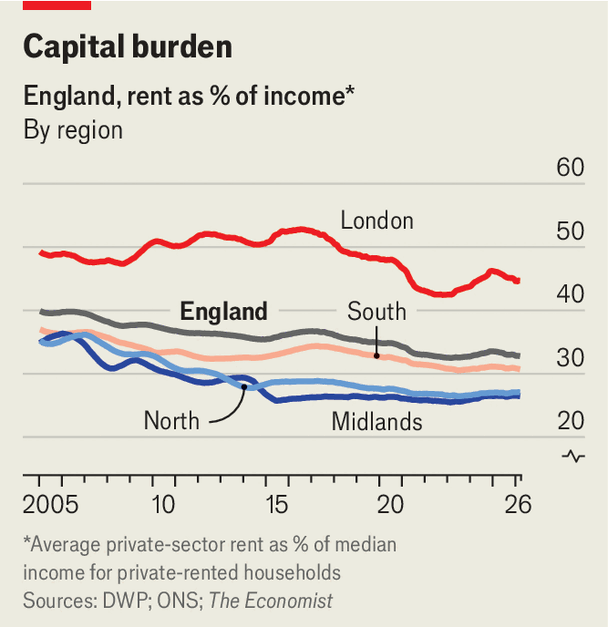
FOR TWO decades the private rental market in England boomed(繁荣,激增). Cheap finance, tax incentives and laissez-faire(自由放任的) regulation encouraged buy-to-let investors(购房出租投资者) to pile in(蜂拥而入). The number of privately rented homes rose from 2m in 1996 to 4.7m in 2016. Cheap finance and intense competition kept prices down for tenants. In the decade since then, mortgage costs have risen, tax has become burdensome and landlords must navigate a thicket of rules(错综复杂的规则). As a result there are just 20,000 more privately rented homes than in 2016, even though the population has grown by 3.3m.
二十年来,英格兰的私人租赁市场蓬勃发展。廉价的融资、税收优惠和自由放任的监管鼓励购房出租投资者蜂拥而入。私人租赁住房的数量从1996年的200万套增加到2016年的470万套。廉价的融资和激烈的竞争压低了租户的租金。在此后的十年里,抵押贷款成本上升,税收变得繁重,房东们必须穿越一片错综复杂的规则丛林。结果是,尽管人口增加了330万,私人租赁住房仅比2016年多出2万套。
Sweeping(全面的,彻底的) legislative reforms that came into force(生效) on May 1st mean that renting privately may become worse. The act attempts to tackle genuine insecurity. The new law abolished fixed-term (typically 12-month) tenancies and replaced them with ones that roll on indefinitely(无限期延续). Tenants’ notice to landlords will be set at two months and “no-fault” evictions will end. Instead landlords will need a valid reason—such as selling or rent arrears(欠款,拖欠)—for ousting tenants.
5月1日生效的全面立法改革意味着私人租房可能变得更糟。该法案试图解决真正的不安全感。新法律废除了固定期限(通常为12个月)租约,代之以无限期续租的租约。租户提前通知房东的期限将设定为两个月,“无过错”驱逐将终止。相反,房东需要有效的理由——例如出售或租金拖欠——才能驱逐租户。
The new law will also restrict landlords’ ability to raise prices. Bidding wars above the asking price(超过要价的竞价战) for new lets are now banned. Tenants will also be able to challenge annual rent reviews at a tribunal(法庭;裁判所). They will have every incentive to(有充分的动力去) do so, as the new rent will be payable from the tribunal’s decision rather than backdated(追溯的;回溯生效).
新法律还将限制房东提价的能力。新房源的竞价战现在被禁止。租户还可以在法庭上挑战年度租金审查。他们将有充分的动力这样做,因为新租金将从法庭裁决之日起支付,而不是追溯。