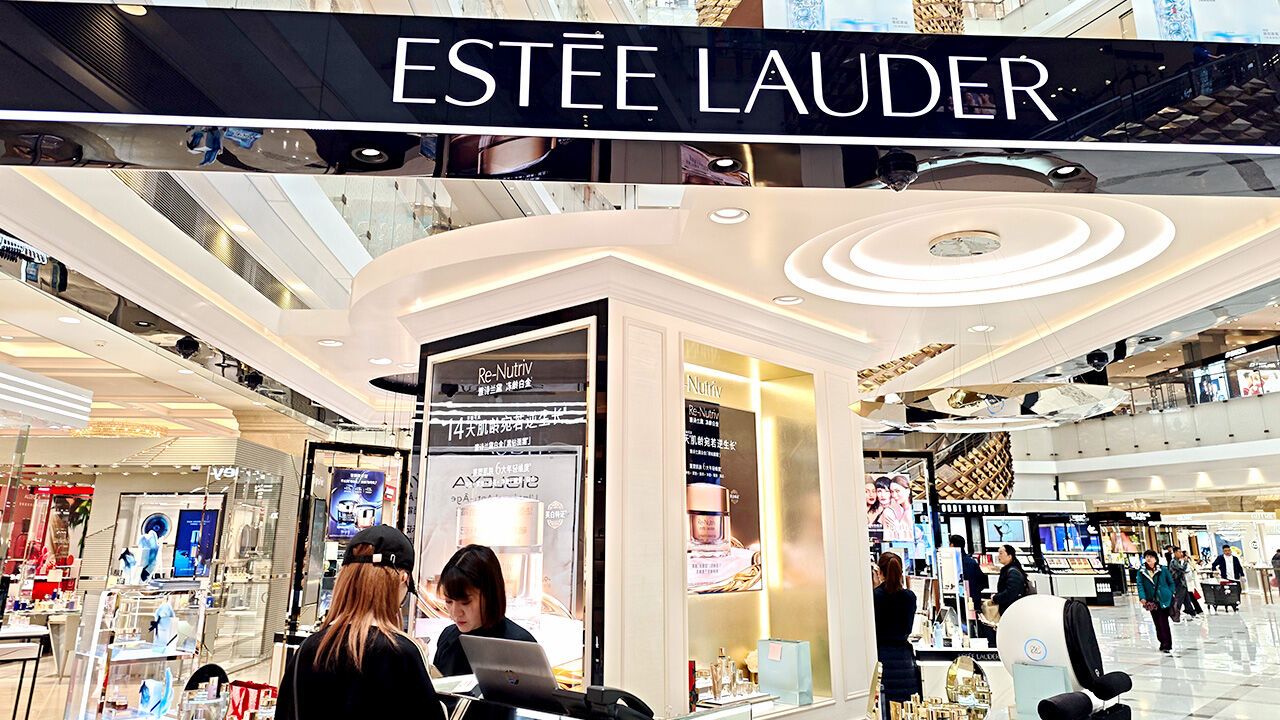
In the world of posh(高档的,豪华的) cosmetics, two firms have long dominated. On one side of the Atlantic is France’s L’Oréal, owner of swanky(时髦豪华的,炫耀的) labels such as Lancôme, as well as drugstore stalwart(中坚分子,忠诚的支持者)s such as Maybelline. On the other side is America’s Estée Lauder, home to a range of high-end brands typically found in department stores.
在高端化妆品领域,长期以来有两家公司占据主导地位。大西洋彼岸是法国的欧莱雅,旗下拥有兰蔻等奢华品牌以及美宝莲等药妆店常青树。另一边是美国的雅诗兰黛,旗下拥有一系列通常在百货公司销售的高端品牌。
Lately, however, Lauder has been looking dishevelled(凌乱的,邋遢的). The American company’s market value, having shot from $16bn in 2010 to $133bn in 2021, has since slid back to $31bn—a seventh of L’Oréal’s figure. Its sales in 2025, at $14.7bn, were down by 17% from their peak four years earlier, even as the beauty business as a whole has boomed. In pursuit of a glow-up(蜕变,变得更有魅力), Lauder is spending big: it is said to be planning a takeover bid for Puig, a Catalan beauty firm, that will cost it around $6bn. A deal may add some gloss(光泽,假象) to the business, but will not do much to fix its deeper flaws.
然而最近,雅诗兰黛却显得狼狈不堪。这家美国公司的市值从2010年的160亿美元飙升至2021年的1330亿美元,而后又回落至310亿美元——仅为欧莱雅的七分之一。其2025年销售额为147亿美元,比四年前的高峰下降了17%,尽管整个美容行业一片繁荣。为了重回巅峰,雅诗兰黛正大举支出:据说它计划以约60亿美元收购加泰罗尼亚美容公司Puig。这笔交易或许能为公司增添一些光彩,但无助于解决其更深层次的问题。
Lauder’s success in the 2010s was thanks largely to China’s booming(蓬勃发展的,激增的) demand for high-end cosmetics. Its wares(商品,货物) became popular in the country’s daigou trade, in which shoppers buy products in bulk abroad (often at duty-free outlets) and resell them at home for a profit.
雅诗兰黛在2010年代的成功主要得益于中国对高端化妆品的旺盛需求。其产品在中国的代购贸易中很受欢迎,这种贸易是消费者在国外(通常在免税店)批量购买产品,然后在国内转售获利。