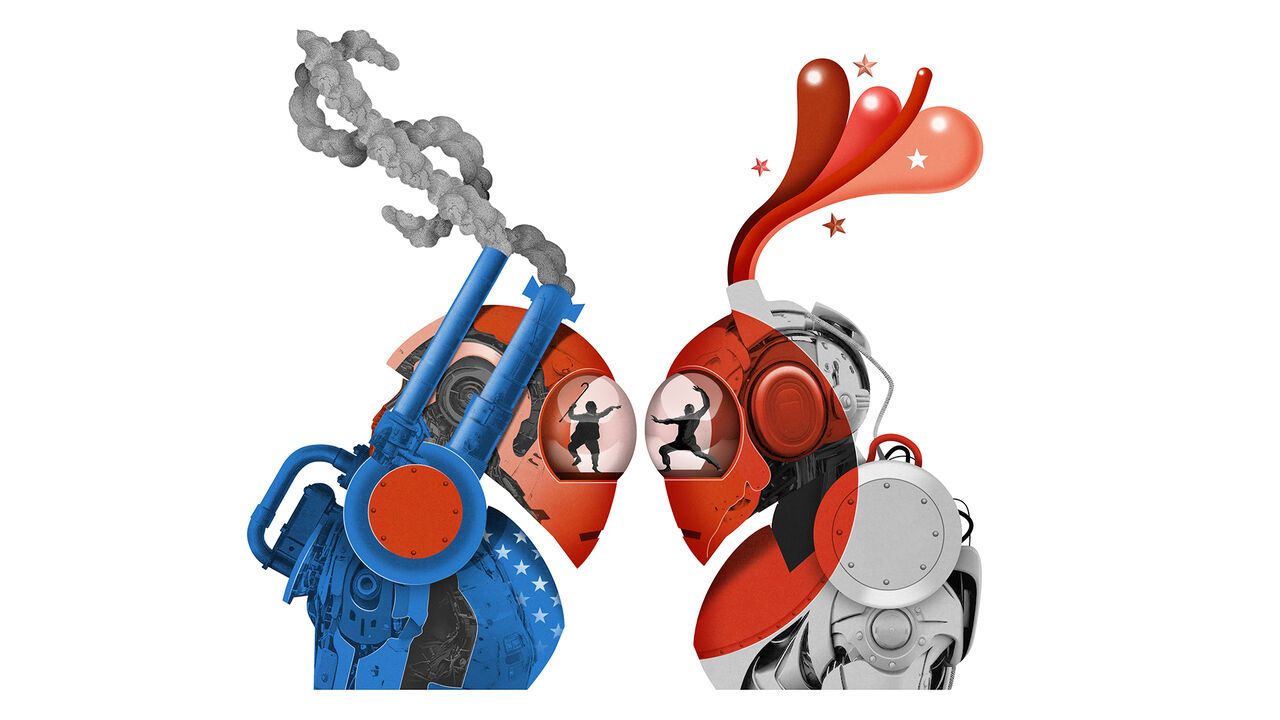
For two firms that embody(体现,代表) opposite visions of capitalism, Berkshire Hathaway and SoftBank Group have a great deal in common. Both are an uncategorisable(无法分类的) mix of operating conglomerate and investment fund. Both were built by singular(非凡的,独特的) men recognisable by their first names. And both receive little scrutiny(仔细审查,监督) from the bank analysts who write about them and the adoring investors who own their shares.
对于两家体现资本主义对立愿景的公司,伯克希尔·哈撒韦和软银集团有很多共同点。两者都是经营集团和投资基金的难以分类的混合体。两者都是由仅凭名字就可辨认的独特人物建立的。而且两者都很少受到撰写报告的银行分析师和持有股份的崇拜投资者的审视。
Each would also regard the other’s balance-sheet as an aberration(偏离常规,异常现象). Berkshire under Warren Buffett, who recently retired as chief executive (though not as chairman), amassed nearly $400bn of cash. It has little idea what to spend it on. Only a crash comparable to that of 1929, 1987 or 2008 would vindicate(证明…正确,为…辩护) this sober inaction. SoftBank, by contrast, has an excess of ideas courtesy of(蒙…提供;由于) Masayoshi Son, its futuristic founder, but little cash. No sooner does the firm borrow money than it flies out of the door to finance the artificial-intelligence gold rush under way in Silicon Valley. For Mr Son’s heavily indebted firm, a crash could be terminal(致命的,终局的).
每一方都会认为对方的资产负债表是个异类。沃伦·巴菲特领导下的伯克希尔积累了近4000亿美元现金,他最近退休了首席执行官职务(但仍是董事长)。公司几乎不知道该怎么花这笔钱。只有一场类似1929年、1987年或2008年的崩盘才能证明这种清醒的不作为是正确的。相比之下,软银在其未来主义创始人孙正义的引导下有过多的想法,但现金很少。公司刚借到钱,就立即流出去资助硅谷正在进行的人工智能淘金热。对于孙先生负债累累的公司来说,崩盘可能是致命的。
The pair are a kind of yin and yang: what repels Berkshire delights SoftBank. During the dot-com bubble Mr Buffett, who aims to buy companies with unassailable(坚不可摧的,无可辩驳的) “moat(护城河,竞争壁垒)s” at cheap prices, stuck, in his words, to “such cutting-edge(尖端的,领先的) industries as brick, carpet, insulation and paint”. Meanwhile Mr Son, who likes high-tech companies whatever their price, was making his name investing in Yahoo, an American internet firm, and Alibaba, a Chinese one. Two decades later Mr Buffett was again saving up for the bargain(便宜货,廉价品)s that might emerge after a market correction, just as Mr Son was docked in the Bay Area spending his massive “Vision Fund” like a sailor on shore-leave(靠岸休假(水手用语)).
这两家公司是一种阴阳关系:让伯克希尔排斥的东西让软银欣喜。在互联网泡沫期间,巴菲特的目标是以低廉价格购买拥有难以攻破的“护城河”的公司,用他自己的话说,他坚守于“砖块、地毯、保温材料和油漆等尖端行业”。与此同时,孙正义则无论价格高低都喜欢高科技公司,他因投资美国互联网公司雅虎和中国公司阿里巴巴而成名。二十年后,巴菲特再次积蓄力量,准备在市场调整后出现的便宜货,而孙正义则停靠在湾区,像个休假的船员一样大笔挥霍他的“愿景基金”。
The Son also sets
孙也可以定下基调