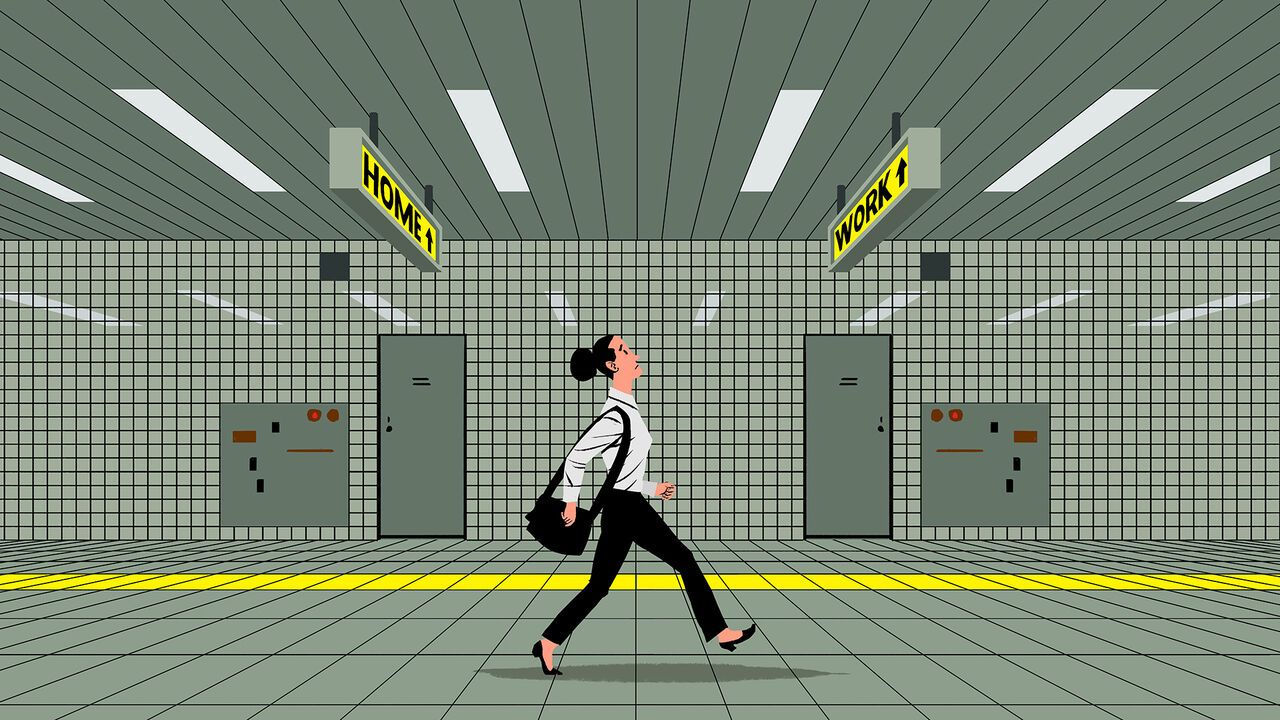
Ask someone if they have regrets, and very few people will say: “I wish I had spent more of my life commuting(通勤).” The time spent travelling from home to work and back again tends to be neither relaxing nor productive(既不放松也无效率). It is usually routine and sometimes unpleasant: anything that involves loads of traffic or armpits(大量交通或拥挤车厢) is hard to like.
如果你问一个人是否有遗憾,很少有人会说:“我希望自己在通勤上花更多时间。”从家到工作地点的往返通勤时间往往既不放松也无效率。它通常是例行公事,有时还令人不悦:任何涉及大量交通堵塞或拥挤车厢的事情都很难让人喜欢。
In popular culture the monotony is the point. Commuting becomes a trap (“Exit 8(①背景资料:《Exit 8》是2023年...)”), a window on the real action (“The Girl on the Train(①背景资料:Paula Hawkins所...)”) or a commentary on the softness of modern society (“The War of the Worlds(①背景资料:H.G. Wells的经典科...)”). The covid-19 pandemic gave people the chance to experience a commute-free existence(无通勤的生活), and many of them loved it.
在流行文化中,单调就是重点。通勤成为一种陷阱(《出口8》),一扇窥见真实行动的窗(《火车上的女孩》),或是对现代社会软弱的评论(《世界大战》)。新冠疫情让人们有机会体验无通勤的生活,许多人对此爱不释手。
So when people are surveyed about their perfect commute time, the unsurprising answer tends to be “shorter”. On average people around the world spend roughly an hour a day commuting. But however long their travel time is, they want to lop that total roughly in half.
因此,当人们被调查问及理想的通勤时间时,答案不出所料是“更短”。全球平均每人每天通勤约一小时。但无论实际通勤时间多长,他们都希望将总时长大约减半。