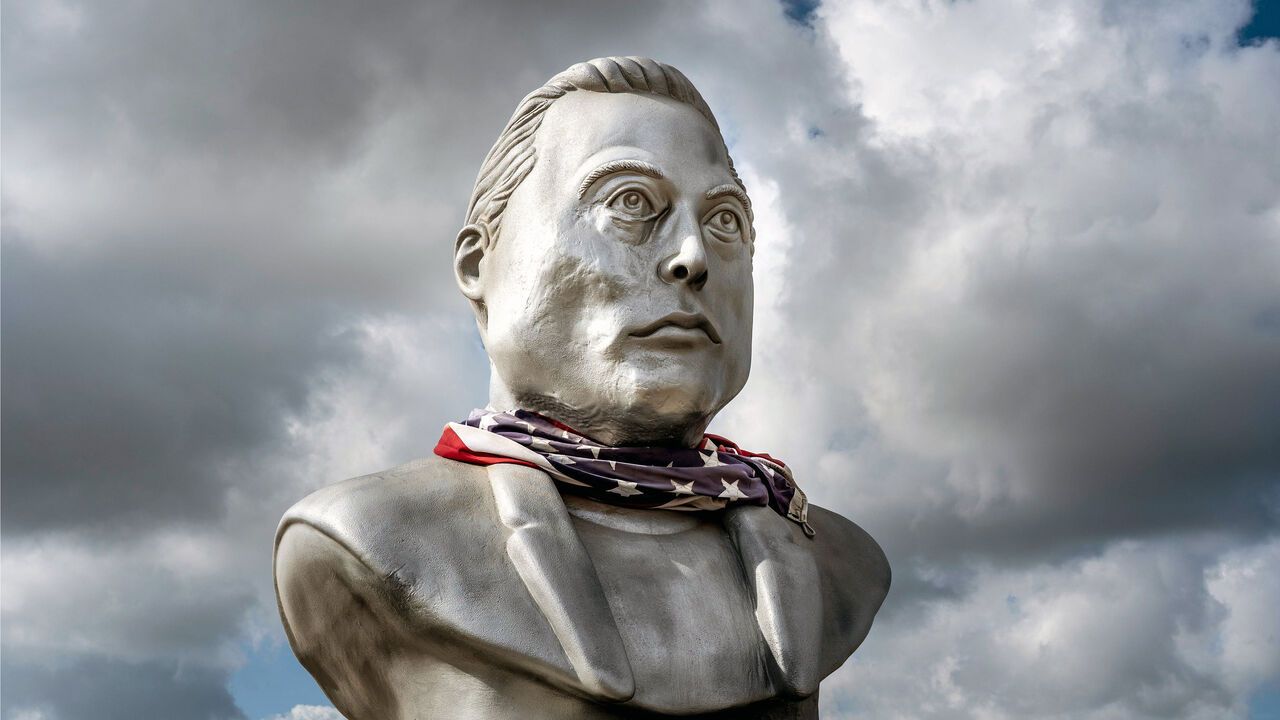
Muskism(马斯克主义). By Quinn Slobodian and Ben Tarnoff. Harper; 256 pages; $30. Allen Lane; £25
《马斯克主义》。作者:Quinn Slobodian 和 Ben Tarnoff。Harper出版社;256页;30美元。Allen Lane出版社;25英镑。
LOVE HIM or loathe him(爱他也好,恨他也罢), Elon Musk is hard to avoid. The world’s richest man is poised(准备好,摆好姿势) to float(发行(股票)上市) the world’s most valuable startup on the stockmarket. Just as Henry Ford provided the template(模板,模式) for 20th-century capitalism, known as Fordism(福特主义), Mr Musk offers one for the 21st. That is the thesis(论点,命题) advanced by Quinn Slobodian and Ben Tarnoff in “Muskism”, an illuminating(富有启发性的) book that examines where Mr Musk came from and the episodes that shaped his worldview. In many ways it is the inverse(相反,颠倒) of Walter Isaacson’s authorised biography of 2023. Despite the lack of direct access to Mr Musk, the authors provide a portrait of his psyche(灵魂,心理) that is arguably more revealing(有揭示性的,揭露真相的).
无论爱他还是恨他,埃隆·马斯克都难以回避。这位世界首富即将让全球最有价值的初创公司上市。正如亨利·福特为20世纪资本主义提供了模板(即福特主义),马斯克为21世纪提供了一个模板。这就是Quinn Slobodian和Ben Tarnoff在《马斯克主义》一书中提出的论点。这本富有启发性的书审视了马斯克的出身以及塑造他世界观的事件。该书在许多方面与沃尔特·艾萨克森2023年授权的传记相反。尽管未能直接接触马斯克,但作者描绘出的心理画像可以说更具揭示性。
Mr Musk grew up in apartheid-era(种族隔离时期) South Africa, a country that saw itself as a citadel(堡垒,要塞) of white civilisation on a black continent, and used technology to divide and control. As a teenager the young Mr Musk, who had become enamoured with(迷恋,倾心于) computers, moved to Canada to avoid military service, and then to America. But “Apartheid South Africa came along like a spore(孢子) in his luggage,” the authors write. What they call the “fortress futurism(堡垒未来主义)” of his youth shaped his attitude to technology, and its symbiotic(共生的) relationship with the state.
马斯克在种族隔离时期的南非长大,这个国家自视为黑色大陆上白人文明的堡垒,并用技术进行划分和控制。青少年时期,年轻的马斯克迷上了电脑,为了逃避兵役移居加拿大,后来去了美国。但作者写道:“种族隔离的南非就像孢子一样附在他的行李上。”他们称其青年时代的“堡垒未来主义”塑造了他对技术以及技术与国家共生关系的态度。