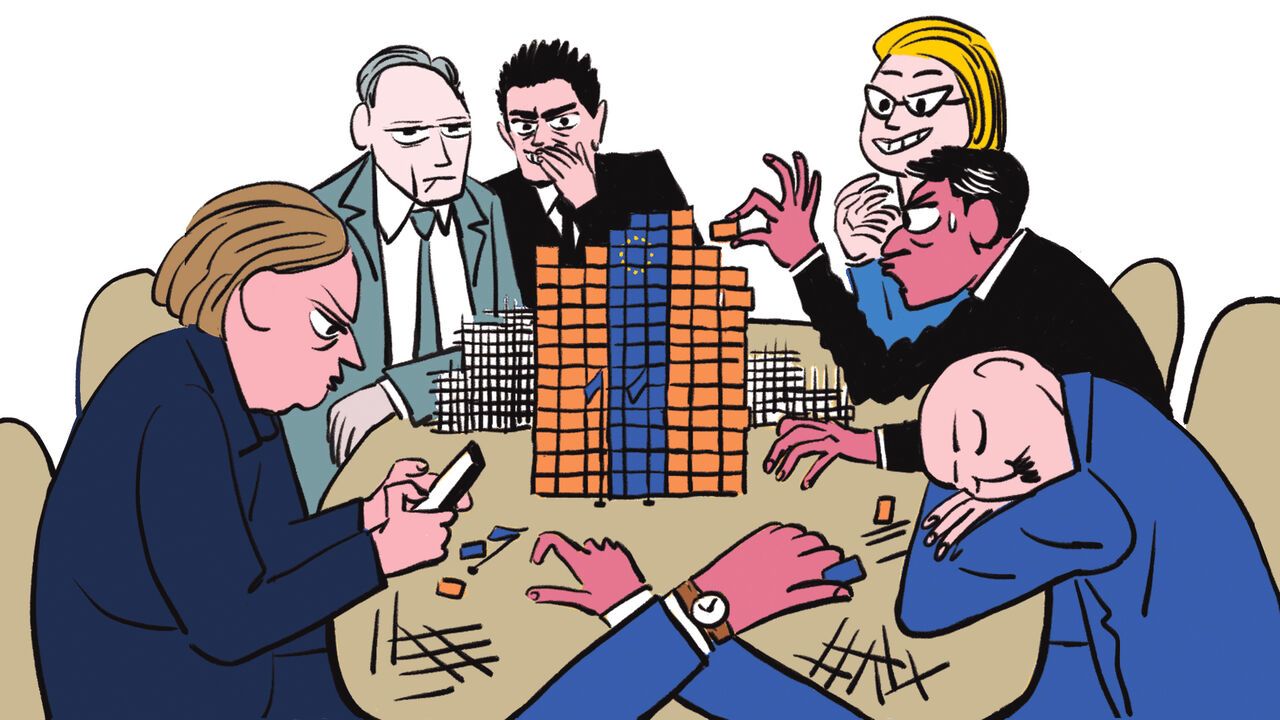
A mason(石匠) present for the laying of the cornerstone(基石) of a great European cathedral knew he was unlikely to be around to see the edifice(宏伟建筑) completed, decades or even centuries later. And yet in Chartres, Milan, Aachen and beyond, a brotherhood of true believers devoted their lives to building edifices that would endure long after they were dust. One millennium or so later, a new guild(行会) is building its own grand projet(宏伟工程). Based mostly in Brussels, the staff of the European Commission have toiled(辛勤劳作) in recent decades on a political structure they hope will prove as awe-inspiring(令人惊叹的)—and permanent—as Notre Dame. In place of stained glass and spires, they craft regulations whose complexity rivals baroque duomos(巴洛克式大教堂).
一位为大教堂奠基典礼在场的石匠知道,自己不太可能活着看到这座建筑竣工——那将是几十年甚至几个世纪后的事了。然而在沙特尔、米兰、亚琛等地,一群志同道合的兄弟会成员奉献一生,建造着在他们化为尘埃后仍会矗立的建筑。一千年左右之后,一个新的行会正在建造自己的宏伟工程。欧盟委员会的工作人员主要在布鲁塞尔,近几十年来他们辛勤构筑着一个政治结构,希望它像巴黎圣母院一样令人敬畏且永恒。他们以彩色玻璃和尖塔取而代之的,是复杂程度堪比巴洛克大教堂的法规。
Cathedrals had their architects, but the real work was done by lowlier(更低微的) folk. The same is true of building the European Union. For all the presidents of the bloc's various institutions (there are a half-dozen, few of them known outside EU circles), the tone of what happens in Brussels is set by "the eurocrats" who keep the machine chugging along(持续运转). Some 33,000 officials trudge(步履沉重地走) into the commission's offices every day, alongside even more in other EU bodies such as the European Central Bank. These mostly lifelong civil servants are the backbone of the European project. As the ones who hold the pen(负责起草) on drafting new legislation, serve as the guardians of the club's treaties and have sweeping powers(广泛的权力) in areas such as antitrust and trade negotiations, their biases matter. Predictably members of this guild aspire to a federal EU, even if not as dogmatically(教条地) as British tabloids(英国小报) once made out. Overwhelmingly they embrace liberal values such as multilateralism, open markets and the rule of law. As deep states go, there are worse traits.
大教堂有建筑师,但实际工作是由身份更卑微的人完成的。建设欧盟也是如此。尽管欧盟各机构都有主席(共有六七位,其中很少有在欧盟圈子之外为人熟知的),但布鲁塞尔事务的基调是由那些让机器持续运转的“欧元官僚”定下的。每天约有3.3万名官员步履沉重地走进委员会办公室,此外还有更多人在欧洲央行等其他欧盟机构工作。这些大多是终身制的公务员,是欧洲项目的骨干。他们负责起草新立法、守护俱乐部的条约、在反垄断和贸易谈判等领域拥有广泛权力,因此他们的倾向至关重要。可预见的是,这个行会的成员渴望建立一个联邦制欧盟,尽管不像英国小报曾经渲染的那样教条。他们绝大多数拥护多边主义、开放市场和法治等自由主义价值观。就深层政府而言,这些特质不算太坏。
But a spectre(幽灵) haunts the eurocratic rank-and-file(普通成员). The EU has steadily gained powers in the past decade or two, the result of many emergencies from the euro-zone crisis of 2009 to Russia's invasion of Ukraine in 2022. A consensus has grown from Paris to Berlin and Warsaw (though, alas, not London) that many of the continent's problems need to be handled collectively. Mega schemes like those to green the continental economy or hobble(束缚;削弱) Russia through sanctions have been handed to the Brussels machine to turn into reality. That might have translated into a surge of influence to the behind-the-scenes toilers there. Not so. Of late the feeling in the corridors of the commission's directorates—ie, among the civil service that stays on, even as a slew of 27 commissioners appointed by national governments rotate every five years—is that power is ebbing(衰退) from their grasp.
但一个幽灵困扰着欧元官僚的普通成员。过去一二十年里,欧盟的权力稳步增长,这是从2009年欧元区危机到2022年俄罗斯入侵乌克兰等多次紧急状况的结果。从巴黎到柏林再到华沙(可惜不包括伦敦),已形成一种共识:欧洲大陆的许多问题需要集体应对。诸如绿化欧洲经济或通过制裁削弱俄罗斯等大型计划,已交由布鲁塞尔机器化为现实。这理应转化为对幕后辛勤工作者影响力的提升。但事实并非如此。最近,委员会总司走廊里的气氛——即尽管成员国任命的27名专员每五年轮换,但留任的公务员群体——感觉权力正从他们手中流失。
Commission impossible
委员会不可能完成的任务