Everyone knows that the European Union’s economy is weighed down by(被…所累,受…拖累) regulation. But you may not have spotted that everyone now includes Europeans themselves. They are so rattled(不安的,慌乱的) that the momentum to fix the problem is the greatest in a generation(一代人以来,几十年来). On April 28th the EU unveiled plans for its rule-making to be simpler and more consistent. It gave a timeline for accomplishing this, and for removing barriers to trade within the bloc. The trillion-euro question is whether, after many false starts, Europe can at last turn its good intentions into progress.(这个价值万亿欧元的问题是:在经历多次失败后,欧洲能否最终将良好意图转化为实际进展。)
所有人都知道欧盟经济被监管所累。但你或许没意识到,如今“所有人”也包括欧洲人自己。他们深感不安,解决问题的势头达到了一代人以来最强。4月28日,欧盟公布了简化和统一规则制定的计划,并给出了完成此事以及消除集团内部贸易壁垒的时间表。这个价值万亿欧元的问题是:在经历多次失败后,欧洲能否最终将良好意图转化为实际进展。
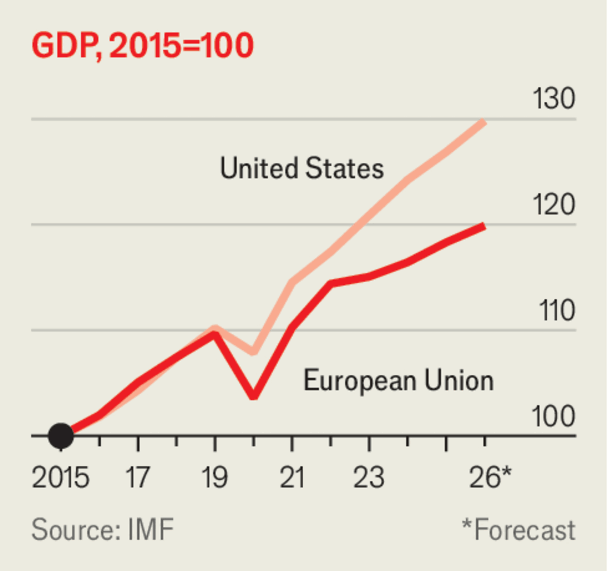
Europe needs to grow if it is to pay its debts, care for its swelling legions of(日益庞大的...群体) elderly citizens and defend itself without America’s help. Yet its economy is far behind that of Uncle Sam(山姆大叔(美国绰号)). In the first quarter its output barely grew—and now the Iran war has driven up(推高,使上升) energy prices.
欧洲需要增长,才能偿还债务、照料日益庞大的老年人群,并在没有美国帮助的情况下自卫。然而其经济远落后于美国。第一季度产出几乎零增长,而如今伊朗战争推高了能源价格。
The battle for growth is being fought on two fronts. The first is in Brussels, where two very different strategies vie for favour(争夺青睐,竞争支持). Some eurocrats(欧盟官员(尤指官僚)) think the EU should pivot to(转向,转变重点) subsidies, protectionism and Chinese-style state capitalism. Others prefer the liberal route of more open, competitive and integrated markets.
增长之战在两条战线展开。第一条在布鲁塞尔,两种截然不同的战略在争夺青睐。一些欧盟官员认为欧盟应转向补贴、保护主义和中国式的国家资本主义。其他人则偏好更开放、更具竞争力和更一体化市场的自由路线。