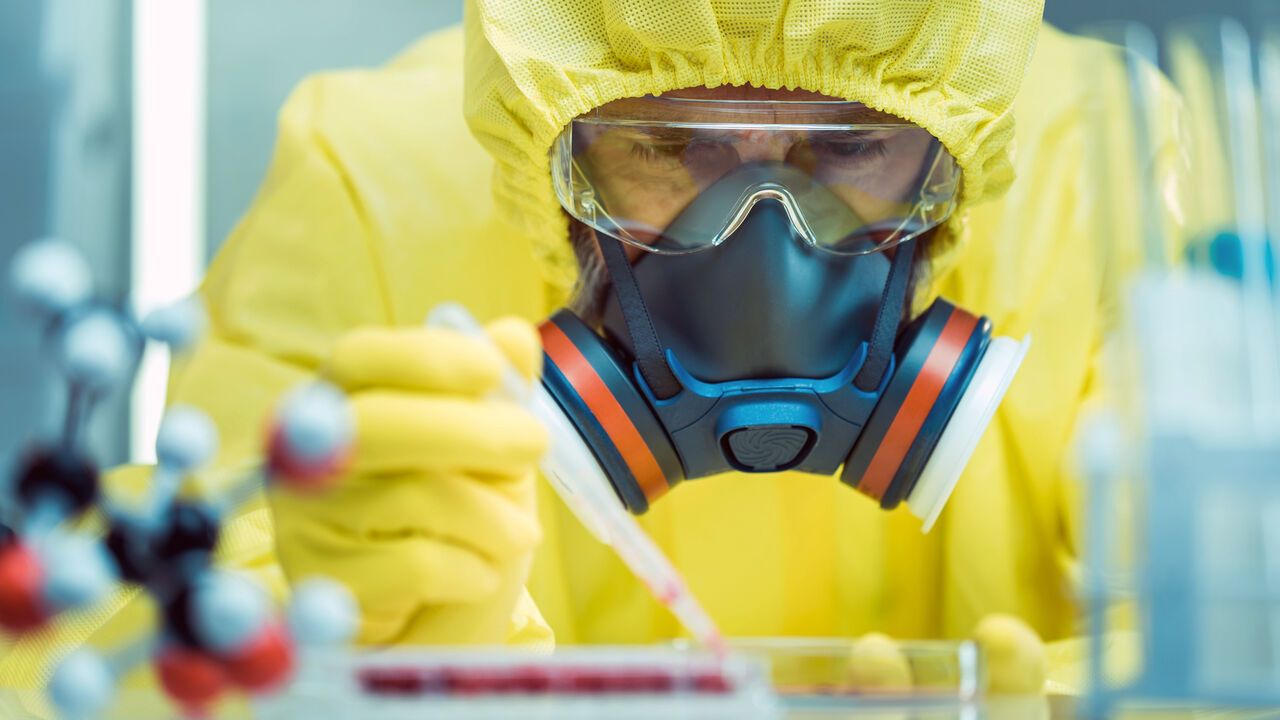
Artificial intelligence (AI) will soon add biology to its list of superhuman(超人的,超乎常人的) abilities. Anthropic’s Mythos model—already withheld( withheld (withhold的过去式) 扣留,拒绝给予) from general release owing to its hacking skills—recently succeeded on a third of the most difficult data-crunching(数据处理,数据运算) tasks pulled together by biology experts. Mythos could do things that were beyond all of the tested humans, such as reverse-engineering(逆向工程) a cell type from raw DNA data.
人工智能(AI)很快就会将生物学加入其超能力清单。Anthropic公司的Mythos模型——因其黑客技能已被限制公开发布——最近在生物学专家整理的最困难数据处理任务中成功完成了三分之一。Mythos能做到所有测试人类都无法做到的事情,比如从原始DNA数据逆向工程出一个细胞类型。
As we report, problem-solving like that means AI may soon grant people extremely dangerous powers: to synthesise viruses, generate novel neurotoxins(神经毒素) or assemble omnicidal(全灭的,毁灭一切的) “mirror life”. Such dangers are the dark side of AI’s wonderful promise to democratise intelligence(智能民主化,让智能普及). It is even conceivable that an AI could give a misanthropic(厌世的,厌恶人类的) loner the power to end humanity.
正如我们所报道的,像这样的问题解决能力意味着AI可能很快赋予人们极其危险的能力:合成病毒、生成新型神经毒素或组装毁灭性的“镜像生命”。这些危险正是AI民主化智能这一美好承诺的阴暗面。甚至可以想象,一个AI可能赋予一个厌世的孤独者终结人类的力量。
Biosecurity risks are thus far worse than cyber-security ones. If one engineered virus may cause billions of deaths, humanity has no room to learn from mistakes. There may be no “defender’s dividend(防御者红利)”, in which AI itself helps forestall(预先阻止,防患于未然) the danger. Software can be fixed quickly, but human biology is far less malleable(可塑的,容易改变的). Making models safe for release will therefore require breakthroughs in the fundamental science of ai.
因此生物安全风险远大于网络安全风险。如果一种工程病毒可能导致数十亿人死亡,人类就没有从错误中学习的机会。可能不存在“防御者红利”,即AI本身帮助防范危险。软件可以快速修复,但人类生物学的可塑性要差得多。因此,要使模型安全发布,需要在人工智能基础科学上取得突破。
Petrifying dishes
令人恐惧的培养皿