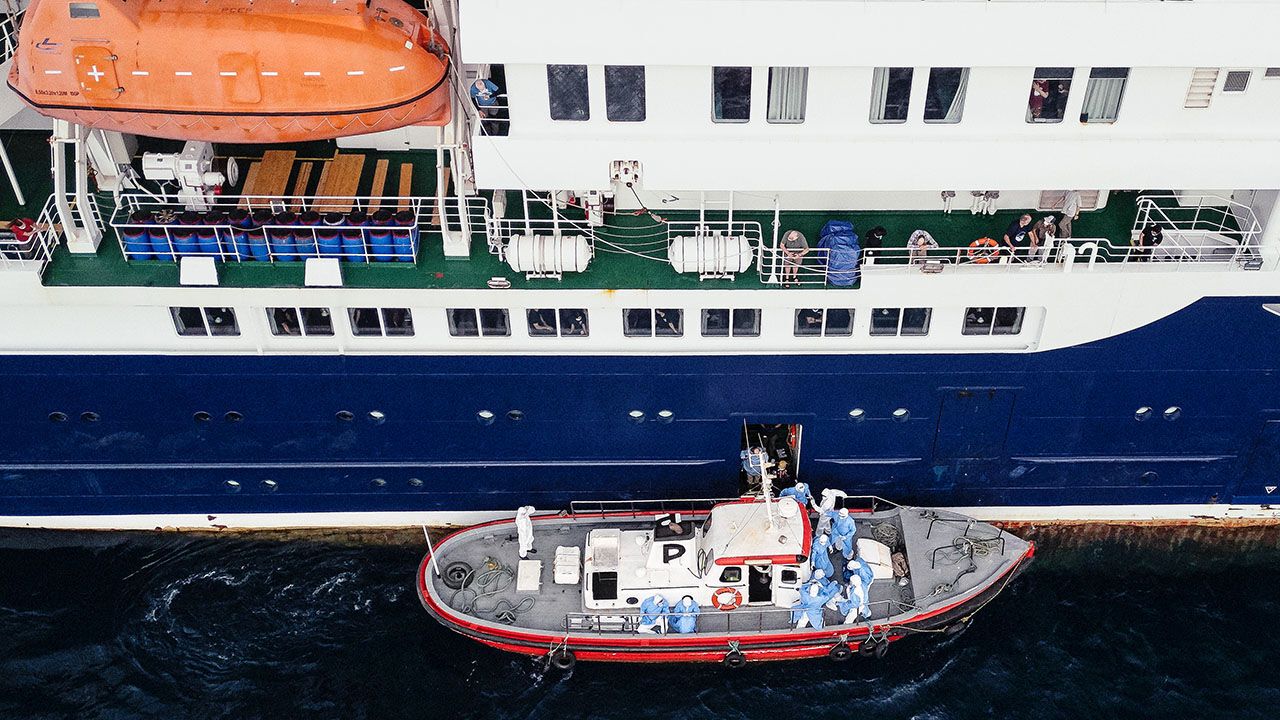
ON APRIL 1ST MV Hondius, a cruise ship carrying around 150 passengers and crew, set sail(启航) from Argentina towards the island nation of Cape Verde. By early May an outbreak of hantavirus(汉坦病毒) was reported on board, sending international health authorities scrambling(争相;慌忙行动) to contain further spread and treat those taken ill(患病).
4月1日,载有约150名乘客和船员的MV Hondius号邮轮从阿根廷启航,驶向岛国佛得角。到5月初,船上报告了汉坦病毒疫情,国际卫生当局争相控制进一步传播并救治患病者。
As of(截至) May 6th three cases among those on board had been confirmed and five more were suspected. Of those eight people, three have died. Although information about the outbreak is still patchy(零星的;不完整的), the World Health Organisation (WHO(世界卫生组织)) and other health bodies say the risk of hantavirus infections globally remains low.
截至5月6日,船上有三例病例确诊,另有五例疑似。在这八人中,已有三人死亡。尽管关于疫情的信息仍然零散,世界卫生组织(WHO)和其他卫生机构表示,全球汉坦病毒感染的风险仍然较低。
Human infections with hantavirus are rare. Such cases are usually caused by the inhalation(吸入) of airborne particles(气溶胶颗粒) from the droppings or urine of rodents such as mice and rats, in which the virus is endemic(地方性的). Further spread from infected humans to others is rarer still, though not unheard of(并非前所未闻). Very close contact—such as bed-sharing, sex and interactions between health-care workers and patients—has historically been a prerequisite(前提条件). Although no human-to-human transmission on MV Hondius has yet been confirmed, the cramped(拥挤的;狭小的) cabins and common areas of a cruise ship are an ideal environment for it to occur. The fact that the wife of the first passenger who died was also infected is a worrying sign.
人类感染汉坦病毒的情况很少见。此类病例通常是由于吸入啮齿动物(如老鼠)粪便或尿液中的气溶胶颗粒引起的,这些动物体内存在该病毒。从感染者到他人的进一步传播更为罕见,但并非从未听说过。非常密切的接触——如共用床铺、性行为以及医护人员与患者之间的互动——历来是必要条件。尽管MV Hondius号上尚未确认人传人,但邮轮拥挤的舱室和公共区域为其发生提供了理想环境。首例死亡乘客的妻子也被感染,这一事实是一个令人担忧的信号。