In science, whether an anomaly(异常;反常事物) is insignificant or the basis for a promising new field of study can boil down to(归根结底是;归结为) the catchiness(易记性;吸引力) of its name. Pick the wrong one, and conferences are hard to organise and funding shrivels up. But pick the right one, and the publicity takes care of itself.
在科学界,一个异常现象是微不足道还是一个有前途的新研究领域的基础,归根结底取决于其名称的吸引力。选错了名字,会议就难组织,资金就会枯竭。但选对了,宣传自然会水到渠成。
In that spirit, say hello to(向……问好;欢迎) peptideins(肽质体(新命名分子)): a newly named class of molecules found within human cells that are similar to proteins but smaller and with vaguer purposes. As the authors of the paper that named them, published in the journal Nature this week, point out, they may still be important. Sebastiaan van Heesch, a protein specialist at the Princess Máxima Centre in the Netherlands who co-led the new study, has said that peptideins might “unlock new insights and drug targets across human biology”, potentially assisting with the development of immunotherapies and vaccines against cancer. What is certain for now is that they complicate the conventional picture of how cells work.
本着这种精神,来认识一下肽质体吧:这是一类新命名的分子,存在于人类细胞中,类似于蛋白质但更小,功能也更模糊。正如本周围绕这一命名发表论文的作者所指出的那样,它们可能仍然很重要。荷兰马克西玛公主中心的蛋白质专家、新研究的共同领导者塞巴斯蒂安·范·赫斯表示,肽质体可能“开启人类生物学的新见解和药物靶点”,潜在地帮助开发针对癌症的免疫疗法和疫苗。目前可以肯定的是,它们让人们对细胞工作的传统认识变得复杂。
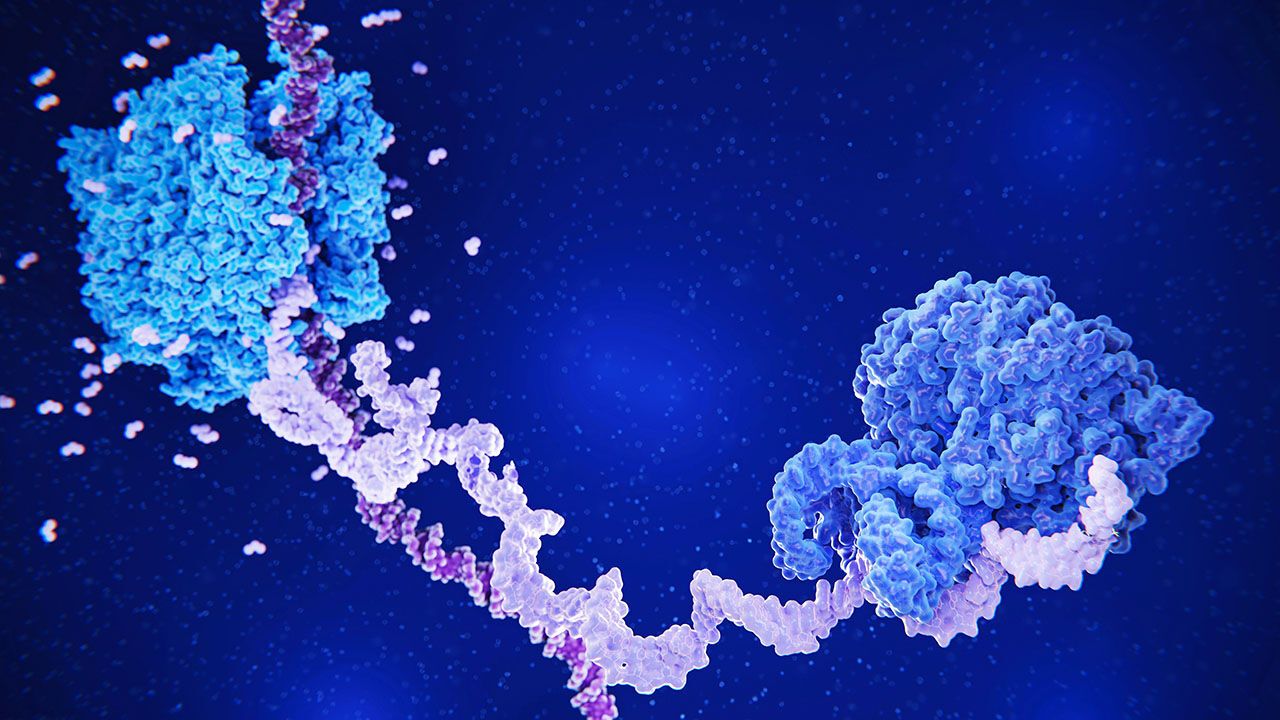
Simply put(简而言之), enzymes within a cell are thought to copy strands of DNA into molecules of RNA. These in turn are used as blueprint(蓝图;计划)s to make chains of amino acids known as peptides. (This second process, known as translation, is largely handled by cellular components called ribosomes.) Proteins are a loosely defined subset of peptides: those that are of a certain size; have a known function; and can be found across several species.(蛋白质是肽的一个定义松散的子集:那些具有一定大小、已知功能且跨物种存在的肽。)
简单地说,细胞内的酶被认为将DNA链复制成RNA分子。这些RNA分子又作为蓝图,用来制造被称为肽的氨基酸链。(第二个过程称为翻译,主要由称为核糖体的细胞组分完成。)蛋白质是肽的一个定义松散的子集:那些具有一定大小、已知功能且跨物种存在的肽。