NOT LONG ago Wicker Park, a neighbourhood on the north-west side of Chicago, was among America’s hippest(最时髦的) neighbourhoods. On summer weekends young people with weird haircuts mobbed nightclubs. Vintage stores did a roaring trade(生意兴隆) in faded T-shirts from the 1980s. A few Puerto Rican restaurants, remnants(遗留物,残余) of a poorer neighbourhood, sat uneasily alongside the new cafés serving cronuts(① 详细背景:cronut由纽约糕点师D...) and unlimited mimosas.
不久前,芝加哥西北侧的威克公园还是美国最时髦的社区之一。夏季周末,发型古怪的年轻人涌入夜店。复古商店以高价售卖褪色的80年代T恤。几家波多黎各餐馆,作为较贫穷社区的遗迹,与售卖可颂甜甜圈和无限量含羞草鸡尾酒的新咖啡馆尴尬并存。
Walk through Wicker Park these days and it feels a little different. It is still gentrified, more so if anything(甚至可以说更甚). The vintage stores have not gone away. But the new crowd is rather younger. Nursery workers lead gaggles(一群(尤指小孩)) of toddlers in bright yellow vests around the streets. On the 606, a park built along a former railway track, almost everyone seems to be pushing an expensive pram(婴儿车(英式)) or carrying a child on a bicycle. At weekends a clutch of(一小群) craft-brewery tap rooms fills up with fathers. A new private school recently opened and a billboard advertises a clever new type of child car seat.
如今走在威克公园里,感觉有点不同。它仍然中产阶级化了,甚至有过之而无不及。复古商店并未消失,但新人群更年轻了。托儿所工作人员带着一群穿着亮黄色背心的幼儿在街上走。在606公园(沿旧铁轨修建的公园),几乎所有人都在推着昂贵的婴儿车,或骑着自行车带着孩子。周末,几家精酿啤酒吧挤满了父亲。一所新的私立学校最近开业,广告牌上宣传着一种聪明的新型儿童汽车座椅。
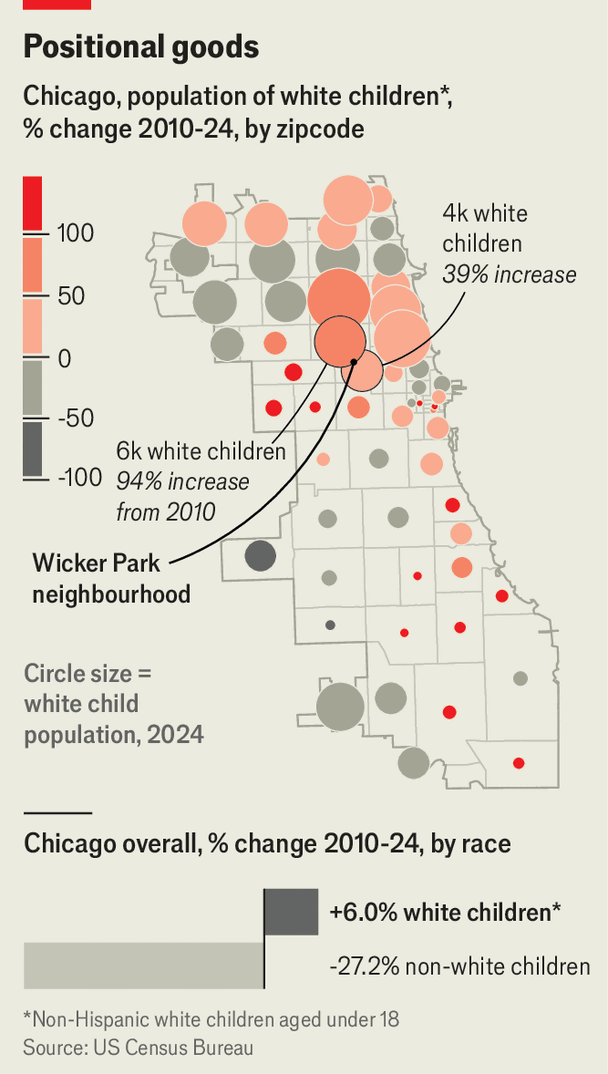
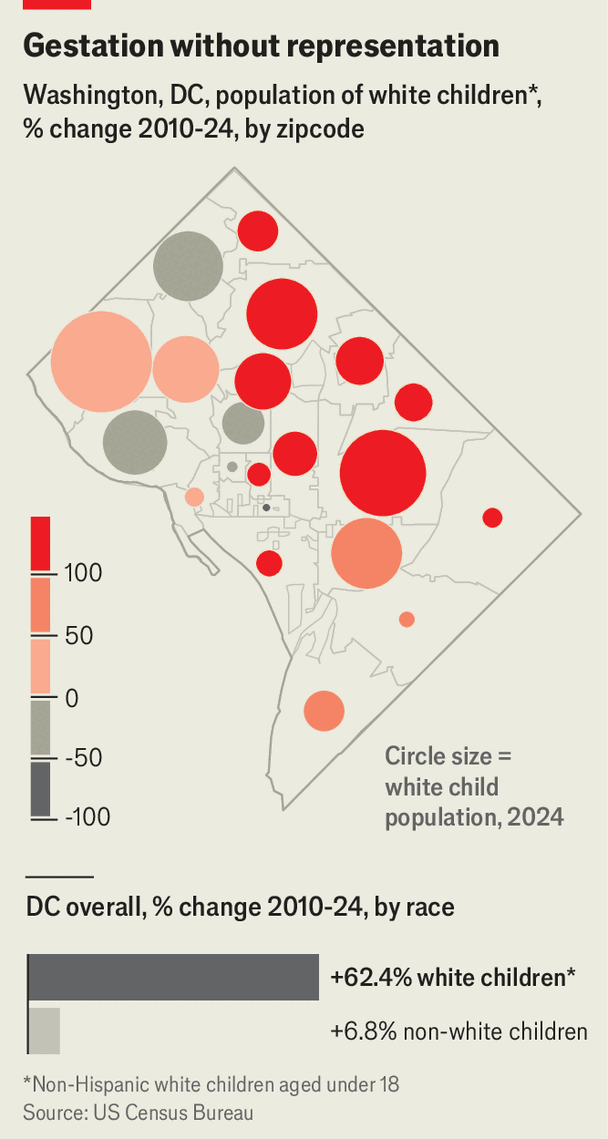
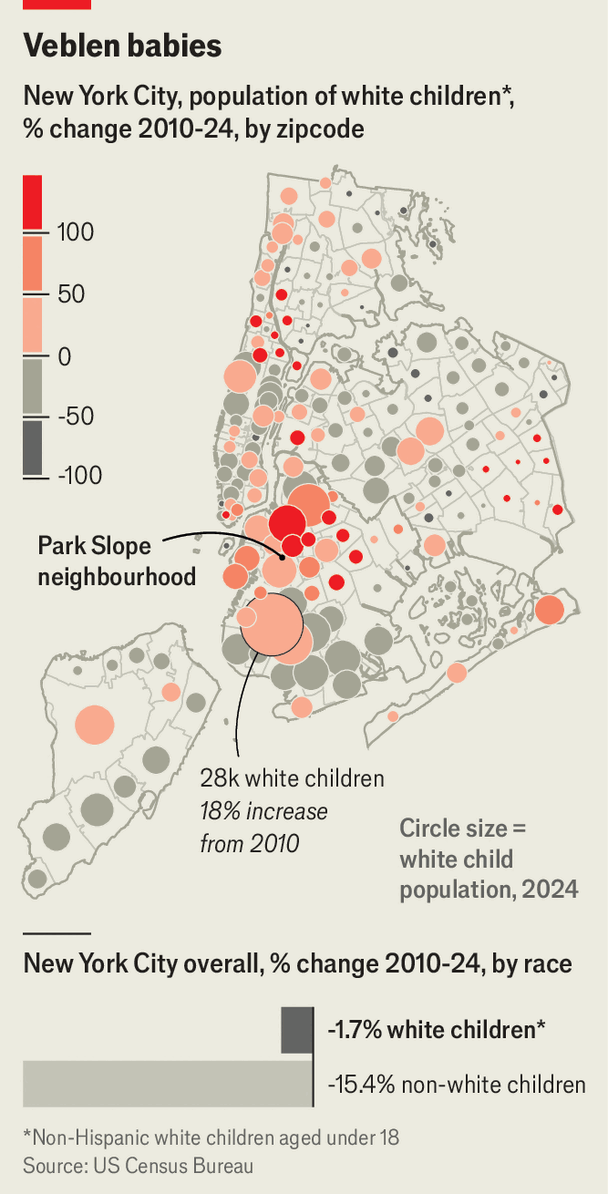
Cities across America are losing children fast. Across Chicago, between 2010 and 2024, according to census-bureau data, the total population aged under 18 declined by 22%. In Los Angeles the figure was 23% and in New York, 12%. And yet in the country’s richest, densest cities, there is one group noticeably defying(反抗,违背,逆势) the trend: wealthier white families. In Chicago the population of non-Hispanic(非西班牙裔的) white children grew by 6% from 2010 to 2024, faster than the white population grew overall. In Washington, DC, it rose by a truly remarkable(显著的,非凡的) 62%. Their parents are professionals who grew up in boring suburbs and do not want their kids to.
全美城市都在快速失去儿童。根据人口普查局数据,2010年至2024年间,芝加哥18岁以下人口下降了22%。洛杉矶下降23%,纽约下降12%。然而,在最富裕、最密集的城市,有一个群体明显逆势而行:较富裕的白人家庭。在芝加哥,非西班牙裔白人儿童人口从2010年到2024年增长了6%,快于白人总人口增长。在华盛顿特区,这一数字惊人地增长了62%。这些孩子的父母是在无聊的郊区长大的专业人士,他们不希望自己的孩子也那样。