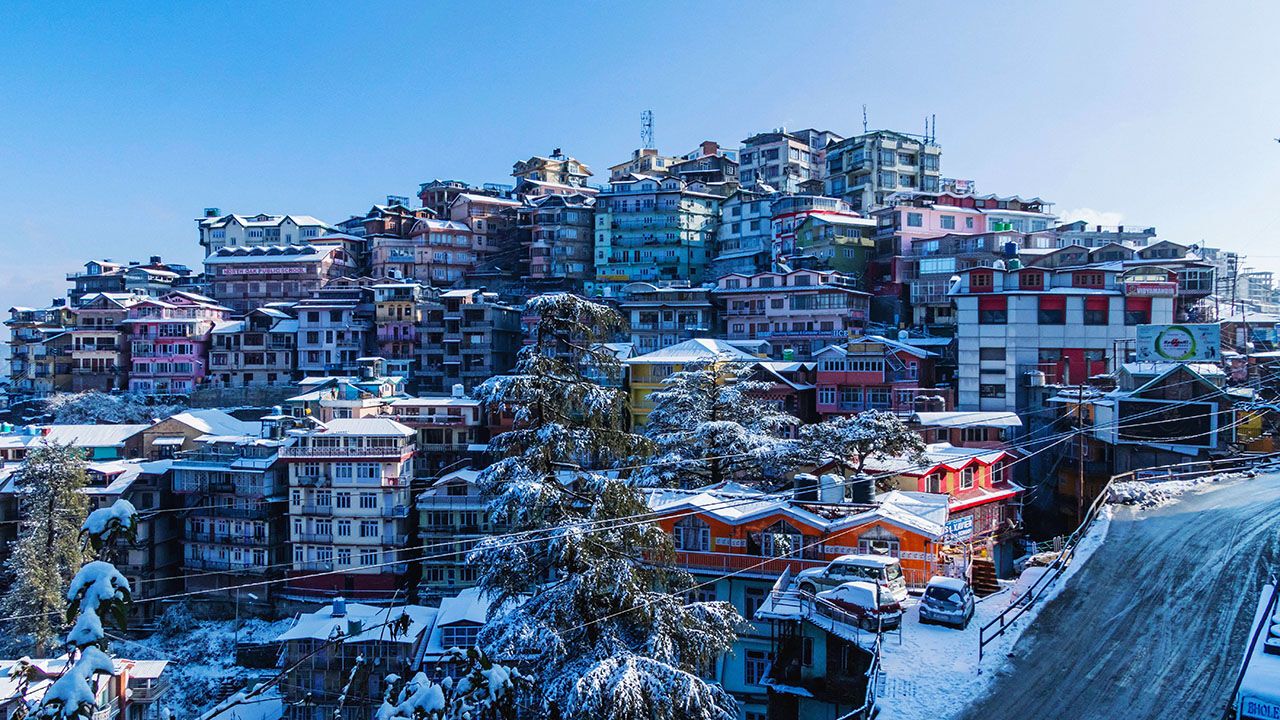
WHEN THE temperature rises, Indians head upwards. In the scorching(灼热的;极热的) month of May, many venture(冒险;冒险前往) to famous hill towns—none better known than(没有比……更知名的) Shimla, a resort in the foothills of the Himalayas which British colonial rulers used as their summer capital. Urbanites chase fairy-tale scenes of pine forest, snow-capped peaks and mischievous macaque monkeys.
当气温升高,印度人便向高处进发。在酷热的五月,许多人前往著名的山城——其中最负盛名的莫过于西姆拉,这座位于喜马拉雅山麓的度假胜地曾是英国殖民统治者的夏都。都市人追逐着童话般的景象:松林、雪峰和顽皮的猕猴。
That is only part of what they find. On a recent visit to Shimla, your correspondent sat in a high-altitude traffic jam(高海拔交通堵塞) all the way into the centre. These days the city’s Tudor-style town hall looks onto a branch of Domino’s Pizza. Punters watch the sun set over the mountains from the terraces of bars that blare(发出响而刺耳的声音) songs by Lady Gaga.
这只是他们所见的一部分。最近一次访问西姆拉,本刊记者一路堵车直到市中心。如今,这座城市的都铎式市政厅正对着达美乐披萨的一家分店。顾客们在酒吧露台上看着太阳落山,而酒吧里大声播放着Lady Gaga的歌曲。
Under the British, Shimla housed around 25,000 people. Now it welcomes roughly 2.7m visitors each year. Much of its expansion was unplanned. The skyline is a maze(迷宫;错综复杂) of modest homestays—their sun-faded signs promising views that are often blocked by the building next door. Houses cling to 75-degree slopes, flout(公然蔑视;藐视)ing both gravity and bylaws((地方)规章;附则).
在英国统治时期,西姆拉只有约2.5万人居住。如今它每年接待大约270万游客。其扩张大多未经规划。天际线是迷宫般的简陋民宿——它们被阳光晒褪色的招牌承诺有美景,但这些景致往往被隔壁的楼房遮挡。房屋紧贴75度的斜坡而建,既蔑视重力,也藐视法规。