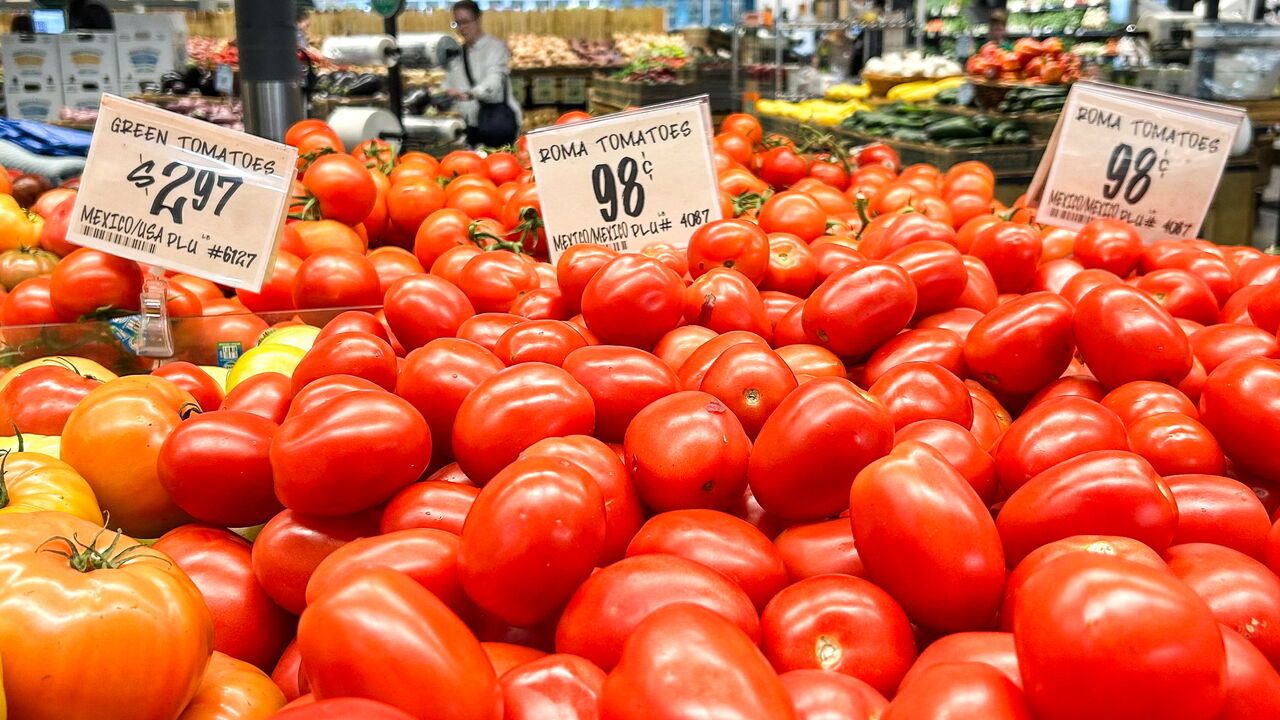
AMERICANS ARE not famous for their love of vegetables. The staples(主食;主要产品) of American cuisine are starchy(富含淀粉的), cheesy and heavy on(大量使用;偏重) meat. One exception, though, sneaks into(偷偷进入;悄然渗入) everything: the tomato. Slices are tucked into(夹入;塞进) burgers; canned ones become pizza sauce; further processing(进一步加工) turns them into ketchup. After potatoes, Americans eat more tomatoes than any other vegetable. Yet shoppers reaching for one at their grocery store may be experiencing a sense of déjà vu(似曾相识的感觉). Tomato prices are almost 25% higher than they were a year ago. It is eggs all over again(鸡蛋事件重演).
美国人并不以热爱蔬菜著称。美国菜肴的主食多富含淀粉、奶酪且肉类偏重。但有一个例外悄悄渗入一切:番茄。番茄片夹进汉堡;罐头番茄做成披萨酱;进一步加工则变成番茄酱。除了土豆,美国人吃番茄比任何其他蔬菜都多。然而,在杂货店伸手拿番茄的 shoppers 可能会感到似曾相识。番茄价格比一年前上涨了近25%。这简直就是鸡蛋事件的重演。
Tomato prices are rising partly for idiosyncratic(独特的;特殊的) reasons. Some 90% of America’s imports of tomatoes come from Mexico. In the middle of 2025 President Donald Trump withdrew from(退出;撤回) the “Tomato Suspension Agreement(① 背景:该协议是美墨之间关于番茄贸易的...)”—a bilateral arrangement managing imports of Mexican tomatoes—and imposed a 17% levy on them. But prices may keep climbing. Tomatoes, like other fresh produce, require fertiliser, the price of which has rocketed(猛涨;迅速上升) since the war with Iran broke out(爆发). Fuel costs are also starting to bite(开始产生不良影响). How bad could the rise in grocery prices get?
番茄价格上涨部分出于特殊原因。美国约90%的番茄进口来自墨西哥。2025年年中,唐纳德·特朗普总统退出“番茄暂停协议”——一项管理墨西哥番茄进口的双边安排——并对其征收17%的关税。但价格可能继续攀升。番茄与其他新鲜农产品一样需要化肥,而化肥价格自伊朗战争爆发以来已飙升。燃料成本也开始造成影响。食品杂货价格上涨可能会多严重?
To understand how the energy shock will affect grocery bills, consider each step of the supply chain. Begin with farmers, who rely on fossil fuels(化石燃料). Fertilisers, which typically use natural gas as a feedstock(原料;给料), account for(占;说明原因) as much as 40% of their input costs. Add to that(再加上) the diesel needed to fuel their tractors. Producers of commodities(大宗商品;商品) like wheat and maize, however, have little control over their prices, which are determined by the balance of global supply and demand. Much of the expense for this year’s growing season—rent, equipment, seeds and even some fertiliser purchases—would have already been incurred(招致;承担) by the time the war began. The energy shock might force some farmers into the red(陷入亏损) this year, but many will still make more money by planting what seed they have, rather than letting it go to waste. That means crop supply may not change much this season. The effect on farm prices might therefore not be felt in full until next season, by when growers who suffered big losses this year may have packed it in(放弃;停止).
要理解能源冲击将如何影响食品杂货账单,需考虑供应链的每一环节。先从农民说起,他们依赖化石燃料。化肥通常以天然气为原料,占农民投入成本的40%。再加上拖拉机所需的柴油。然而,小麦和玉米等大宗商品的生产者对其价格几乎无法控制,价格由全球供需平衡决定。本种植季的大部分开支——租金、设备、种子甚至部分化肥采购——在战争爆发时可能已经发生。能源冲击可能迫使一些农民今年陷入亏损,但许多人仍会利用手头种子继续种植赚钱,而不是任其浪费。这意味着本季作物供应可能变化不大。因此,对农产品价格的影响可能要到下一季才会全面显现,届时今年遭受重大损失的种植者可能已经放弃。