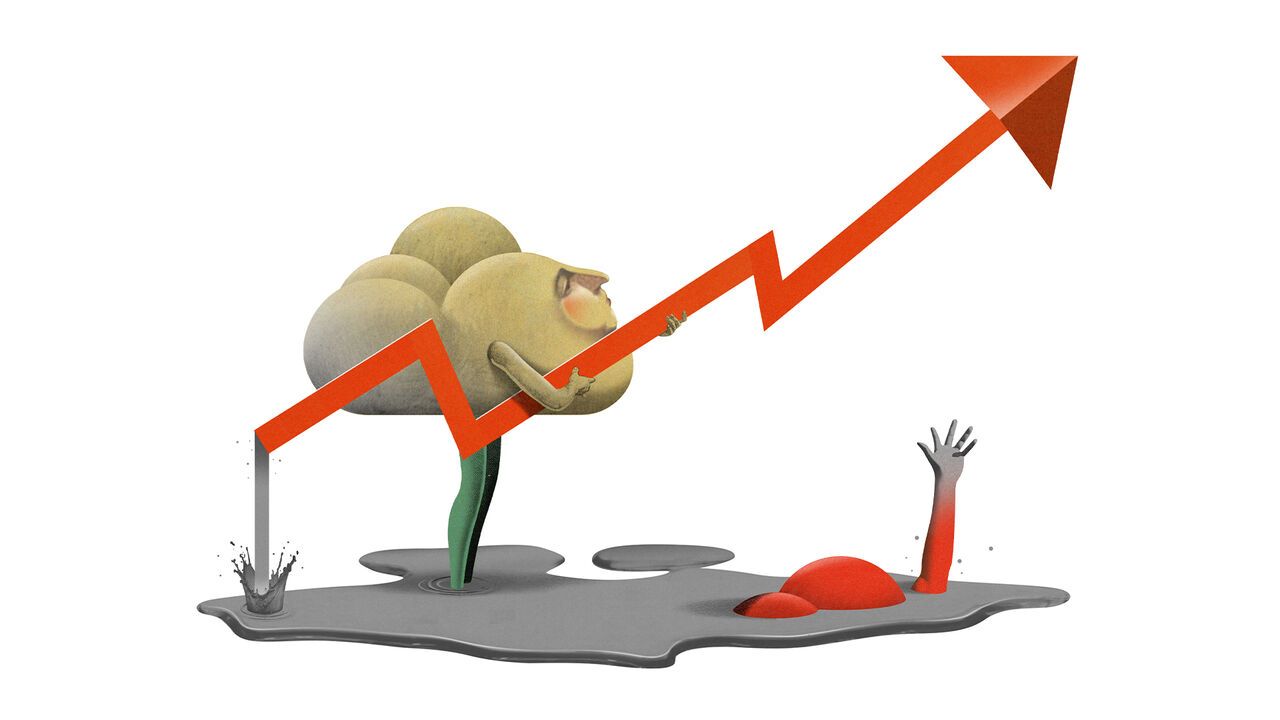
Achart is haunting(萦绕,困扰) Silicon Valley. The profits of big cloud-computing firms (Amazon, Google, Meta, Microsoft and Oracle) are rising inexorably(不可阻挡地). Yet the amount of cashflow(现金流) they generate after capital spending(资本支出) is falling. Sketched together, these soaring profits and diving free cashflows(自由现金流), which until recently rose in unison(一致地,同步地), resemble(类似于,像) the gasps(倒吸一口冷气,喘息) of the world’s investors.
一张图表正困扰着硅谷。大型云计算公司(亚马逊、谷歌、Meta、微软和甲骨文)的利润不可阻挡地上升,然而它们在资本支出后产生的现金流却在下降。将这些曲线画在一起,飙升的利润和骤降的自由现金流(直到最近还同步上升)就像世界投资者的倒吸一口冷气。
In short order America’s biggest companies have gone from printing money(印钞票(指大量盈利)) to burning it. Amazon, Meta and Microsoft are all expected by analysts to announce negative cashflows in at least one quarter this year. Alphabet, the parent company of Google, will just about keep its head above water(勉强维持不沉没). Oracle, the weakest of the bunch, is already drowning(溺水,挣扎).
短时间内,美国最大的公司已经从印钞变成了烧钱。分析师预计亚马逊、Meta和微软今年至少有一个季度将宣布负现金流。谷歌母公司Alphabet将勉强维持不倒。甲骨文是其中最弱的,已经在挣扎了。
It does not take Poirot to work out what’s going on. This year the five firms will spend $800bn filling warehouses with computers to run artificial-intelligence models. These investments barely register(显示,记录) on their profit statements, since assets depreciate(折旧,贬值) only once built—and then only slowly. Cashflow statements, though, are less susceptible to(易受...影响的) obfuscation(模糊化,混淆). At around 40% of their revenues this year, the cloud giants’ capital expenditures will surpass those of the oil industry during the shale boom(页岩油繁荣) in the 2010s and the telecoms industry during the dotcom bubble in the 1990s.
不需要波洛侦探也能明白发生了什么。今年这五家公司将花费8000亿美元,用计算机填满仓库来运行人工智能模型。这些投资在利润表上几乎不显示,因为资产只有在建成后才开始折旧——而且折旧缓慢。不过,现金流量表则不太容易模糊化。今年,云巨头的资本支出约占其收入的40%,将超过2010年代页岩油热潮期间的石油行业和1990年代互联网泡沫期间的电信行业。
Kamikaze capex
自杀式资本支出