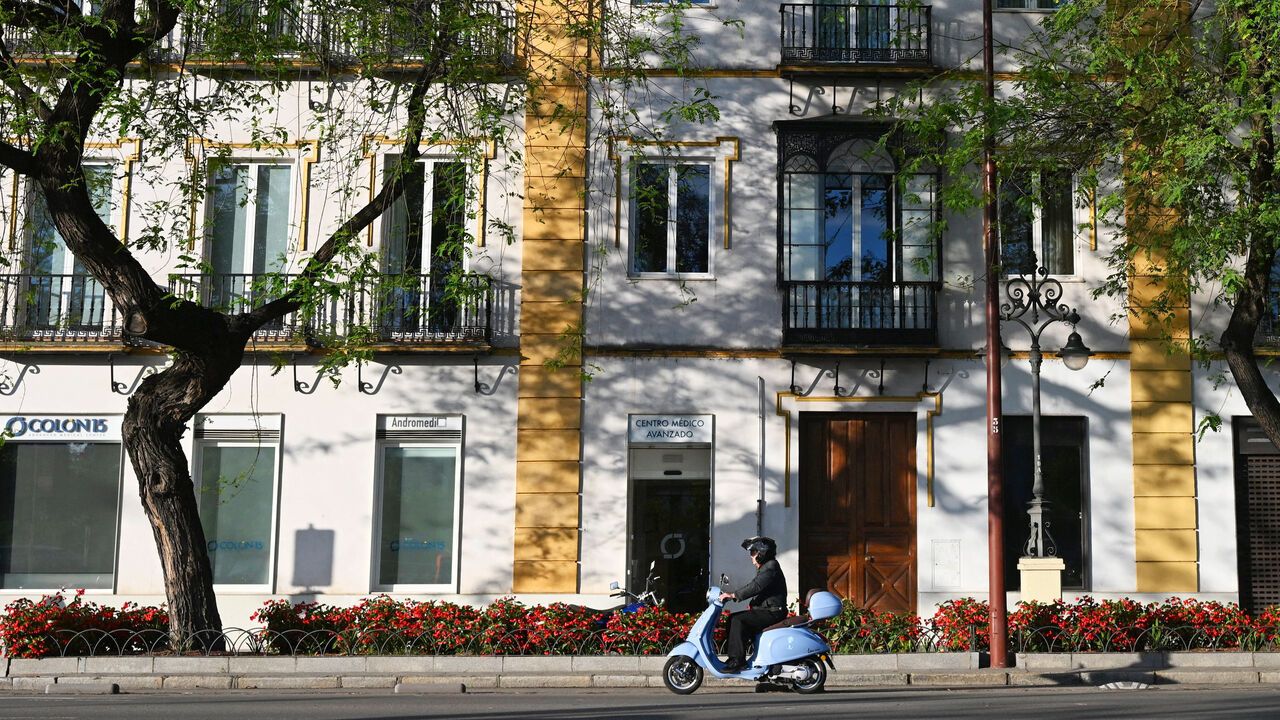
When Bourgeois Fincas, a property agency in Barcelona, lists a flat for rent on the internet, it gets 200 enquiries within an hour or so and it is let within a day. “It’s been like this since last year,” says Jaume Cortes, who works there. “The change is brutal(极其剧烈的).” The agency is based in the Eixample, a leafy grid of elegant 19th-century streets that stretches north from the city’s historic Gothic heart. In many cases the new tenants are digital nomads(数字游民) or other foreigners seeking a second home in the sun. But at the bottom of the market the competition is just as fierce(激烈的). In poor suburbs of Barcelona and Madrid agents report individual rooms being fought over, some rented by the hour by shift workers who take turns sleeping there.
当巴塞罗那的房地产中介Bourgeois Fincas在网上挂出一套出租公寓时,大约一小时内就能收到200次咨询,并在一天内租出。“自去年以来一直如此,”在那里工作的Jaume Cortes说。“变化太猛烈了。”该公司位于Eixample区,那里绿树成荫,街道整齐优雅,是19世纪的街区,从历史悠久的哥特城区向北延伸。许多新租客是数字游民或其他寻求阳光第二家园的外国人。但在市场的底层,竞争同样激烈。在巴塞罗那和马德里的贫困郊区,中介报告说单间都被争抢,有些甚至按小时出租,由轮班工人轮流睡觉。
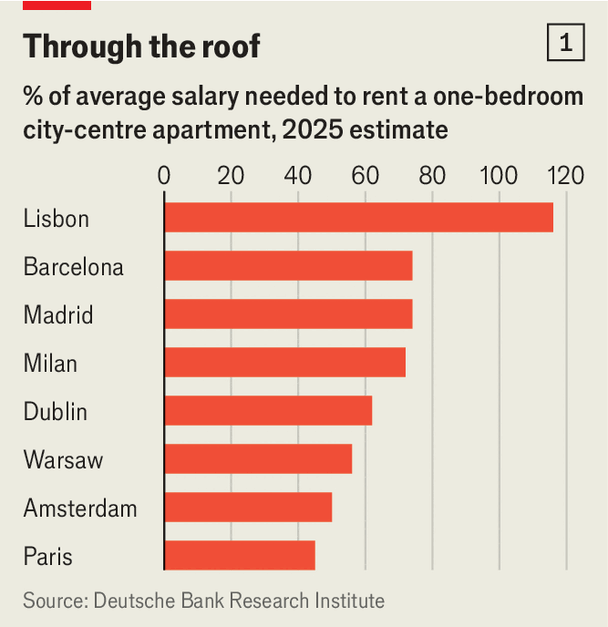
All across Europe, cities face housing shortages. Average house prices in the EU surge(急剧上涨)d by 60% between 2015 and 2025, well ahead of(远超) household incomes. In many places rents take up much more than 40% of average salaries, a threshold that can imply financial difficulty (see chart). Housing is an urgent political issue: some link the populist right’s rise to the difficulty of finding a home, especially for the young.(一些人将民粹主义右翼的崛起与找房困难(尤其是年轻人)联系起来。) In Spain and the Netherlands polls find it is the top public concern. The EU talks of a “housing crisis”; its 27 national leaders are due to discuss this at a summit this year. In 2024 the European Commission appointed a housing commissioner for the first time (shared with energy). It plans to tweak rules to allow more public investment and let governments limit tourist flats.
整个欧洲的城市都面临住房短缺。2015年至2025年间,欧盟平均房价飙升了60%,远超家庭收入增速。在许多地方,租金占平均工资的比重远超40%,而这一门槛通常意味着财务困难(见图表)。住房已成为紧迫的政治议题:一些人将民粹主义右翼的崛起与找房困难(尤其是年轻人)联系起来。在西班牙和荷兰,民调显示住房是公众最关切的问题。欧盟官方在谈论“住房危机”;27国领导人计划在今年峰会上讨论这一问题。2024年,欧盟委员会首次任命了住房专员(与能源事务共用)。它计划调整规则,以允许更多公共投资并让政府限制旅游公寓。
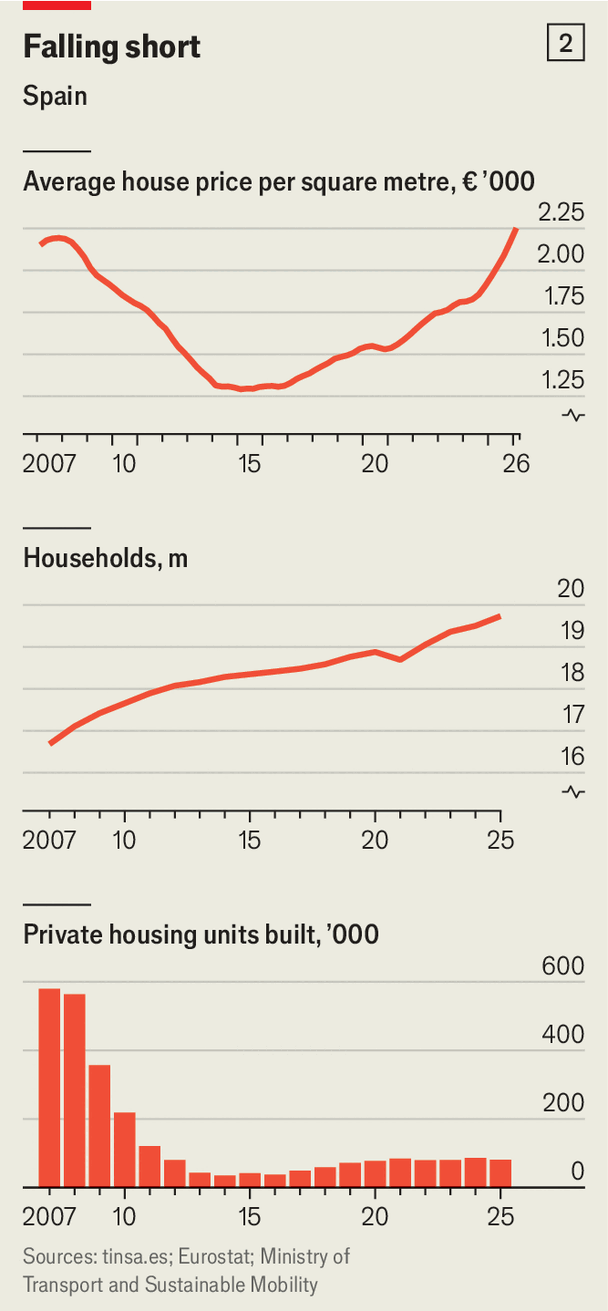
Housing markets vary(各不相同) from country to country. Germans tend to rent their homes, while southern and eastern Europeans prefer to buy. Public and social housing (ie, those subsidised or run by non-profit organisations) makes up 30% or more of the stock in the Netherlands and in Vienna. By contrast, in Spain public housing accounts for just 3.4%. The EU average is 8%.
各国住房市场各不相同。德国人倾向于租房,而南欧和东欧人偏好买房。公共和社会住房(即由非营利组织补贴或运营的住房)在荷兰和维也纳占住房存量的30%或更多。相比之下,西班牙的公共住房仅占3.4%。欧盟平均水平为8%。
Harder than you think
比你想的更难