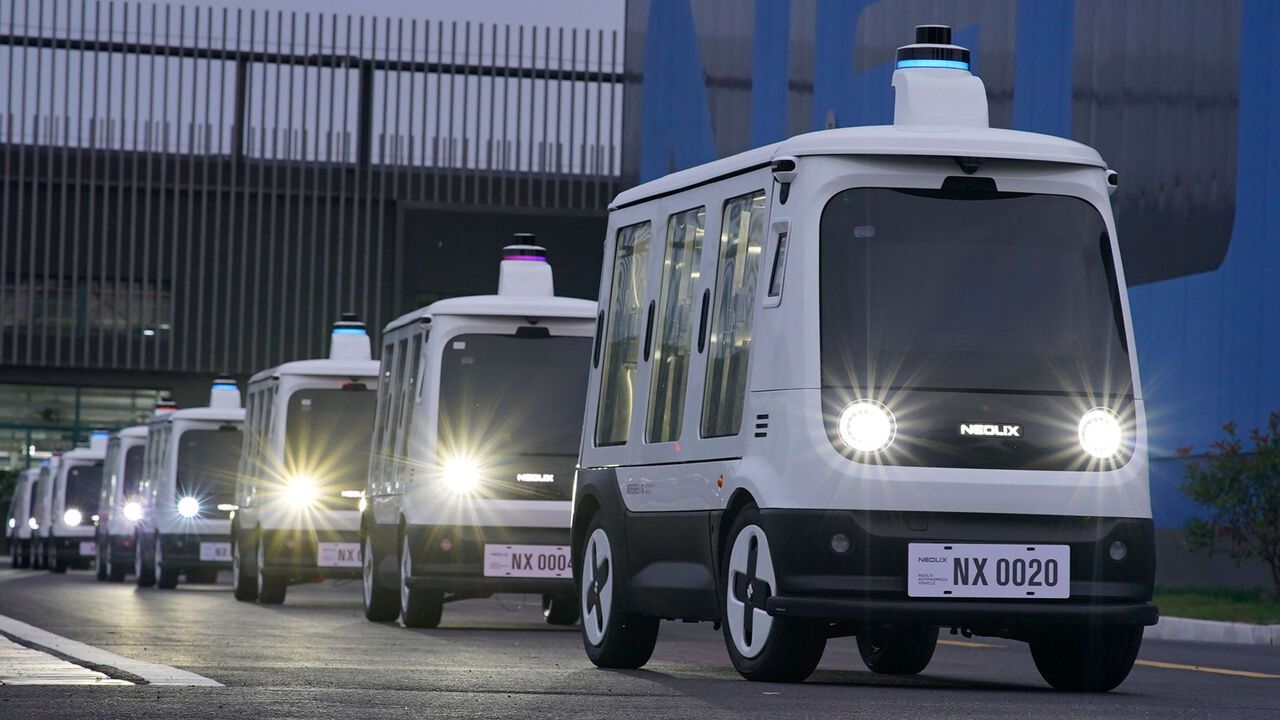
A year ago the city of Qingdao had just a handful(少量,几个) of autonomous vehicles. Now it has more than almost anywhere else on Earth. One firm, Neolix, has put around 1,200 unmanned delivery vans on local roads; it hopes to have 4,000 by the end of the year. With several other autonomous taxi and food-delivery projects under way(在进行中), Qingdao exemplifies(例证,是…的典型) how rapidly artificial intelligence is transforming China. It is also the front line of the clash between unmanned vehicles and drivers.
一年前,青岛市只有寥寥数辆自动驾驶汽车。如今,其数量几乎超过地球上任何其他地方。一家名为新石器的公司已在当地道路上投放了约1200辆无人配送车;它希望在年底前达到4000辆。随着其他几个自动驾驶出租车和食品配送项目的推进,青岛成为了人工智能如何迅速改变中国的范例。它也是无人驾驶车辆与司机之间冲突的前线。
Autonomous cars and drones are being deployed in China at a dizzying pace(令人头晕的速度). About 33,000 short-range delivery vehicles, including the ones in Qingdao, were on Chinese roads at the end of 2025. The number of unmanned cabs is expected to hit 14,000 by the end of 2026. Goldman Sachs, a bank, reckons(估计,认为) that more than 700,000 robotaxis (meaning 12% of all ride-hailing vehicles) will roam(穿梭,漫游) Chinese cities within five years. Meituan, a delivery super-app, believes it could use drones for 10% of the country’s instant food deliveries, of which 60bn were made last year.
自动驾驶汽车和无人机正以令人眼花缭乱的速度在中国部署。到2025年底,包括青岛在内,中国道路上约有33000辆短途配送车辆。无人驾驶出租车数量预计到2026年底将达到14000辆。投行高盛估计,五年内将有超过70万辆自动驾驶出租车(占所有网约车的12%)穿梭于中国城市。外卖超级应用美团认为,其可以利用无人机完成全国即时食品配送的10%,而去年全国即时配送量达到了600亿次。
Though each such delivery is a technological miracle, in the short run it may deprive(剥夺,使丧失) a human driver of a fare. This puts Chinese leaders in a bind(陷入困境): they want to lead the world in AI and automation but not destroy jobs. An economic plan for the next five years says the country must “prevent and resolve large-scale unemployment risks”. In April a cyber-security watchdog told developers in a draft document that they should “not apply AI with the goal of replacing human employment”.
尽管每次这样的配送都是技术奇迹,但在短期内,它可能剥夺人类司机的一笔车费。这让中国领导人陷入两难:他们想在人工智能和自动化领域领先世界,但又不想破坏就业。未来五年的经济规划指出,国家必须“防范和化解大规模失业风险”。今年4月,一家网络安全监管机构在一份草案中告诉开发者,他们“不应以取代人类就业为目标来应用人工智能”。