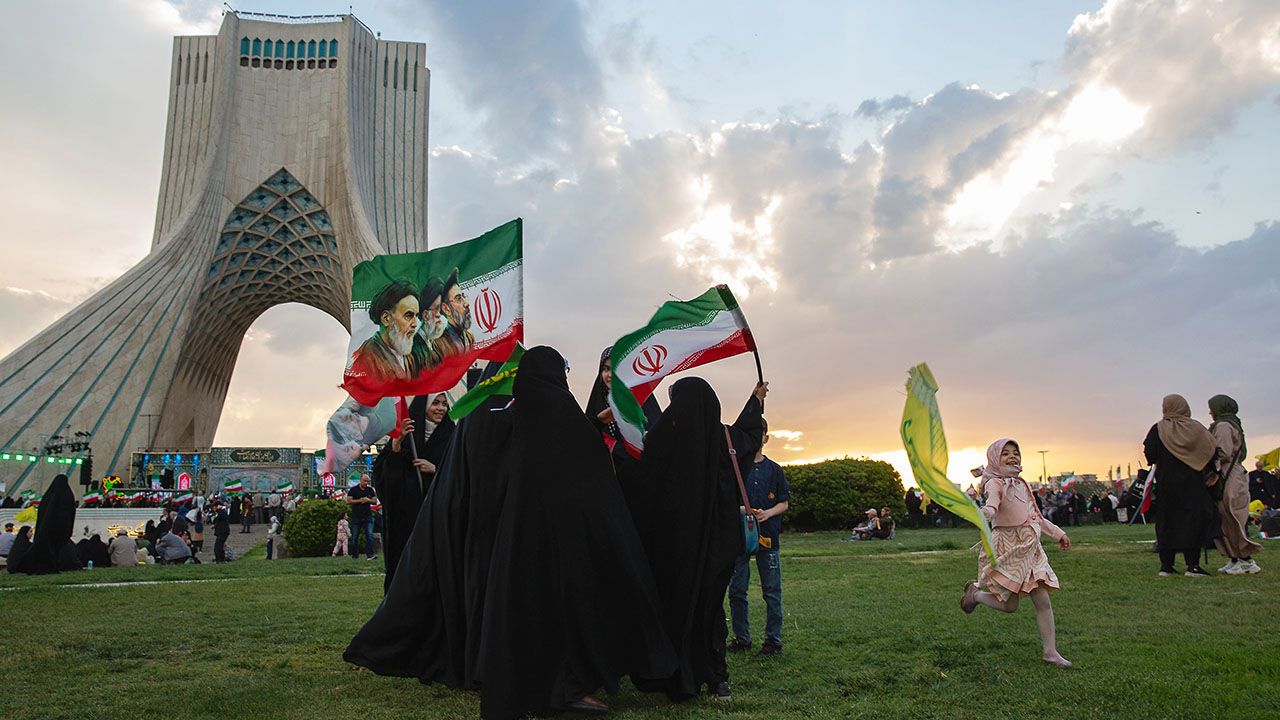
AS AN UNEASY truce(停火,休战) holds between America and Iran, experts are struggling to predict what new phase the conflict may enter next. Might an artificial-intelligence model know any better? To find out, The Economist asked RAND, a think-tank, to see if its new AI forecasting system thought a popular uprising was in the offing(即将发生,在酝酿中) in Iran. Integrated Strategic Forecasting (ISF), as the system is known, put the chance of regime collapse or replacement by the end of 2026 at 20%—higher than many experts would hazard(冒险猜测,大胆推测).
在美国与伊朗之间脆弱的停火状态下,专家们难以预测冲突可能进入何种新阶段。人工智能模型是否会知道得更多?为了找出答案,《经济学人》请智库兰德公司测试其新AI预测系统是否认为伊朗即将发生民众起义。该系统的全称是综合战略预测(ISF),它认为到2026年底政权崩溃或更替的概率为20%——高于许多专家敢于给出的判断。
There are caveats(警告,限制条件). The forecast was produced without classified intelligence. Its inputs and outputs were also not vetted by humans, as is customary for forecasts commissioned by government agencies, notes Anthony Vassalo, RAND’s head of prediction technology and a former senior official in America’s Office of the Director of National Intelligence. Even so, Mr Vassalo is bullish. He describes ISF, which was completed in February, as “the better crystal ball(水晶球(预测未来的象征))” policymakers have long sought.
需要指出的是,该预测是在没有使用机密情报的情况下做出的。兰德公司预测技术主管、曾任美国国家情报总监办公室高级官员的安东尼·瓦萨洛指出,其输入和输出也未像政府机构委托的预测那样经过人工审核。即便如此,瓦萨洛仍然乐观。他将今年2月完成的ISF描述为决策者长期寻求的“更好的水晶球”。
And ISF is not the only game in town(唯一的可行选择). After two decades in which attempts to build conflict-predicting computer models have yielded disappointing results, recent advances in machine learning and large language models have prompted many data scientists to take another crack(再次尝试).
而ISF并非唯一的竞争者。在过去二十年里,构建冲突预测计算机模型的尝试结果令人失望,但最近机器学习和大语言模型的进步促使许多数据科学家再次尝试。