For much of the modern era, “Neanderthal” has served as shorthand for brutishness(野蛮;粗野) and ineptitude(无能;笨拙). Yet mounting archaeological evidence suggests a rather more refined species: one that buried its dead, tended to injured companions and adapted with remarkable success to the rigours(严酷;艰苦) of Ice Age Europe.
在现代的大部分时间里,“尼安德特人”一直是野蛮无能的代名词。然而,越来越多的考古证据表明,这是一个更加文明的物种:他们埋葬死者、照料受伤的同伴,并以惊人的成功适应了冰河时代欧洲的严酷环境。
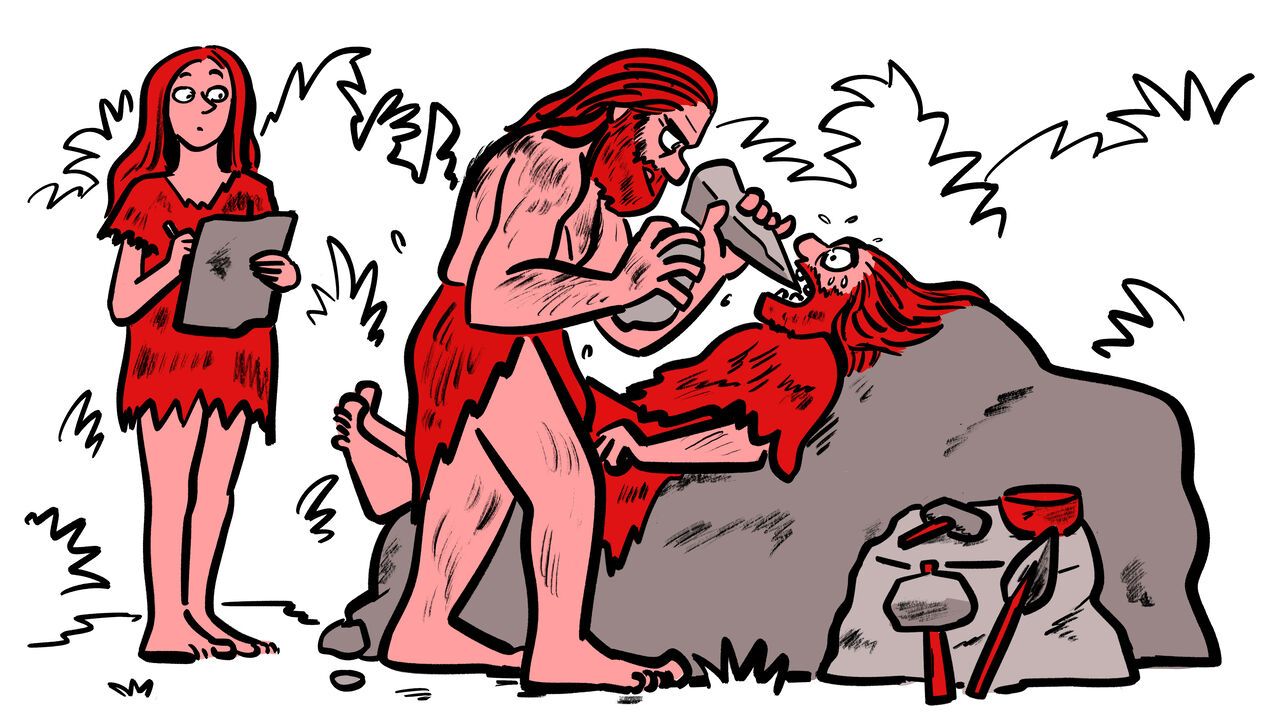
Many researchers still draw a line between their behaviour and that of modern humans, arguing that they lacked the technical sophistication to perform something as complex as surgery.(许多研究者仍然在尼安德特人的行为与现代人类的行为之间划清界限,认为他们缺乏执行像手术这样复杂任务的技术复杂度。) Now a battered(受损的;破旧的) tooth from a cave in southern Siberia, described in the journal PLOS One by Alisa Zubova, Lydia Zotkina and Ksenia Kolobova at the Russian Academy of Sciences(俄罗斯科学院(Russian Acade...), is forcing a rethink.
许多研究者仍然在尼安德特人和现代人类的行为之间划清界限,认为他们缺乏执行手术这样复杂任务的技术复杂度。如今,俄罗斯科学院的Alisa Zubova、Lydia Zotkina和Ksenia Kolobova在《PLOS One》期刊上描述了一颗来自西伯利亚南部洞穴的破损牙齿,这迫使人们重新思考。
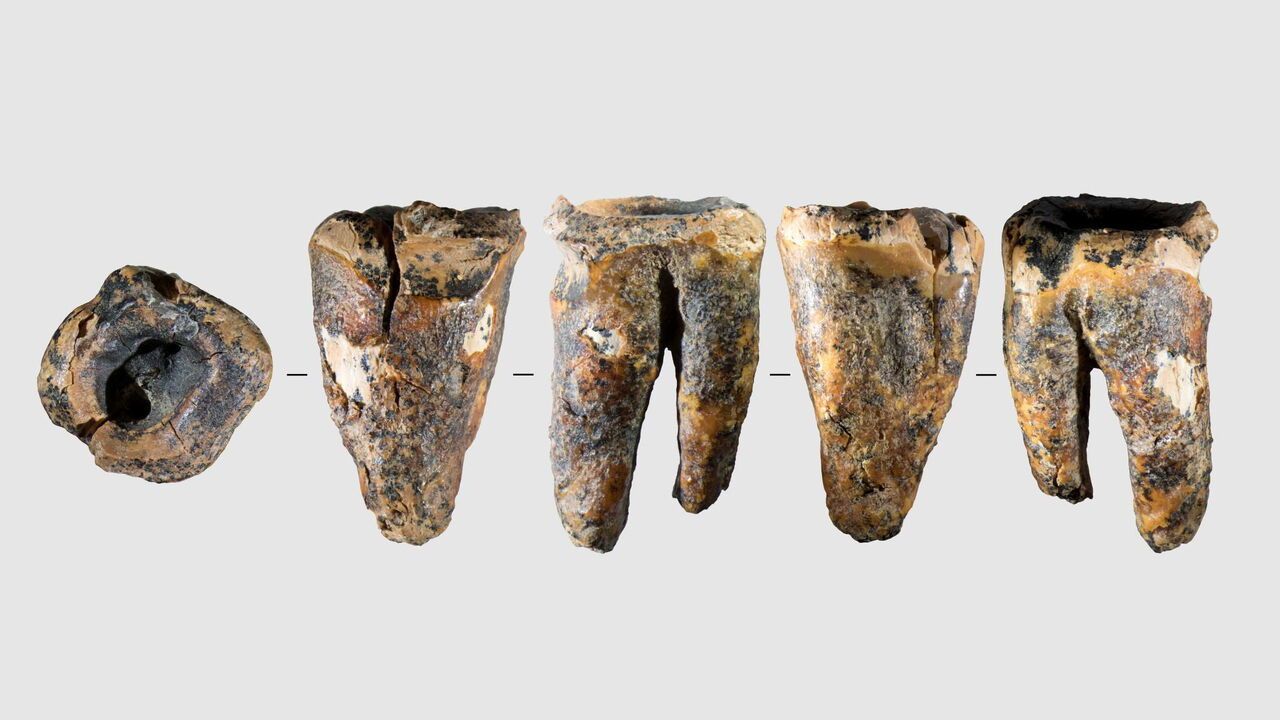
The tooth in question is a 59,000-year-old molar from an adult Neanderthal. It was discovered in 2016 in Chagyrskaya Cave in the Russian stretch of the Altai Mountains by Dr Kolobova’s team and, like many ancient teeth, it is heavily worn down from years of chewing on tough, gritty(含沙的;坚韧的) food. No other skeletal remains of its owner have been found. What is noteworthy about the tooth is that it has a large hollow(空洞;凹陷) on the chewing surface that reaches deep into its centre, where nerves and blood vessels would have been.
这颗牙齿是一颗来自成年尼安德特人的59000年前的臼齿。它于2016年在俄罗斯阿尔泰山脉的Chagyrskaya洞穴中被Kolobova博士的团队发现,和许多古代牙齿一样,由于多年咀嚼坚韧、含沙的食物而严重磨损。没有找到其主人的其他骨骼遗骸。这颗牙齿值得注意的是,它的咀嚼面上有一个大的空洞,深处到达牙齿中心,那里原本应有神经和血管。