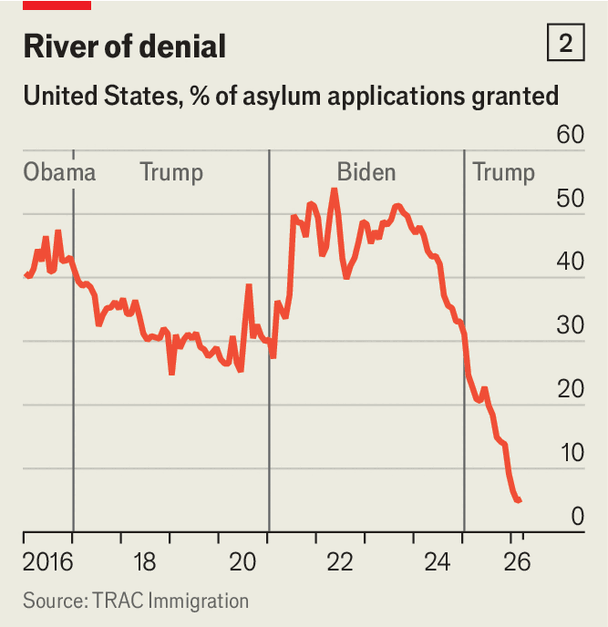
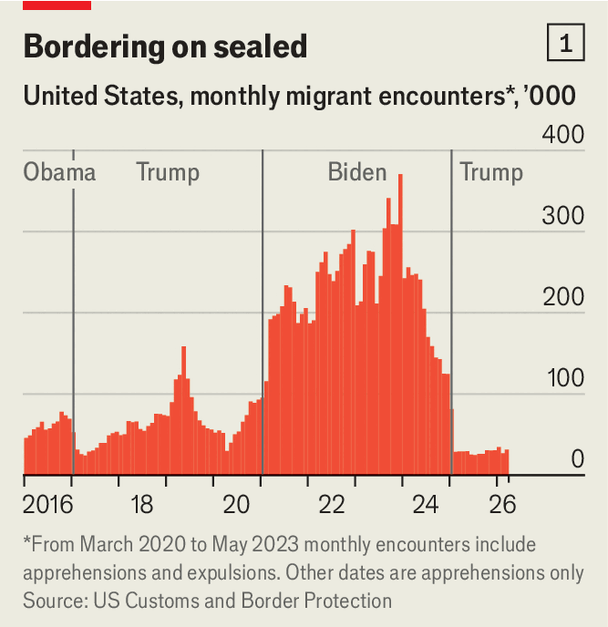
WHEN TOM HOMAN, Donald Trump’s border tsar(边境总管), addressed the Border Security Expo in Phoenix on May 5th, he had an upbeat message. “We have the most secure border in the history of the nation,” he crowed(得意地说,夸口). The audience was filled with besuited(穿着西装的) industry types who were hoping to sell the federal government tech and tools to deter(阻止,威慑) migrants and smugglers. Besides the “men and women of Border Patrol”, Mr Homan had one person to thank: “God bless President Trump(上帝保佑特朗普总统).”
当唐纳德·特朗普的边境总管汤姆·霍曼于5月5日在凤凰城边境安全博览会上发表讲话时,他带来了乐观的消息。“我们拥有国家历史上最安全的边境,”他得意地宣称。听众中挤满了西装革履的行业人士,他们希望向联邦政府出售技术和工具以阻止移民和走私者。除了“边境巡逻队的男女们”,霍曼先生还要感谢一个人:“上帝保佑特朗普总统。”
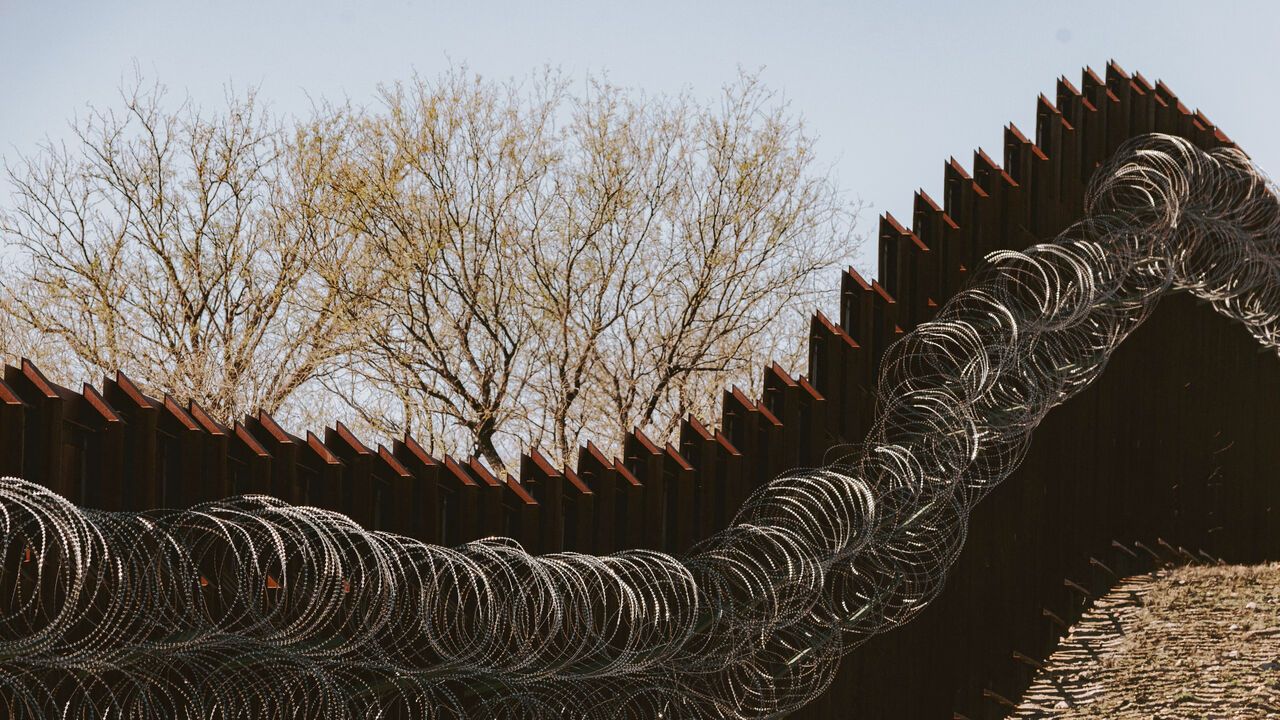
Mr Trump has been promising to close America’s southern border for more than a decade. In his second term, his method for doing that has been muscular(强硬的,有力的), multifaceted(多方面的,多管齐下的) and, ultimately, successful. His border security posture includes finally building his big beautiful wall, hiring more Border Patrol agents, and detaining and deporting migrants with showy cruelty in order to convince others to stay away. But underpinning(支撑,基础) all of that are his administration’s restrictions on asylum, which are being litigated(被诉讼,在法庭上争论) in the courts. The president is testing how much he can restrict asylum without violating America’s laws and its treaty obligations(条约义务). If he succeeds it will be partly because the legislation that governs asylum is vague and outdated(模糊且过时).
十多年来,特朗普先生一直承诺关闭美国南部边境。在他的第二个任期内,他的方法变得强硬、多管齐下,并最终取得了成功。他的边境安全姿态包括最终建造他的大而美丽的墙、雇用更多边境巡逻人员,以及以炫耀式残忍手段拘留和驱逐移民,以劝退其他人。但支撑这一切的是他的政府对庇护的限制,这些限制正在法庭上被诉讼。总统正在测试他能在多大程度上限制庇护而不违反美国法律及其条约义务。如果他成功,部分原因将是管理庇护的立法模糊且过时。
The Refugee Act of 1980 borrowed heavily from(大量借鉴于) the 1951 Refugee Convention and its 1967 extension. America signed the latter. Most of the statute was devoted to creating a programme for resettling refugees who demonstrate a “well-founded fear of persecution(有充分理由的迫害恐惧)”. Lawmakers were reacting to the cold war, and were focused on eastern Europeans and Vietnamese fleeing communism. Territorial asylum—claims made by people already in America or at the border—was an afterthought(事后想法,后来附加的东西). “Our immigration experience was one of people who needed protection coming from far away,” explains Doris Meissner(① 身份:Doris Meissner在...), who oversaw immigration policy at the Justice Department (DoJ) at the time.
1980年的《难民法》大量借鉴了1951年的《难民公约》及其1967年的扩展协议。美国签署了后者。该法案的大部分内容致力于创建一个安置难民的计划,这些难民需证明存在“有充分理由的迫害恐惧”。立法者们当时正应对冷战,关注的是逃离共产主义的东欧人和越南人。领土庇护——由已经在美国或边境的人提出的申请——则成了事后才想到的问题。“我们的移民经验是那些需要保护的人从远道而来,”当时在司法部监督移民政策的多丽丝·迈斯纳解释道。
Joe Biden’s legacy
乔·拜登的遗产