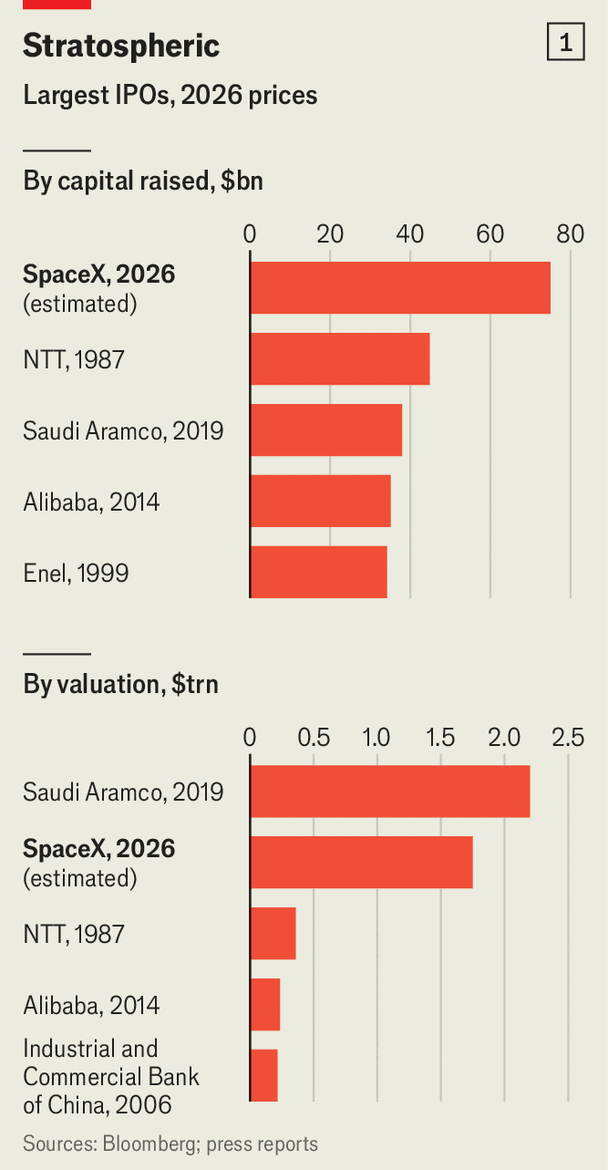
IT IS A launch of a more bureaucratic sort than normal for SpaceX, but still characteristically spectacular. On May 20th, after America’s financial markets had closed, Elon Musk, the rocketry firm’s founder and the world’s richest man, lit the blue touch paper(点燃导火索) on the biggest initial public offering ever. Documents filed with American regulators pave the way for SpaceX, which has conquered space but is spending a fortune on artificial intelligence (ai), to make its debut on the NASDAQ(纳斯达克交易所) exchange in June.
这是一次比SpaceX通常更具官僚色彩的发射,但仍一如既往地引人注目。5月20日,在美国金融市场收盘后,这家火箭公司的创始人、世界首富埃隆·马斯克点燃了有史以来最大规模首次公开募股的导火索。提交给美国监管机构的文件为SpaceX在6月于纳斯达克交易所上市铺平了道路——这家公司已经征服了太空,但正在人工智能上花费巨额资金。
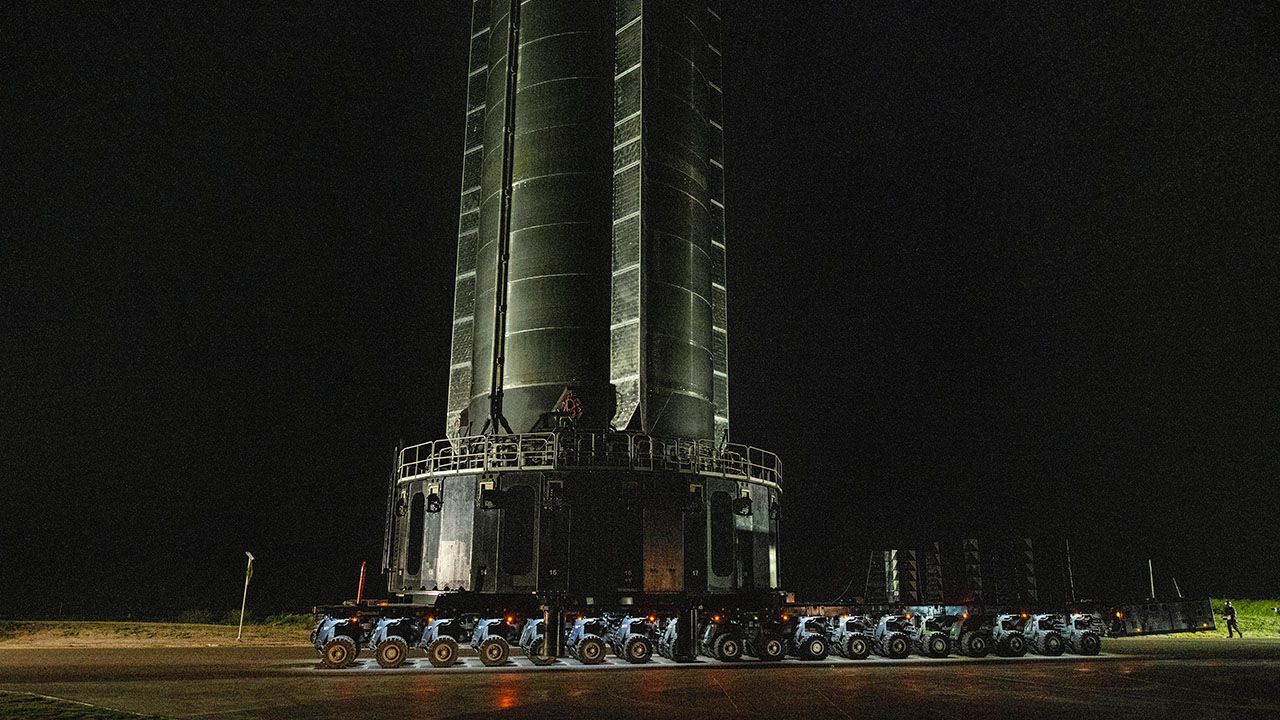
Mr Musk had hoped to mark the occasion with a test flight of the latest version of the firm’s gigantic, troublesome Starship rocket, upon whose stainless-steel frame the company’s astronomical ambitions rest. But the test, originally scheduled for May 19th, has slipped repeatedly. As The Economist went to press, Starship was due to fly on May 21st. Its success or failure could have a big impact on the IPO.
马斯克本希望用该公司最新版巨型且麻烦不断的星舰火箭的试飞来纪念这一时刻,这家公司庞大的雄心就寄托在这枚火箭的不锈钢框架上。但原定于5月19日的试飞一再推迟。截至《经济学人》付印时,星舰预计在5月21日试飞。其成败可能对IPO产生重大影响。
For many years SpaceX had dismissed the idea of an IPO. “We can’t go public until we’re flying regularly to Mars,” said Gwynne Shotwell, the firm’s chief operating officer, in 2018. Mr Musk has long argued that public markets are too short-termist(短视的;只顾眼前的) and unimaginative for a firm whose goal is eventually to build a city on Mars.
多年来,SpaceX一直对IPO的想法嗤之以鼻。该公司首席运营官格温·肖特韦尔在2018年表示:“除非我们能定期飞往火星,否则不会上市。”马斯克长期以来一直认为,对于一家目标最终是在火星上建造城市的公司来说,公开市场过于短视和缺乏想象力。
Business, but not as we know it
生意,但绝非我们所知的模样
Boldly going forward
勇敢前行
We can’t find reverse
我们找不到倒车挡