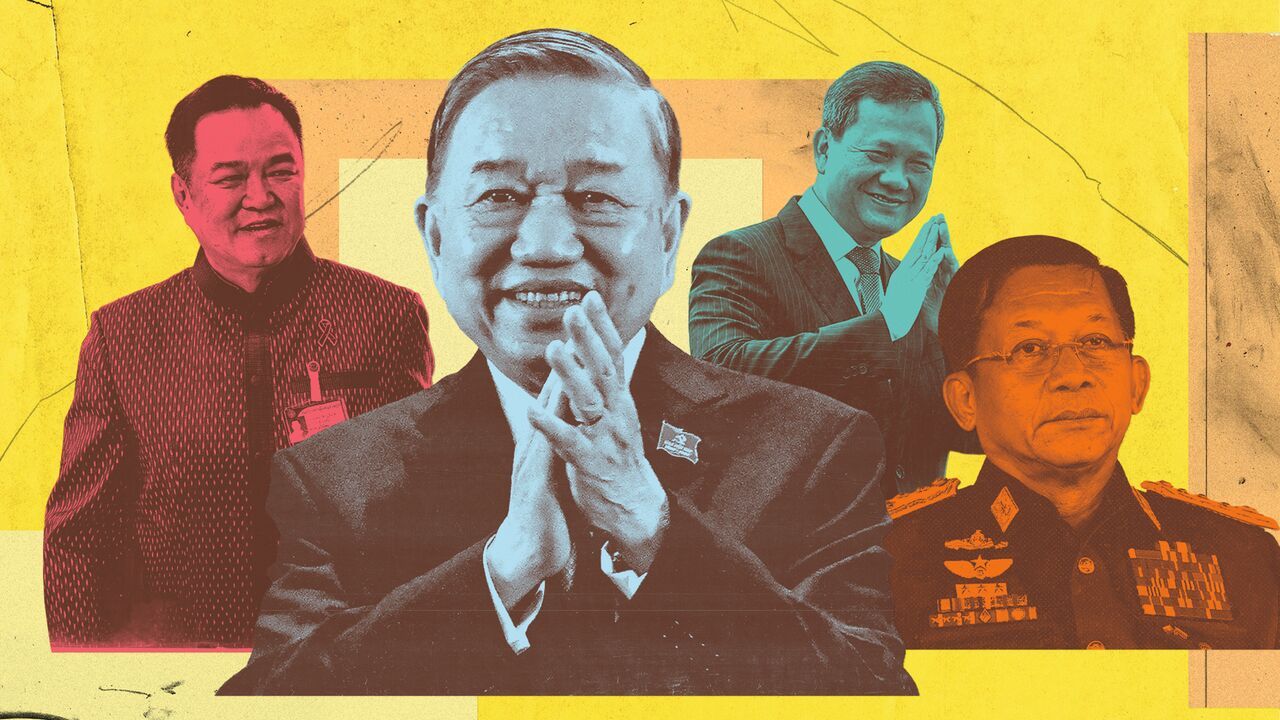
WHEN VIETNAM’S president, To Lam, steps up to the microphone in Singapore on May 29th, he will have a spring in his step(步伐轻快,充满活力). Mr Lam is giving the keynote address at the Shangri-La Dialogue, a gabfest(长谈会,闲谈聚会) of defence ministers, military commanders and spy chiefs that takes place in the hotel of that name on the island each year. He will do so as Vietnam’s most powerful leader in nearly four decades.
当越南主席苏林于5月29日在新加坡走向麦克风时,他将步履轻快。苏林将在香格里拉对话会上发表主旨演讲,这是一个每年在该岛同名酒店举行的国防部长、军事指挥官和间谍头目的聚会。他将以近四十年来越南最有权势的领导人的身份发表讲话。
Mr Lam was re-elected as chief of Vietnam’s Communist Party in January, and last month took the office of president for good measure(额外,另外). He is the first Vietnamese leader to be elected to both jobs for full terms since 1986. This has put beyond doubt Mr Lam’s authority to pursue far-reaching reforms in Vietnam, and to run its foreign policy. It also makes him one of the most powerful leaders in South-East Asia. That is a change after decades of infighting(内斗,内部争斗) in the top ranks of the party.
苏林于1月连任越南共产党总书记,上个月又兼任了国家主席一职。他是自1986年以来首位同时担任这两个职务满任期的越南领导人。这使苏林在越南推行深远改革和执行外交政策的权威毋庸置疑。这也使他成为东南亚最有权势的领导人之一。这是经过数十年党内高层内斗后的一种变化。
Mr Lam’s consolidation of power is part of a broader trend observable across the region once known as the Indochinese Peninsula(Indochinese Peninsul...) but now referred to as “mainland” South-East Asia. From Vietnam in the east to Cambodia, Thailand and Myanmar in the west, South-East Asia’s hard men are undertaking a process of regime renewal. To varying degrees, the changes are putting their rule on a firmer footing(更稳固的基础) after years of challenge.
苏林的权力巩固是更广泛趋势的一部分,这一趋势在整个曾被称为印度支那半岛、如今被称为“大陆”东南亚的地区都可以观察到。从东部的越南到西部的柬埔寨、泰国和缅甸,东南亚的强人们正在进行政权更新。在不同程度上,这些变化使他们的统治在多年挑战之后更加稳固。
A different kind of authoritarian
另一种威权主义者
Two birds with one stone
一石二鸟