
“A drain on our resources”, says Josie from Heywood. “People are coming over here, we’ve no idea who they are, what they’ve done,” says Ed from Bury. “Giving them a hotel, it doesn’t make sense,” says Katie from Gravesham. Those are some of the responses from a focus group(焦点小组(市场调研方法)) of right-leaning(右倾的、偏向保守的) British voters, run by the pollster(民意调查机构) More In Common and commissioned by(受……委托) The Economist, when asked recently what concerns them about immigration.
“对我们资源的消耗”,来自海伍德的乔西说。“人们来到这里,我们完全不知道他们是谁,做过什么,”来自伯里的埃德说。“给他们提供酒店,这说不通,”来自格雷夫舍姆的凯蒂说。这些是来自一个右倾英国选民焦点小组的一些回应,该小组由民调机构More In Common运作,受《经济学人》委托,最近询问他们关于移民的担忧。
Immigration has declined(下降、减少) rapidly in recent years, but the topic remains at the forefront of voters’ minds. Each month Ipsos, another polling firm, asks a representative sample(代表性样本) of adults: “What is the most important issue facing Britain today?” In May 41% responded “immigration”, seven percentage points(百分点) higher than the second-most-mentioned term, “the economy”. A similar poll by More In Common has “cost of living(生活成本)” as the top issue, though concern about immigration has risen by five points over the past year. The government has acted but voters are still displeased. Why?
近年来移民数量迅速下降,但该话题仍处于选民关注的最前沿。每月另一家民调机构Ipsos都会询问具有代表性的成年人样本:“当今英国面临的最重要问题是什么?”5月份,41%的人回答“移民”,比第二个最常被提及的“经济”高出7个百分点。More In Common的一项类似民调将“生活成本”列为最高议题,尽管对移民的担忧在过去一年上升了5个百分点。政府已经采取行动,但选民仍然不满。为什么?
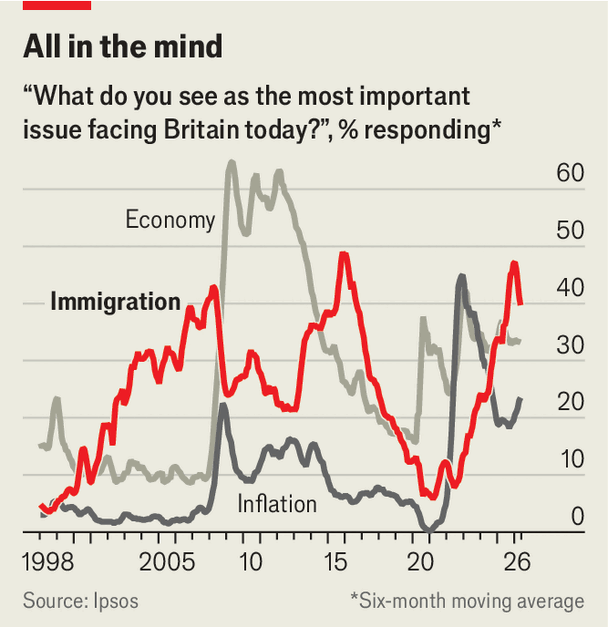
The public’s displeasure long precedes(远远早于……存在) Labour. According to the “Immigration Attitudes Tracker”, published since 2015 by British Future, a think-tank(智库、智囊团), just 15% of Brits say they are satisfied with the way the government is dealing with immigration. That figure has never been higher than 20%. This ire(愤怒、盛怒) could be aimed at several elements of migration, from the sheer volume(绝对数量、大量) of people coming into the country in a given year, to the perception of a lack of control around asylum-seekers, to concerns about the assimilation(同化、融入) of newcomers.
公众的不满早在工党执政之前就已存在。根据智库British Future自2015年起发布的“移民态度追踪”,只有15%的英国人对政府处理移民的方式表示满意。这一数字从未超过20%。这种愤怒可能针对移民的多个方面,从一定年份入境人数的绝对数量,到对庇护寻求者缺乏控制的看法,再到对新移民融入的担忧。