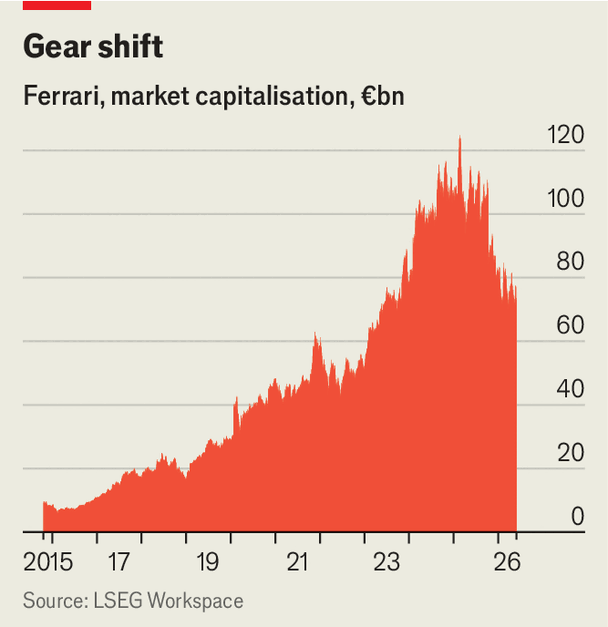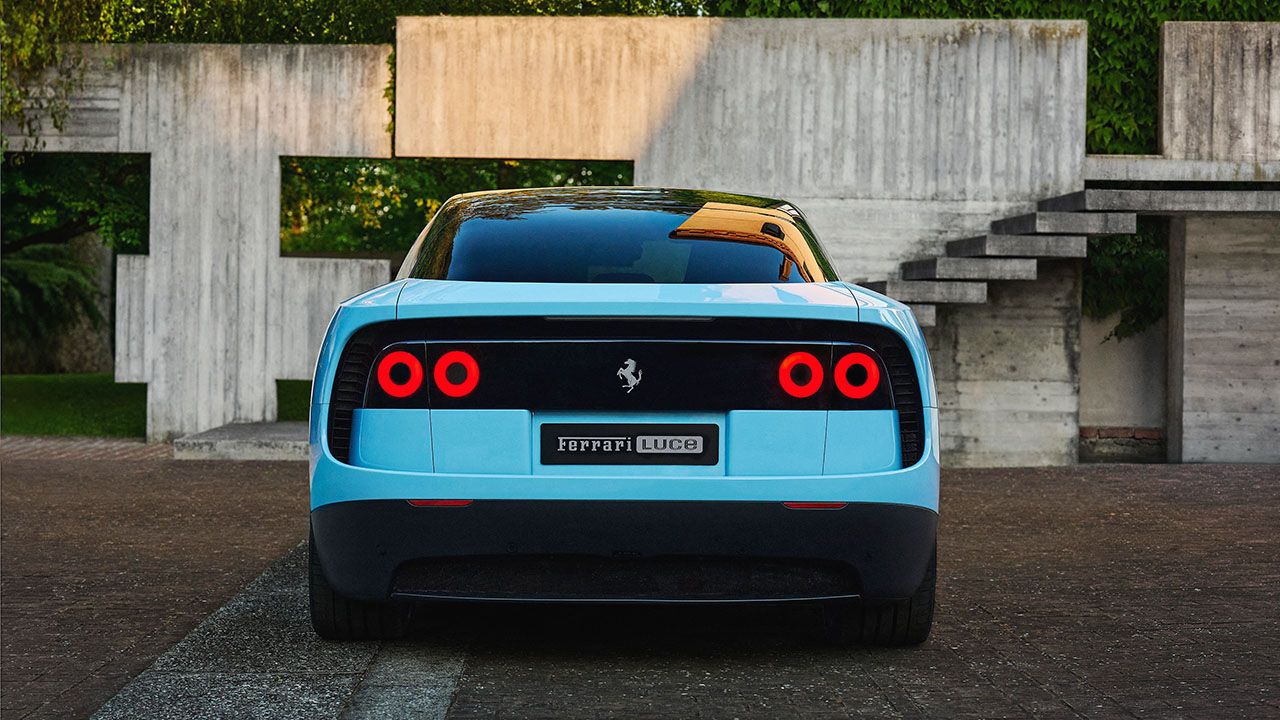
Carmakers usually talk up(吹捧,大肆宣传) a new model. Yet Ferrari (whose biggest shareholder, Exor, part-owns The Economist’s parent company) is not like other car firms. When the supercar brand unveiled its first electric vehicle (EV), called the Luce (Italian for “light”), on May 25th, its marketing chief described it as “polarising(两极分化的)”. Social media erupted with criticisms. Investors also gave it the thumbs down(反对,不认可), though the motoring press was kinder. Yet divisiveness may be the point.(但争议可能正是关键所在。)
汽车制造商通常会大肆宣传新车型。然而,法拉利(其最大股东Exor部分持有《经济学人》母公司)与其他汽车公司不同。当这个超跑品牌于5月25日推出其首款电动车(EV),名为Luce(意大利语意为“光”)时,其营销总监称其“两极分化”。社交媒体上批评声四起。投资者也对其表示反对,尽管汽车媒体更为宽容。但争议可能正是关键所在。
Some features of the Luce are typical of the Italian marque(品牌(尤指汽车)). Four electric motors deliver over 1,000 horsepower, blistering(极快的,惊人的) acceleration and a top speed of 193mph for around €550,000 ($640,000). That makes the Luce the priciest(最昂贵的) of the brand’s higher-volume models, though exclusive limited-edition hypercars can run to(达到(价格等)) over €3.6m. Despite weighty(沉重的) batteries, its engineers will have ensured that it handles as smoothly as any other Ferrari.
Luce的一些特征符合这家意大利品牌的典型风格。四个电动机提供超过1000马力、惊人的加速性能以及193英里/小时的最高时速,售价约55万欧元(64万美元)。这使得Luce成为该品牌高产量车型中最贵的,尽管专属限量版超跑的价格可超过360万欧元。尽管电池沉重,但工程师们将确保其操控性与其他法拉利一样流畅。
But in other respects it is a radical departure(彻底的背离,重大变革), with five seats (a first for the marque), four doors and more boot space than the Purosangue, another four-door model launched in 2022. That model—which Ferrari refuses to concede is an SUV, despite the evidence—was also a controversial departure from Ferrari tradition, but a resounding commercial success.(那款车——尽管证据确凿,但法拉利拒绝承认它是SUV——同样是对法拉利传统的有争议的背离,但却取得了巨大的商业成功。)
但在其他方面,这是一次彻底的背离:拥有五个座位(品牌首次)、四门以及比2022年推出的另一款四门车型Purosangue更大的后备箱空间。那款车——尽管证据确凿,但法拉利拒绝承认它是SUV——同样是对法拉利传统的有争议的背离,但却取得了巨大的商业成功。