Once upon a time, inequality in Europe was largely horizontal(横向的). The rich western half drove BMWs and holidayed abroad, while the poorer east rewired its own appliances and queued for bread. But three decades of catch-up growth(追赶性增长) in erstwhile(以前的,曾经的) communist countries has put paid to(终结、使结束) jokes about Romanian cars whose top speed was “downhill”. These days inequality in Europe has a vertical dimension(纵向维度)—one that goes up and down family trees. Youngsters unable to move out of their parents’ spare room due to sky-high house prices wonder if they will ever enjoy the lifestyle as adults which they knew as kids. Thirty-somethings in jobs pay hefty(巨额的,沉重的) taxes to fund the pensions of oldies who retired in their prime. Costs related to ageing are guzzling(大量消耗) a quarter of the European Union’s GDP, a figure unlikely to fall as the Old Continent grows older still. To be a young European is to feel oneself an unwitting participant in an intergenerational confidence trick(代际信任骗局).
从前,欧洲的不平等主要是横向的。富裕的西半部开宝马车、去国外度假,而较穷的东半部自己修理电器、排队买面包。但前共产主义国家三十年的追赶增长,让关于罗马尼亚汽车最高时速是“下坡”的笑话成了过去。如今欧洲的不平等有了纵向维度——沿着家谱上下延伸。因房价高企而无法搬出父母空余房间的年轻人,想知道自己成年后是否还能享受到童年时的那种生活方式。在职的三十多岁年轻人缴纳高额税款,为那些壮年退休的老人的养老金买单。与老龄化相关的成本正在吞噬欧盟GDP的四分之一,随着欧洲大陆进一步老龄化,这一数字不太可能下降。做一个欧洲年轻人,就是感觉自己无意中参与了一场代际信任骗局。
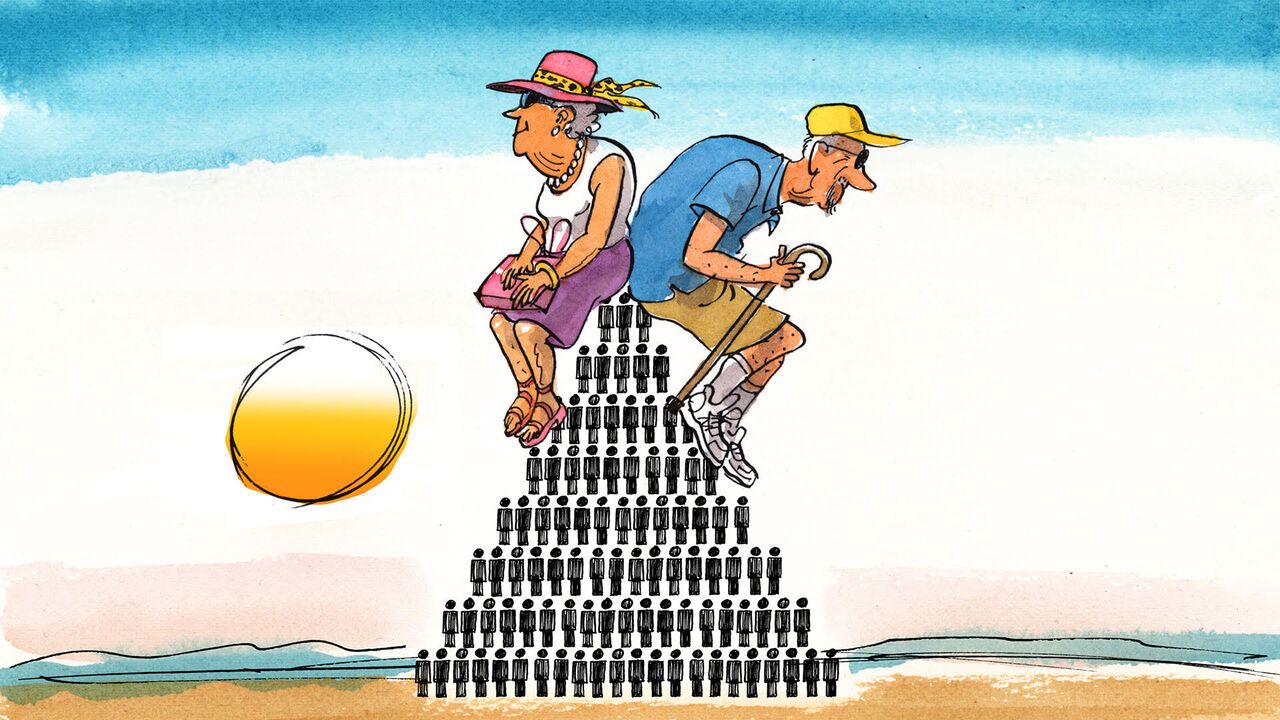
If the European welfare state looks like a pyramid scheme(金字塔骗局), its pharaohs(法老) are the “baby-boomers”. The bumper(丰厚的,巨大的) generation born in the two decades after 1945, aged roughly between 60 and 80 (Hello Mum! Hi Dad!), would like to go down in history(载入史册) as the first in centuries not to have started a war pitting one bit of the continent against another. Sociologists will surely celebrate the 1960s, when boomers sought to replace chauvinism(沙文主义) with rock ’n’ roll. But economists will judge them less kindly. Boomers granted themselves generous pensions, relying on demographic trends(人口趋势) that have since lapsed(失效的,终止的). The costs turned Europe lethargic(无精打采的,懒洋洋的). Today’s grandparents inherited a continent rebuilding itself after war; they will pass on one in need of repair after the damage they helped wreak(造成(破坏等)).
如果欧洲福利国家看起来像是一个金字塔骗局,那么它的法老就是“婴儿潮一代”。这个在1945年后二十年内出生的庞大世代,年龄大约在60到80岁之间(你好,妈妈!嗨,爸爸!),他们希望作为几个世纪以来第一个没有发动欧洲内部战争的世代载入史册。社会学家肯定会颂扬1960年代,当时婴儿潮一代试图用摇滚乐取代沙文主义。但经济学家对他们的评判就没那么客气了。婴儿潮一代依靠后来失效的人口趋势,为自己争取了丰厚的养老金。这些成本使欧洲变得无精打采。今天的祖父母们继承了一个战后重建的大陆;他们将传递一个因他们造成的损害而需要修复的大陆。
The most obvious goodies(赃物,好处) in the intergenerational heist(抢劫) are houses, which boomers bought for a song(以极低价格买下) and which are now worth millions. Yes, they did so by borrowing money at eye-watering(令人瞠目的(形容极度)) interest rates—but they then profited when property prices kept climbing after the mortgages had been repaid. Even adjusted for inflation, housing in Europe has gone up by a quarter in just a decade, with rents also increasing faster than incomes. The result, beyond making boomers feel like financial whizzes(天才,能手) when they were merely lucky, is to lock the young out of home ownership. The share of Europeans who live in their parents’ homes well into middle age(一直到中年) (not entirely voluntarily, one assumes, no matter the quality of mama’s cooking) has steadily increased over time. Among those born in the 1980s nearly a quarter still lived at home at 30, half again as many(多一半) as those born two decades earlier. Home ownership used to be the path to financial independence. Now inheritance looks a better bet—if it ever arrives.
代际劫案中最明显的赃物是房子,婴儿潮一代以极低的价格买下,现在价值数百万。是的,他们当时是以令人瞠目的利率借了钱——但之后,当抵押贷款还清后,房价却持续上涨,他们赚了。即使经过通胀调整,欧洲房价在短短十年内也上涨了四分之一,租金的涨幅也快于收入。结果,除了让婴儿潮一代觉得自己是金融天才(其实只是幸运)之外,还让年轻人被挡在自有住房之外。住在父母家中直至中年的欧洲人比例(假设并非完全自愿,无论妈妈做的饭菜有多好)稳步上升。在1980年代出生的人中,近四分之一在30岁时仍住在父母家,比二十年前出生的人多了一半。拥有住房曾经是财务独立的途径。现在,遗产看起来是更好的赌注——如果它能到来的话。
No continent for young men
没有属于年轻人的大陆