Letters are welcome via email to letters@economist.comFind out more(了解更多) about how we process your letter
欢迎通过电子邮件向letters@economist.com来信。了解更多关于我们如何处理您的来信的信息。
How to make the grass grow
如何让草生长
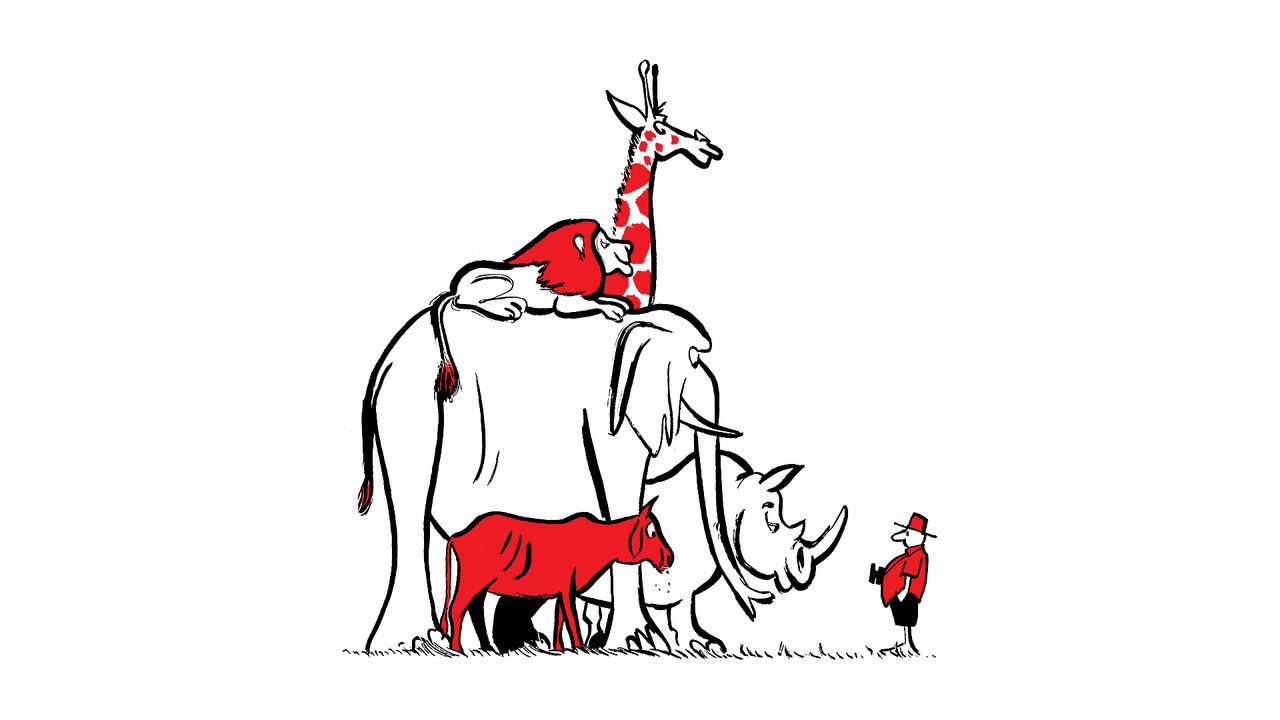
“How to save the safari” (May 23rd) identified domestic livestock(家畜) and overgrazing as a problem for conservation. But properly managed, these animals are actually the only economical regenerative(再生的,恢复性的) tool powerful enough to save savannahs from turning to desert. The “overgrazing” you lament is a failure of management, not a surplus of animals.(你所哀叹的“过度放牧”是管理上的失败,而非动物过剩。)
“如何拯救野生动物园”(5月23日)将家畜和过度放牧视为保护问题。但若管理得当,这些动物实际上是唯一经济有效的再生工具,足以阻止热带草原变为沙漠。你所哀叹的“过度放牧”是管理上的失败,而非动物过剩。
Herbivores are selective eaters. At low densities they repeatedly hammer their preferred plants until they die, driving a degradation spiral(退化螺旋) of bare soil, water run-off, erosion and desertification. So the counter-intuitive(反直觉的) solution is to increase animal densities while drastically shortening grazing rotations. This “pulse” forces less selective grazing, recycles nutrients and tramples old growth more effectively than, for instance, the crude reliance on annual fires in Kenya’s Masai Mara National Reserve(马赛马拉国家保护区是非洲最著名的野生动物...).
食草动物是选择性觅食者。在低密度下,它们反复啃食偏爱植物直至其死亡,导致裸土、径流、侵蚀和荒漠化的退化螺旋。因此,反直觉的解决方案是增加动物密度,同时大幅缩短轮牧周期。这种“脉冲”促使非选择性放牧、循环养分并更有效地践踏老植被,例如远胜于肯尼亚马赛马拉国家保护区每年焚烧的粗劣依赖。
Breastfeeding
母乳喂养
In defence of Sir Keir
为基尔爵士辩护
A doer upper
一个待修缮的房子

The silent service
沉默的军种
Beware the mad scientist
警惕疯狂科学家
Making sense of per cent
理解百分比