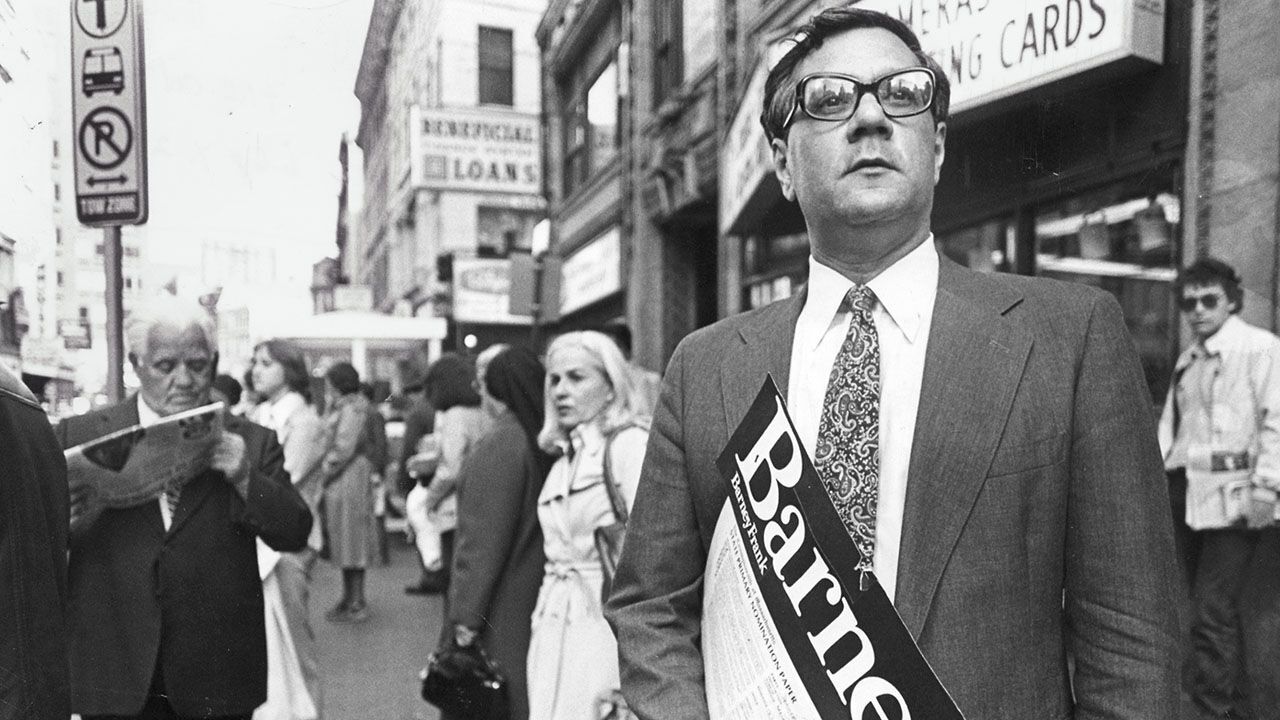
He had never known what being in a majority(处于多数地位) was like, and Barney Frank enjoyed that. First, he was left-handed, which accounted perhaps for the mess of spills and crumbs he left on himself after lunch, and for the cuts on his face because he tried to read while shaving. Second, he was Jewish, which was hardly a career-favouring fact when he started out in politics, and not a great one as he was growing up in the heavily Catholic and Mafia-ridden(黑帮横行的) city of Bayonne, New Jersey. He also kept a fine Joisey twang(泽西口音) all through his years as congressman for the Fourth District of Massachusetts, preserving his outsider status as Not From There Exactly. But the most crucial minority(少数群体) he belonged to was that of people who believed in government.
他从未体验过属于多数派的感觉,而且巴尼·弗兰克喜欢这样。首先,他是左撇子,这大概解释了他午饭后身上留下的汤汁和面包屑,以及因为他试图在刮胡子时阅读而刮破的脸。其次,他是犹太人,在他刚开始从政时,这几乎不是一个有利于职业发展的身份,而且他在新泽西州贝永那个天主教徒众多、黑帮横行的城市长大,这个身份也不太好。在担任马萨诸塞州第四选区众议员的整个职业生涯中,他都保留着浓重的泽西口音,保持着他那种'并非完全来自本地'的外来者姿态。但他所属的最重要的少数群体,是那些相信政府的人。
His America was divided into two tribe(部落、群体)s: those who thought government inherently evil, and those who thought it good. For much of his political career, in the 1970s in the Massachusetts legislature and from 1981-2013 in Washington, he seemed to be battling forces—the Moral Majority, the Tea Party, the Republican Party in its many permutation(变化形式、变体)s—that wanted government to be as small as possible. As a liberal Democrat, he naturally believed the opposite: it could, and should, help anyone on society’s losing side. He felt that way from the age of 15, when he heard of racist lynching(私刑)s in Mississippi, to the age of 70, when in the wake of(在……之后(作为后果)) the sub-prime financial crash he led the charge to stop the banks taking foolish risks with ordinary people’s money.
他所认识的美国分为两个部落:一个认为政府本质上是邪恶的,另一个认为政府是好的。在他的大部分政治生涯中——20世纪70年代在马萨诸塞州议会,以及1981年至2013年在华盛顿——他似乎一直在与那些希望政府尽可能小的势力(道德多数派、茶党、以及各种变体的共和党)作斗争。作为一名自由派民主党人,他自然相信相反的观点:政府可以,也应该帮助社会中的失败者。从15岁听闻密西西比州的种族主义私刑,到70岁在次贷金融危机后带头阻止银行拿普通人的钱进行愚蠢的冒险,他一直都是这么认为的。
He was also gay. But for many years no one knew that. Perhaps, he hoped, no one had to know it. To be gay meant, besides all the pansy(娘娘腔(贬称)) and pinko slur(诽谤、辱骂)s, that he could not marry, join the army, or necessarily get the job he wanted. But he could hide it. The fact that, from 13, he lived in the pain and fear of being attracted to men was disguised by his brilliant and often lacerating tongue(尖刻的言辞).
他也是同性恋。但多年来没有人知道这一点。也许他希望没人需要知道。除了'娘娘腔'和'粉红分子'之类的侮辱之外,身为同性恋还意味着他不能结婚,不能参军,也不一定得到他想要的工作。但他可以隐藏这一点。事实上,他从13岁起就生活在被男性吸引的痛苦和恐惧之中,而他出色的、往往尖刻的言辞掩盖了这一切。