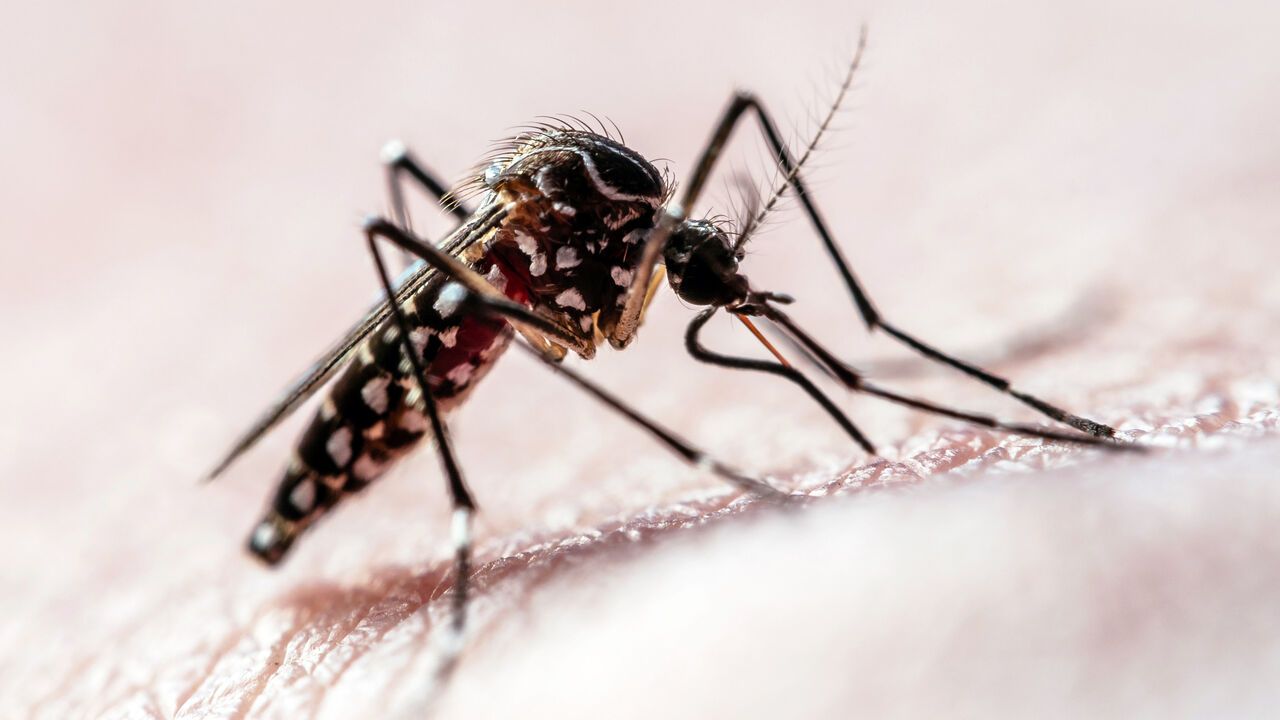
DEET(避蚊胺(驱蚊剂成分)) is the gold standard(金标准;最佳方法) for preventing mosquito bites. Although there is some debate over precisely how it works to ward off the insects, most researchers agree that a key part of its effectiveness is unpleasantness—the bugs just hate to be around it. Effective as it is, however, some mosquitoes seem capable of getting over their revulsion(强烈反感;厌恶). This has led to the speculation that the insects might be getting used to the chemical.
DEET是预防蚊虫叮咬的金标准。尽管关于它究竟如何驱赶昆虫存在一些争论,但大多数研究人员一致认为其有效性的关键部分在于令人不悦——虫子就是讨厌靠近它。然而,尽管它很有效,一些蚊子似乎能够克服它们的厌恶感。这导致了推测,即昆虫可能正在习惯这种化学物质。
Claudio Lazzari at the University of Tours set out to(着手;开始(做某事)) investigate, by running a version of the experiments made famous by Ivan Pavlov, a Russian physiologist, in the late 1800s in which dogs were conditioned(使形成条件反射) to associate sounds with food. In those experiments, Pavlov routinely made a sound with a metronome or buzzer and then promptly fed the dogs. Eventually, when he made the sounds but did not provide food, he found that the animals still salivated, as they would before a meal(就像吃饭前那样).
图尔大学的Claudio Lazzari着手调查,他进行了一种版本的实验,这些实验由19世纪末的俄罗斯生理学家伊万·巴甫洛夫使成名,实验中狗被条件反射地将声音与食物联系起来。在这些实验中,巴甫洛夫通常用节拍器或蜂鸣器发出声音,然后立即喂狗。最后,当他发出声音但不提供食物时,他发现这些动物仍然会流口水,就像吃饭前一样。
In his experiments, Dr Lazzari presented hungry mosquitoes with warm sheep’s blood while they were being exposed to a gentle breeze of ordinary air or of air blown past a piece of paper soaked in(浸在……中) DEET. With colleagues, he then repeated the experiments with sugar water, instead of blood, on a different set of mosquitoes.
在他的实验中,Lazzari博士让饥饿的蚊子接触温热的羊血,同时它们被暴露于普通空气的微风或吹过浸有DEET的纸片的空气。随后,他与同事在不同的蚊子身上重复了实验,但用糖水代替了血液。