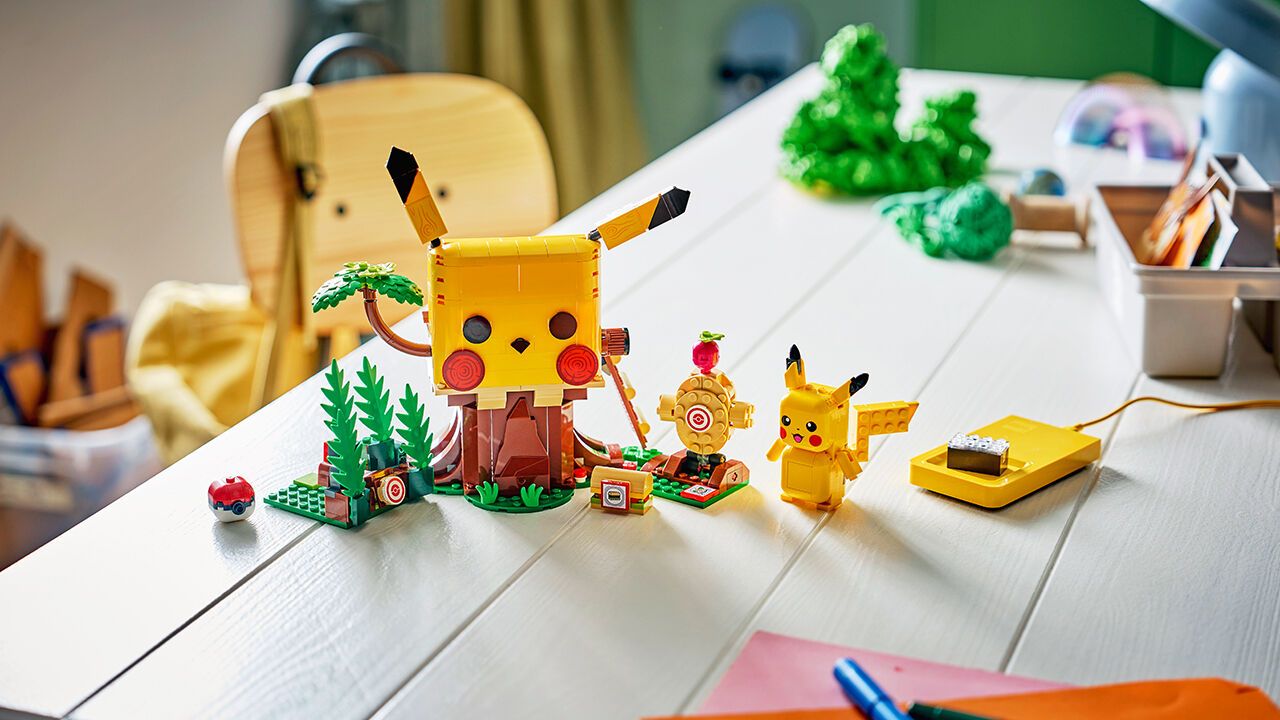
Lego executives tried valiantly(勇敢地,英勇地) to present their latest products on June 2nd amid a din(嘈杂声,喧闹声) of chirping, croaking and snoring. The toy giant’s newest range is part of a collaboration with Pokémon, a Japanese brand that has evolved from video game to multi-media phenomenon. Built-in chips let the creatures train, battle and noisily chat when put near each other.
6月2日,乐高高管们在叽叽喳喳、呱呱叫和打鼾的嘈杂声中奋力展示他们的最新产品。这家玩具巨头的最新系列是与宝可梦(Pokémon)合作的一部分。宝可梦是一个日本品牌,已从电子游戏发展为跨媒体现象。内置芯片让这些生物在靠近时能够训练、对战并大声交谈。
Pokémon is the latest in a growing line of(不断增长的一系列) Lego tie-ups(合作,联合) with media brands. Since the success of a Star Wars set in 1999, the Danish firm has sought licences everywhere from gaming (Nintendo) and Hollywood (Harry Potter) to sport (Formula One). Generic pirates and spacemen are increasingly squeezed off store shelves by the likes of Super Mario. Toys based on licensed intellectual property (IP) provide more than half of Lego’s $13bn annual revenue, estimates Circana, a research firm.
宝可梦是乐高与媒体品牌日益增长的系列合作中的最新一员。自1999年星球大战系列大获成功以来,这家丹麦公司便到处寻求授权,从游戏(任天堂)和好莱坞(哈利·波特)到体育(一级方程式)。普通的海盗和太空人玩具正越来越多地被超级马里奥之类的产品挤出商店货架。据研究公司Circana估计,基于授权知识产权的玩具为乐高130亿美元的年收入贡献了一半以上。
The brickmaker(制砖工,造砖者) is not the only example. Hasbro’s Monopoly has versions that license everything from James Bond to Barbie. Funko, which makes the wildly popular Pop! dolls, offers likenesses(肖像,相似物) based on athletes, actors and much else. Its slogan—“Everyone is a fan of something”—sums up the idea. The share of global toy sales based on licensed IP has risen from 25% to 37% in the past seven years, says Frédérique Tutt of Circana.
积木制造商并非唯一例子。孩之宝的大富翁有各种授权版本,从詹姆斯·邦德到芭比娃娃。生产大受欢迎的Pop!玩偶的Funko公司提供基于运动员、演员等形象的产品。其口号——“每个人都是某物的粉丝”——概括了这一理念。Circana的Frédérique Tutt表示,过去七年中,基于授权IP的全球玩具销售份额已从25%上升到37%。