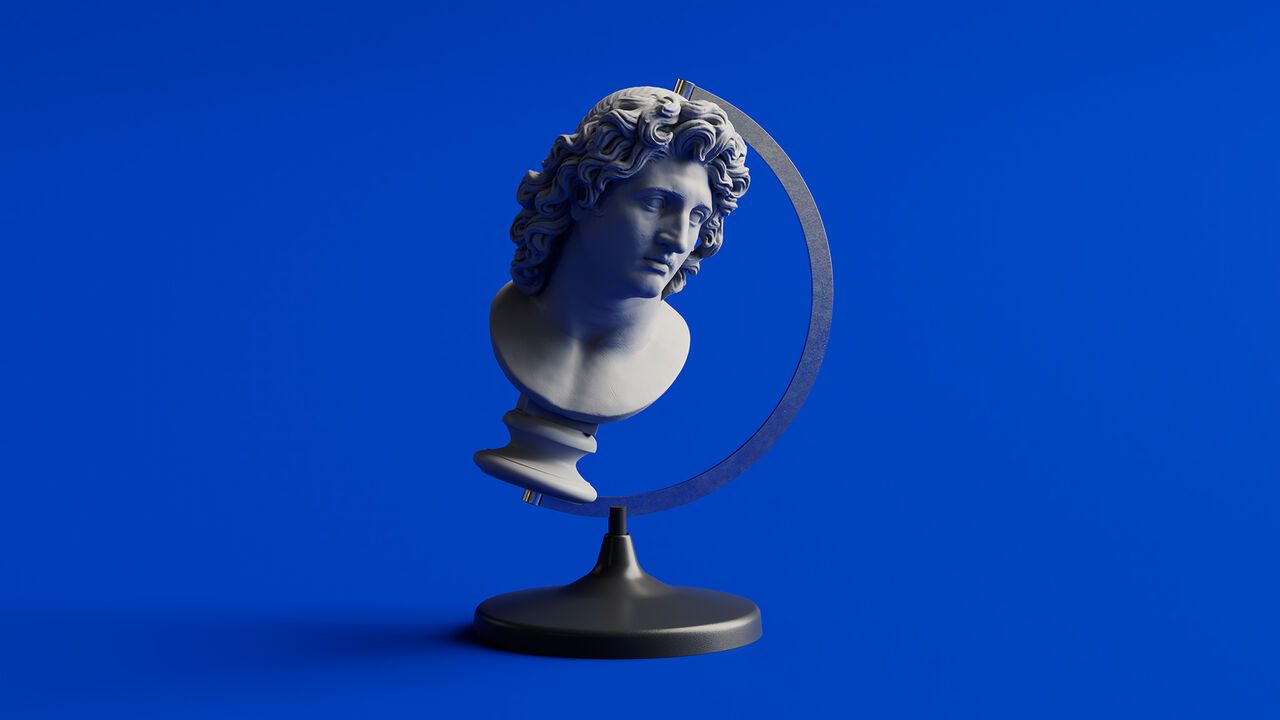
Alexander: God, King, Man. By Edmund Richardson. Bloomsbury; 480 pages; £25. To be published in America by St Martin’s Press in September; $33
亚历山大:神、王、凡人。作者:埃德蒙·理查森。布鲁姆斯伯里出版社;480页;25英镑。将于9月由圣马丁出版社在美国出版;33美元
How do you measure(衡量,评估) the greatness of Alexander the Great? Perhaps by the size of the empire he conquered (it stretched(延伸,绵延) 4,800 kilometres, from Athens to India). Or the speed with which(……的速度) he conquered it (about a decade). Or the cities he founded(建立,创办) (between six and 17, many called “Alexandria(① 背景资料:亚历山大港(Alexand...)”).
你如何衡量亚历山大大帝的伟大?也许是通过他征服的帝国规模(从雅典到印度,绵延4800公里)。或者他征服的速度(大约十年)。或者他建立的城市(六到十七座,许多称为“亚历山大港”)。
Though, as a new book by Edmund Richardson, a professor of classics and ancient history at Durham University, shows, there are darker(更阴暗的,更负面的) measures of this man. He has been called “mad”, “Alexander the not-so-great” and “one of the greatest killers the world had ever known(世界曾知道的)”. This is with reason: some have estimated(估计) that almost 1% of the ancient world’s population died as a result of his campaigns(军事行动,征战).
然而,正如杜伦大学古典学与古代史教授埃德蒙·理查森的一本新书所显示的,这位人物也有更阴暗的一面。他被称为“疯子”、“亚历山大大帝”和“世界史上最伟大的杀手之一”。这是有理由的:据估计,古代世界近1%的人口死于他的征战。