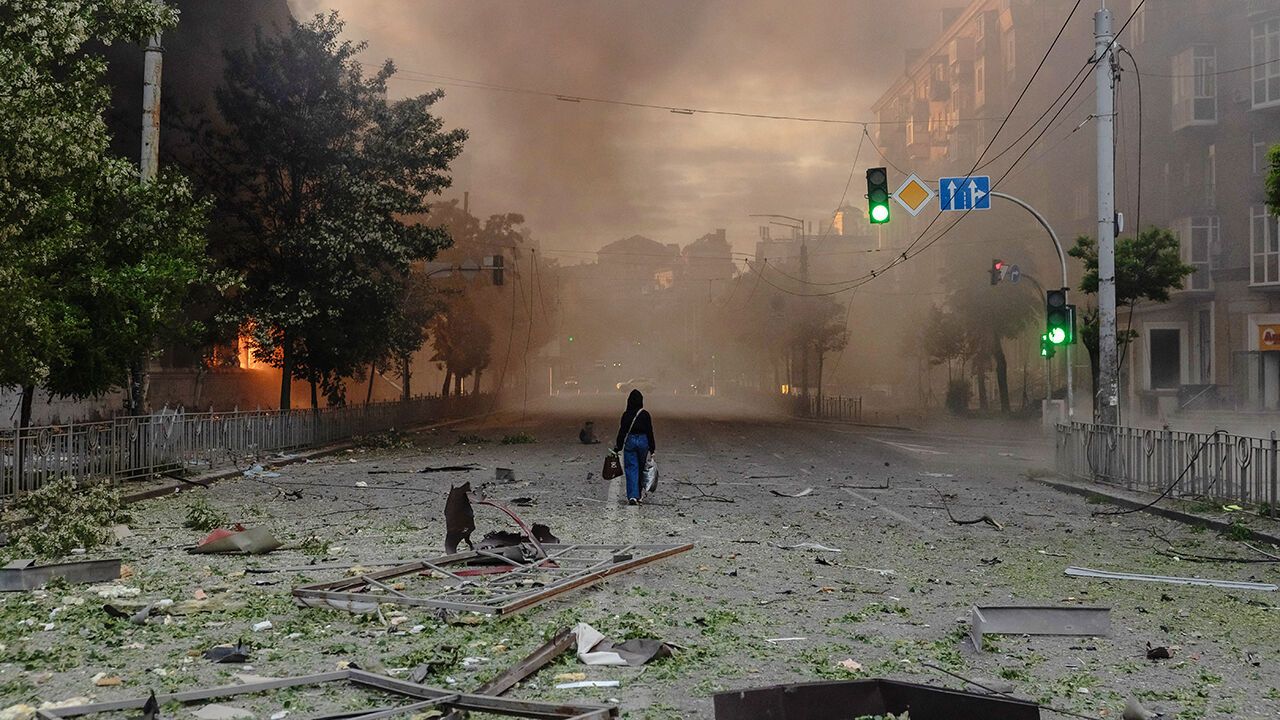
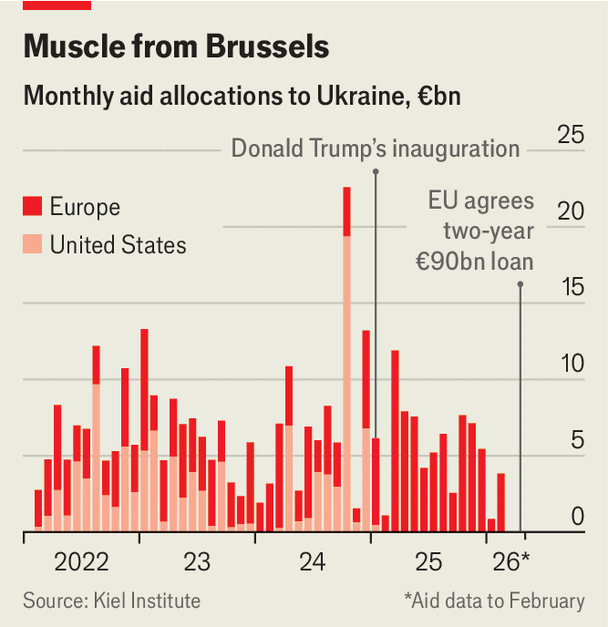
“This is a moment of truth(关键时刻) for Europe,” declared Ursula von der Leyen, president of the European Commission, when Vladimir Putin’s tanks rolled into Ukraine in 2022. Now, after years of dallying(拖延,犹豫不决), Europe might finally mean it. European Union members, plus other European countries such as Britain, are today responsible for almost all aid to Ukraine (see chart). Military integration is moving ahead, and a Franco-British initiative to police a notional ceasefire(监管名义上的停火) has been set up. A €90bn ($105bn) loan to Ukraine will start flowing this month. Sanctions on Russia are growing tougher.
“这对欧洲来说是一个关键时刻,”欧盟委员会主席乌尔苏拉·冯德莱恩在2022年弗拉基米尔·普京的坦克开进乌克兰时宣称。如今,经过多年的拖延,欧洲或许终于要动真格了。欧盟成员国,加上英国等其他欧洲国家,如今承担了几乎全部对乌克兰的援助(见图表)。军事一体化正在推进,法英两国已联合发起一项行动,负责监督一个名义上的停火协议。一项900亿欧元(合1050亿美元)的贷款将于本月开始拨付给乌克兰。对俄罗斯的制裁也日益严厉。
Meanwhile Ukraine’s recent battlefield advances have revived a sense of diplomatic possibility. Europe wants to take over where American efforts have fizzled(失败,虎头蛇尾). “We will be part of the solution, and we should be part of the discussion,” said Emmanuel Macron, France’s president, in February. For the first time, such words sound descriptive rather than pleading.(第一次,这样的话听起来像是描述事实,而不是恳求。)
与此同时,乌克兰近期在战场上的进展重新燃起了外交的可能性。欧洲希望在美国的努力失败后接过接力棒。“我们将成为解决方案的一部分,我们也应该参与讨论,”法国总统埃马纽埃尔·马克龙在二月份表示。第一次,这样的话听起来像是描述事实,而不是恳求。
Europe’s support, says Katarina Mathernova, the EU’s ambassador to Ukraine, “has been more resilient(有韧性的,坚强的) than we could have dared imagine.” Yet although Europe’s takeover gives it leverage, ministers and officials acknowledge that their governments are still groping towards(摸索着寻找) a strategy that goes beyond maintaining Ukraine’s survival. In recent weeks policymakers have prematurely(过早地,仓促地) debated sending an envoy to negotiate with Mr Putin (the array of names floated included Angela Merkel and Mario Draghi), without a clear sense of what Europeans hope to achieve. On May 28th Kaja Kallas, the EU’s foreign-policy co-ordinator, deemed it wise to play down(淡化,贬低重要性) the speculation.
欧盟驻乌克兰大使卡塔琳娜·马瑟诺娃表示,欧洲的支持“比我们敢于想象的更有韧性”。然而,尽管欧洲的接管给了它筹码,部长们和官员们承认,他们的政府仍在摸索一种超越维持乌克兰生存的战略。最近几周,政策制定者过早地讨论了派遣特使与普京谈判的问题(浮出的名字包括安格拉·默克尔和马里奥·德拉吉),但并未清楚欧洲人希望达成什么目标。5月28日,欧盟外交政策协调员卡娅·卡拉斯认为淡化这种猜测是明智之举。