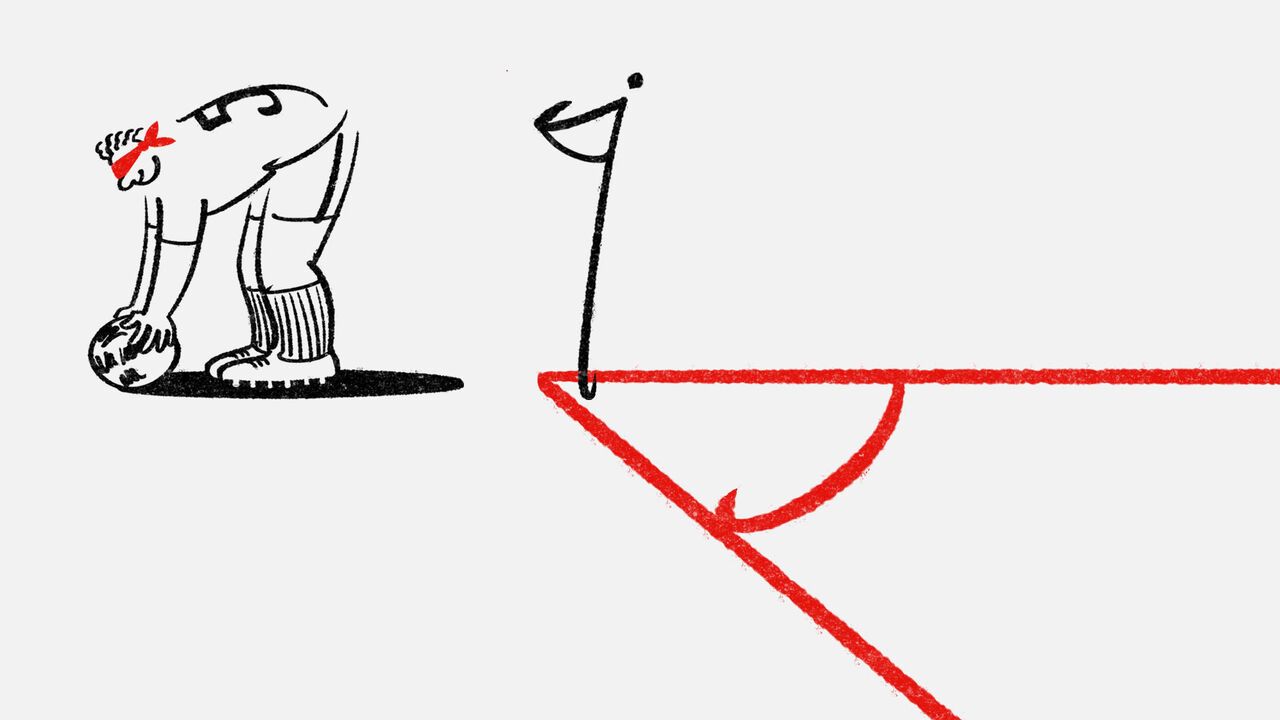
Football is the beautiful game(足球的美称). But it’s often also the boring game. The World Cup, which starts on June 11th, is being hosted by America, Canada and Mexico, the international equivalent of going to a dinner party and hearing the hosts rowing in the kitchen(相当于参加晚宴时听到主人在厨房争吵的国际版). The tournament will feature 48 teams playing 104 matches over the course of six and a half weeks. Although watching matches that feature your own nation is dependably exciting, for neutrals the average game is likely to be pretty drab(单调乏味的). The stakes at a World Cup are too high for players to take big risks, and hanging on for a draw often pays off for less fancied teams.
足球是美丽的运动,但往往也是无聊的运动。世界杯将于6月11日开幕,由美国、加拿大和墨西哥联合主办,这在国际上相当于去参加晚宴时听到主人在厨房争吵。本届赛事将有48支球队在六周半的时间里进行104场比赛。虽然观看自己国家的比赛确实让人兴奋,但对中立球迷来说,普通比赛很可能相当乏味。世界杯的赌注太高,球员不敢冒大风险,而实力较弱的球队经常靠死守平局获利。
Ideas are already circulating for making football more fun. Arsène Wenger, a manager whose credentials include making Arsenal bearable(可忍受的,看得下去的) to watch, has proposed changes such as tweaking the offside rule(微调越位规则) and turning throw-ins into kick-ins. But these ideas are not radical enough. The Economist would like to propose the following changes, so that the world game is one that the world thrills to(因……而激动).
关于如何让足球更有趣的点子已经在传播。阿森纳主教练阿尔塞纳·温格,他的资历包括让阿森纳变得可以看,他提出了修改越位规则和将界外球改为界外踢等建议。但这些想法还不够激进。《经济学人》想提出以下改革,让这项世界运动真正令世界激动。
If a team hits one of the posts or the crossbar three times, that will count as a goal. Attacking intent should be amply rewarded. This will favour teams that really go for it(大胆尝试,全力以赴).
如果一支球队击中门柱或横梁三次,就算进一球。进攻意图应得到充分回报。这将有利于那些真正放手一搏的球队。